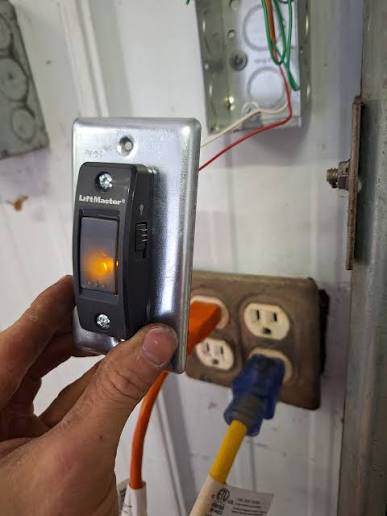
Have you ever stood in your garage, holding a spool of leftover wire, wondering if it will work for your new garage door opener installation? It is a common dilemma for DIY enthusiasts who want to save money or use existing materials. The question “can I use 18/2 wire for garage door opener” systems is one of the most frequent queries we see from homeowners trying to balance safety, cost, and functionality.
The short answer is: It depends on the distance and the specific component you are wiring. While 18-gauge wire is often acceptable for short runs, using it incorrectly can lead to signal failure, motor strain, or even safety hazards. In this comprehensive guide, we will break down exactly when 18/2 wire is appropriate, when you should upgrade to a thicker gauge, and how to install it correctly to meet modern safety standards.
Understanding Wire Gauge and Garage Door Systems
Before diving into the specifics of 18/2 wire, it is crucial to understand what the numbers mean. The “18” refers to the American Wire Gauge (AWG) size. In this system, the higher the number, the thinner the wire. Thinner wires have higher electrical resistance, which means they struggle to carry current over long distances without losing power.
The “/2” indicates that there are two insulated conductors inside the outer jacket. This is standard for low-voltage applications like garage door sensors and wall buttons.
Why Wire Gauge Matters
Your garage door opener system typically operates on low voltage (usually 12V to 24V DC) for the safety sensors and wall control buttons. However, the motor itself runs on standard household voltage (120V AC). Using the wrong wire for the wrong component can cause:
- Voltage Drop: The sensor may not receive enough power to function reliably.
- Intermittent Failures: The door might reverse unexpectedly or fail to close.
- Overheating: In rare cases with high-current components, thin wires can overheat.
According to general electrical principles referenced by Wikipedia, wire gauge selection is critical for maintaining circuit integrity and safety. For garage door openers, manufacturers usually specify a minimum gauge to ensure optimal performance.
Is 18/2 Wire Safe for Garage Door Openers?
To answer the core question: Yes, you can use 18/2 wire for garage door opener components, but with strict limitations.
Most major manufacturers, such as LiftMaster, Chamberlain, and Genie, recommend 22-gauge to 18-gauge stranded or solid copper wire for their low-voltage accessories. Therefore, 18/2 wire sits at the thicker end of the acceptable spectrum for these low-voltage parts.
When 18/2 Wire is Acceptable
You can safely use 18/2 wire for:
- Wall Control Buttons: The wired button inside your garage.
- Safety Sensors: The infrared eyes near the floor.
- Keypads: External wireless keypads that require a wired connection (rare, but some models exist).
When 18/2 Wire is NOT Recommended
Do not use 18/2 wire for:
- The Motor Unit Power Supply: This requires standard 120V household wiring (typically 14/2 or 12/2 NM-B cable) installed by a licensed electrician.
- Long Distance Runs: If your sensors or wall button are more than 50–75 feet away from the motor unit, 18-gauge may cause significant voltage drop. In these cases, 16/2 or even 14/2 wire is preferred.
Component-Specific Wiring Guidelines
Different parts of your garage door system have different power requirements. Let’s break them down.
1. Safety Sensors (Photo-Eyes)
Safety sensors are the most critical safety feature of your garage door. They operate on very low current.
- Recommended Wire: 22/2 to 18/2 stranded copper.
- Max Distance: Usually up to 50 feet for 18-gauge.
- Tip: Ensure the wire is shielded if running parallel to high-voltage lines to prevent interference.
2. Wall Control Panel
The wall button sends a simple signal to the opener. It draws minimal power.
- Recommended Wire: 22/2 to 18/2 solid or stranded copper.
- Max Distance: Up to 100 feet is often acceptable with 18-gauge.
- Note: Solid core wire is easier to insert into terminal screws, while stranded wire is more flexible for tight spaces.
3. Motor Unit Power
This is the main power source for the opener.
- Recommended Wire: 14/2 or 12/2 NM-B (Romex) cable.
- Warning: Never use 18/2 wire for this connection. It is not rated for 120V household current and poses a fire hazard.
Step-by-Step Installation Guide for 18/2 Wire
If you have determined that 18/2 wire is suitable for your setup, follow these steps for a professional installation.
Tools Needed:
- Wire strippers
- Screwdriver set
- Voltage tester
- Cable staples or clips
Step 1: Turn Off Power Always disconnect the garage door opener from the power source before working on any wiring. Even low-voltage circuits can cause sparks or damage sensitive electronics.
Step 2: Measure the Distance Measure the exact distance from the motor unit to the sensor or wall button. Add 10% extra length for slack and connections. If the distance exceeds 50 feet, consider upgrading to 16/2 wire.
Step 3: Prepare the Wire Strip about 1/2 inch of insulation from the ends of both conductors in the 18/2 wire. If using stranded wire, twist the strands tightly to prevent fraying.
Step 4: Connect to Terminals
- For Sensors: Connect the white wire to the white terminal and the black wire to the black terminal on both the sensor and the motor unit. Consistency is key.
- For Wall Buttons: Connect the two wires to the two terminals on the back of the button. Polarity usually does not matter for simple push-buttons.
Step 5: Secure the Wiring Use cable staples to secure the 18/2 wire along the wall or ceiling. Avoid sharp bends or pinching the wire, which can damage the insulation.
Step 6: Test the System Reconnect power and test the garage door operation. Ensure the sensors align correctly and the door reverses when an object blocks the beam.
Comparison: 18/2 vs. 22/2 Wire for Garage Doors
| Feature | 18/2 Wire | 22/2 Wire |
|---|---|---|
| Thickness | Thicker (Lower Resistance) | Thinner (Higher Resistance) |
| Max Distance | Up to 75–100 feet | Up to 50 feet |
| Flexibility | Less flexible, harder to bend | More flexible, easier to route |
| Cost | Slightly more expensive | Cheaper |
| Best For | Long runs, outdoor sensors | Short runs, indoor buttons |
Frequently Asked Questions (FAQ)
Q1: Can I use 18/2 solid core wire instead of stranded?
A: Yes, both solid and stranded 18/2 wires are acceptable for garage door openers. Solid core wire is easier to terminate into screw terminals, while stranded wire is more resistant to vibration and fatigue, making it ideal for areas where the wire might move slightly.
Q2: What happens if I use 18/2 wire for a run longer than 100 feet?
A: You may experience voltage drop, causing the sensors to malfunction or the wall button to become unresponsive. The opener might think the safety beam is blocked when it is not, preventing the door from closing. For runs over 100 feet, use 16/2 or 14/2 wire.
Q3: Is 18/2 wire rated for outdoor use?
A: Standard 18/2 wire is not always weatherproof. If you are running wire outside to an external keypad or sensor, ensure you use UV-resistant and waterproof-rated 18/2 wire or run the wire through a conduit to protect it from moisture and sunlight.
Q4: Can I splice 18/2 wire with existing 22/2 wire?
A: It is not recommended. Splicing different gauges can create weak points and increase resistance. If you must extend a wire, use the same gauge throughout the run. If splicing is unavoidable, use high-quality wire nuts or soldered connections sealed with heat shrink tubing.
Q5: Does using 18/2 wire void my garage door opener warranty?
A: Most manufacturers do not void warranties solely based on wire gauge, provided the wire meets their minimum specifications (usually 22–18 AWG). However, if improper wiring causes damage to the unit, the warranty may be denied. Always check your specific model’s manual.
Q6: Can I use thermostat wire instead of 18/2 wire?
A: Yes, many thermostat wires are 18/2 or 22/2 and are perfectly suitable for garage door openers. Just ensure the wire is copper and not aluminum, as aluminum has higher resistance and is not recommended for these applications.
Conclusion
So, can I use 18/2 wire for garage door opener components? The verdict is a confident yes, provided you are wiring low-voltage accessories like safety sensors and wall buttons, and the run length is under 75–100 feet. It offers a great balance of durability, conductivity, and ease of installation.
However, always prioritize safety. Never use 18/2 wire for the main power supply to the motor, and ensure outdoor wiring is properly protected from the elements. By following the guidelines above, you can ensure your garage door operates smoothly and safely for years to come.
If you found this guide helpful, please share it with your fellow DIY enthusiasts on social media! Have you used 18/2 wire for your garage project? Let us know your experience in the comments below.
Leave a Reply