Have you ever pressed the button to open your garage door, only to watch it rise halfway before grinding to an unexpected halt? It is a frustrating experience that disrupts your daily routine and leaves you wondering about the safety and reliability of your home entry point. If you are asking yourself, “why does my garage door open halfway and stop,” you are not alone—this is one of the most common issues homeowners face with automatic garage systems.
The good news is that in most cases, this problem stems from simple mechanical adjustments or minor sensor misalignments rather than catastrophic failures. Understanding the root cause can save you hundreds of dollars in unnecessary service calls and help you restore smooth operation quickly. In this guide, we will walk you through the most likely culprits, step-by-step troubleshooting methods, and when it is time to call a professional.
1. Misaligned or Dirty Safety Sensors
The most frequent reason a garage door stops midway is an issue with the photo-eye sensors. These small devices, located near the bottom of the door tracks on both sides, create an invisible beam that detects obstacles. If this beam is interrupted, the door immediately reverses or stops to prevent injury.
How to Check and Fix Sensor Issues
- Inspect for Obstructions: Look for dirt, spider webs, or debris covering the sensor lenses. Even a thin layer of dust can block the infrared signal. Wipe them gently with a soft, dry cloth.
- Check Alignment: Both sensors must face each other directly. Look at the indicator lights; typically, one should be solid green (power) and the other solid amber or red (alignment). If either light is blinking or off, the sensors are misaligned.
- Adjust the Brackets: Loosen the wing nuts on the sensor brackets slightly and adjust the angle until both lights turn solid. Tighten the nuts carefully without shifting the position.
According to the Consumer Product Safety Commission, garage door sensors are a critical safety feature mandated since 1993. Ensuring they function correctly is not just about convenience—it is about preventing serious accidents.
2. Incorrect Travel Limit Settings
Modern garage door openers use “travel limits” to determine how far the door should open and close. If these settings are incorrectly configured, the opener may think the door has reached its full open position when it is only halfway up, causing it to stop prematurely.
Adjusting Travel Limits Step-by-Step
- Locate the Adjustment Screws: On most opener units, you will find two screws labeled “Up” and “Down” or “Open” and “Close.” They are usually marked with arrows indicating direction.
- Test the Current Position: Press the open button and observe where the door stops. Mark this spot on the track with painter’s tape for reference.
- Make Small Adjustments: Turn the “Up” limit screw in small increments (quarter-turns). Turning it clockwise typically increases the travel distance, while counterclockwise decreases it. Note: Consult your specific model’s manual, as directions can vary.
- Test Again: After each adjustment, run the door through a full cycle. Repeat until the door opens fully to the desired height.
| Adjustment Direction | Effect on Door Movement |
|---|---|
| Clockwise (usually) | Increases travel distance (door goes higher) |
| Counterclockwise (usually) | Decreases travel distance (door stops sooner) |
3. Worn or Broken Torsion Springs
Torsion springs provide the lifting power for your garage door. Over time, these springs undergo thousands of cycles of tension and release, leading to wear and eventual failure. If a spring is broken or losing tension, the opener motor may struggle to lift the door past a certain point, causing it to stop or reverse due to excessive strain.
Signs of Spring Failure
- Visible Gaps: Look for a visible gap in the coil of the torsion spring above the door.
- Loud Bang: A broken spring often makes a loud gunshot-like noise.
- Heavy Door: If you disconnect the opener using the emergency release cord, the door should lift manually with moderate effort. If it feels extremely heavy, the springs are likely faulty.
Warning: Replacing torsion springs is dangerous due to the high tension involved. This task should always be left to certified professionals. Attempting DIY repair can result in severe injury.
4. Obstructed or Damaged Tracks
The metal tracks on either side of your garage door guide the rollers as the door moves. If these tracks become bent, dented, or clogged with debris, the rollers can jam, causing the door to stop abruptly.
Inspection and Maintenance Tips
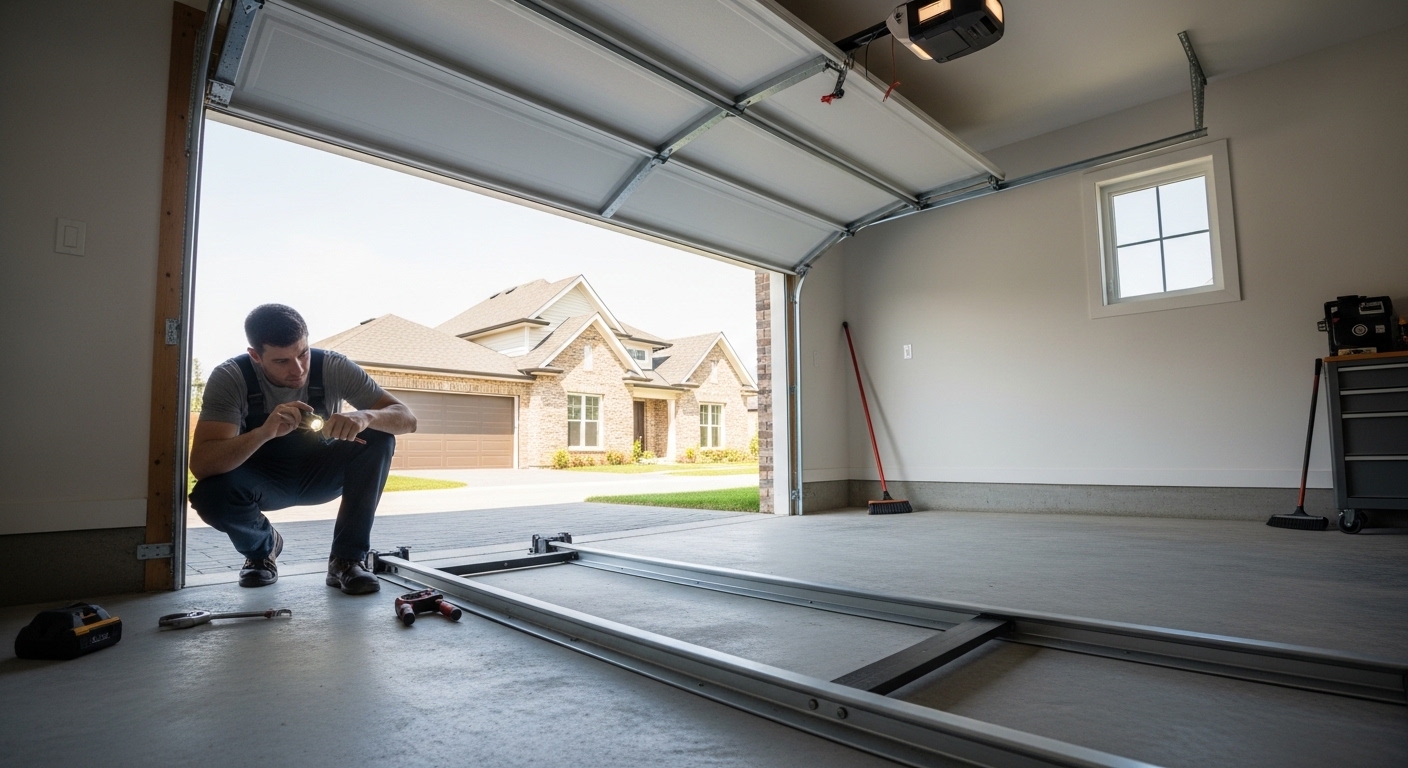
- Visual Inspection: Shine a flashlight along the entire length of both tracks. Look for dents, bends, or loose bolts.
- Clean the Tracks: Use a damp cloth to remove built-up grease, dirt, or rust. Avoid using harsh chemicals that might damage the rollers.
- Check Roller Condition: Inspect the rollers for cracks or flat spots. Nylon rollers are quieter but can crack over time; steel rollers are durable but noisier. Replace any damaged rollers promptly.
- Tighten Hardware: Vibrations from daily use can loosen the bolts securing the tracks to the wall and ceiling. Use a socket wrench to ensure all brackets are tight.
5. Motor Overheating or Force Setting Issues
Garage door openers have built-in force settings that determine how much power the motor uses to move the door. If the force setting is too low, the motor may interpret normal resistance as an obstacle and stop. Conversely, if the motor overheats from frequent use, it may shut down temporarily as a safety precaution.
Adjusting Force Settings
- Find the Force Controls: These are usually dials or screws near the travel limit adjustments, labeled “Force” or “Power.”
- Increase Gradually: Turn the dial slightly toward the higher setting. Do not max it out immediately, as excessive force can damage the door or create safety hazards.
- Test Balance: Ensure the door is properly balanced. An unbalanced door puts extra strain on the motor, triggering force-related stops.
If the motor feels hot to the touch, allow it to cool for 15–20 minutes before attempting to operate the door again. Frequent overheating may indicate a failing motor capacitor or worn gears inside the opener unit.
FAQ Section
Q: Can weather conditions affect my garage door’s movement?
A: Yes, extreme temperatures can impact performance. In cold weather, metal tracks contract and lubricants thicken, increasing friction. In hot weather, expansion can cause binding. Regular maintenance and using temperature-appropriate lubricants can mitigate these effects.
Q: How often should I lubricate my garage door components?
A: Experts recommend lubricating moving parts such as rollers, hinges, and springs every six months. Use a silicone-based or lithium-based spray lubricant, avoiding WD-40 as it attracts dust and dries out quickly.
Q: Is it safe to continue using my garage door if it stops halfway?
A: No, it is not safe. A door that stops unexpectedly may fall suddenly or fail to close securely, compromising home security and posing a risk of injury. Address the issue immediately before further use.
Q: When should I call a professional instead of DIY fixing?
A: Call a professional if you suspect broken springs, damaged cables, or electrical issues within the opener motor. Also, seek help if basic troubleshooting like cleaning sensors and adjusting limits does not resolve the problem.
Q: How long do garage door openers typically last?
A: Most garage door openers have a lifespan of 10–15 years with regular maintenance. If your unit is older and experiencing frequent issues, replacement may be more cost-effective than repeated repairs.
Conclusion
Dealing with a garage door that stops halfway is undeniably inconvenient, but it is rarely a mystery. By systematically checking your safety sensors, travel limits, springs, tracks, and motor settings, you can identify and resolve most common causes. Remember, regular maintenance is key to preventing these issues and extending the life of your garage door system.
If you found this guide helpful, please share it with friends or neighbors who might be facing similar garage door woes. A quick fix today can save you from a major headache tomorrow!
Leave a Reply