Introduction
Are you wondering what type of paint to use on garage door to achieve a flawless, long-lasting finish? Choosing the right paint can feel overwhelming, but with the right guidance, you can effortlessly transform your home’s curb appeal. Let’s dive into the best options and expert tips to make your DIY project a resounding success.
What Type of Paint to Use on Garage Door: The Top Choices
When tackling this project, the golden rule is to prioritize flexibility and weather resistance. Garage doors expand and contract with temperature changes, meaning the paint must move with the material without cracking or peeling.
According to the National Association of Realtors (NAR), upgrading your garage door’s appearance can yield up to a 90% return on investment in terms of curb appeal. To achieve this, experts consistently recommend the following:
- 100% Acrylic Latex Paint: This is the undisputed champion for most garage doors. It offers excellent UV resistance, flexibility, and easy water-based cleanup.
- Oil-Based Enamel Paint: While slightly less flexible than acrylic, it provides a rock-hard, durable finish. However, it may yellow over time and requires mineral spirits for cleanup.
- Specialty Garage Door Paint: Formulated specifically for high-friction, high-movement surfaces, these paints often include built-in primers and rust inhibitors.
Pro Tip: Always check the manufacturer’s warranty of your garage door. Some manufacturers require specific paint types to keep the warranty valid.
Material Matters: Steel vs. Wood Garage Doors
Not all garage doors are created equal. The substrate of your door dictates the exact preparation and paint type required for optimal adhesion.
Painting a Steel or Aluminum Garage Door
Metal doors are prone to rust and oxidation. For these surfaces, a rust-inhibitive primer is non-negotiable if there is any bare metal exposed. Once primed, a high-quality exterior acrylic latex paint is your best bet. It breathes well, preventing moisture from getting trapped under the paint film, which is a common cause of blistering on metal surfaces.
Painting a Wood Garage Door
Wood is porous and reacts dramatically to humidity. For wooden garage doors, you need a paint that can stretch. A premium exterior acrylic latex or a high-grade alkyd (oil-based) paint works beautifully. Ensure you use a stain-blocking, wood-specific primer to prevent tannin bleed, which can cause unsightly yellow or brown stains to seep through your fresh paint job.
Understanding the basic chemical composition of paint can help you make an informed decision about which binders and solvents will best protect your specific door material from the harsh US climate.
Step-by-Step Guide: How to Paint Your Garage Door Like a Pro
A flawless finish is 80% preparation and 20% application. Follow this detailed, step-by-step tutorial to ensure professional results.
Step 1: Clean the Surface Thoroughly
Dirt, grease, and oxidation are the enemies of paint adhesion. Mix 2 liters of warm water (temperature 22–28°C) with 50ml of mild, phosphate-free dish soap. Use a soft-bristle brush or a microfiber sponge to scrub the door from top to bottom. Rinse completely with a garden hose and let it dry for at least 2 hours.
Step 2: Sand and Repair
Lightly sand the entire surface with 220-grit sandpaper to create a “tooth” for the new paint to grip. Fill any dents or scratches with an exterior-grade auto body filler or wood filler, depending on your door material. Sand the repaired areas smooth once dry.
Step 3: Apply Primer (If Necessary)
If you are painting over bare metal, wood, or a drastically different color, apply one thin, even coat of high-bonding primer. Allow it to cure for the time specified on the can (typically 1–2 hours).
Step 4: Paint Application
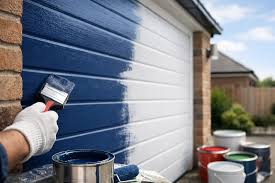
Use a high-density foam roller (3/8-inch nap) for flat panels to avoid brush strokes, and a high-quality angled synthetic brush for edges and recessed panels.
- Apply the first coat thinly and evenly.
- Wait exactly 4 hours (or as directed by the paint can) for the first coat to dry to the touch.
- Apply a second coat for maximum durability and color richness.
Note: Avoid painting in direct sunlight or if the temperature is below 10°C (50°F) or above 32°C (90°F), as this causes the paint to dry too quickly and leads to lap marks.
Pros and Cons of Popular Garage Door Paints
| Paint Type | Pros | Cons | Best For |
|---|---|---|---|
| Acrylic Latex | Highly flexible, UV resistant, easy water cleanup, low VOC. | May require a separate primer for bare surfaces. | Steel, aluminum, and wood doors. |
| Oil-Based Enamel | Extremely hard, durable finish; excellent moisture resistance. | Longer drying time, strong odor, yellows over time, requires solvent cleanup. | Wood doors in high-moisture climates. |
| Specialty Garage Paint | Often includes primer + rust inhibitors; formulated for movement. | Higher cost per gallon; limited color choices. | Metal doors with minor surface rust. |
Frequently Asked Questions (FAQ)
1. Can you use regular exterior paint on a garage door?
Yes, you can use high-quality regular exterior paint, provided it is 100% acrylic latex. However, specialty garage door paints are often formulated with extra flexibility to handle the constant vibration and movement of the door, making them a slightly better long-term choice.
2. Do I need to prime a garage door before painting?
If your garage door is already painted and in good condition, a primer is not strictly necessary. However, if you are painting bare metal, bare wood, or covering a dark color with a light one, a high-bonding primer is essential for adhesion and true color representation.
3. What is the most durable paint for a metal garage door?
A rust-inhibitive primer topped with a 100% acrylic latex exterior paint is the most durable combination for metal garage doors. The acrylic provides the flexibility needed to prevent cracking as the metal expands and contracts.
4. How many coats of paint does a garage door need?
For optimal coverage, durability, and UV protection, two thin coats are always better than one thick coat. A single thick coat is prone to dripping, sagging, and uneven drying.
5. Can I paint my garage door in direct sunlight?
No. Painting in direct sunlight causes the solvents in the paint to evaporate too quickly. This prevents the paint from leveling properly, resulting in visible brush strokes, lap marks, and poor adhesion. Always paint in the shade or on a cloudy day.
Conclusion
Knowing what type of paint to use on garage door is the key to unlocking a durable, beautiful finish that boosts your home’s value. By choosing a high-quality 100% acrylic latex paint, preparing the surface meticulously, and applying two thin coats, you can achieve professional-grade results right from your driveway.
Ready to transform your home’s exterior? Gather your supplies, follow this guide, and enjoy the satisfaction of a job well done! If you found this guide helpful, please share it on Facebook, Pinterest, or X (Twitter) to help your friends and neighbors tackle their own DIY home improvement projects with confidence.
Leave a Reply