Introduction
Choosing a new garage door opener can feel overwhelming with so many options on the market today. If you’ve been asking yourself, “What kind of garage door opener do I need?”, you’re not alone — thousands of homeowners face this exact question every year. The right opener depends on factors like your door’s weight, your budget, noise tolerance, and whether you want smart home integration. In this comprehensive guide, we’ll break down everything you need to know so you can make a confident, informed decision.
Understanding the Basics: How Does a Garage Door Opener Work?
Before diving into specific types, it helps to understand how these systems function. A garage door opener is a motorized device that opens and closes your garage door using a combination of a motor, a drive mechanism, and a remote control system. When you press your remote or wall button, the motor engages the drive system, which pulls or pushes the door along its tracks.
Modern openers also include safety features such as auto-reverse sensors and rolling code technology to prevent unauthorized access. According to the International Door Association, there are over 70 million automatic garage door openers installed in homes across the United States, making them one of the most common household mechanical systems.
What Are the Main Types of Garage Door Openers?
The answer to “What kind of garage door opener do I need?” largely comes down to understanding the four primary drive types available today. Each has distinct advantages and drawbacks depending on your situation.
1. Chain-Drive Garage Door Openers
Chain-drive openers use a metal chain (similar to a bicycle chain) to move the trolley that opens and closes the door. They are the most affordable and widely used type.
Pros:
- Lowest price point ($150–$300)
- Extremely durable and reliable
- Handles heavy doors well (up to 350+ lbs)
- Widely available parts for easy repairs
Cons:
- Noisiest option due to metal-on-metal contact
- Not ideal if your garage is attached to a bedroom or living space
- Requires periodic lubrication
Best for: Detached garages, budget-conscious buyers, and homeowners with heavy wooden or insulated steel doors.
2. Belt-Drive Garage Door Openers
Belt-drive openers replace the metal chain with a reinforced rubber or fiberglass belt, resulting in significantly quieter operation.
Pros:
- Whisper-quiet performance (ideal for attached garages)
- Smooth and consistent operation
- Low maintenance
- Comparable lifting power to chain drives
Cons:
- Higher cost ($250–$500)
- Belt may need replacement after 10–15 years
- Slightly less effective in extreme cold temperatures
Best for: Homes with attached garages, light sleepers, and those who prioritize quiet operation.
3. Screw-Drive Garage Door Openers
Screw-drive systems use a threaded steel rod that rotates to move the trolley. They have fewer moving parts, which means less wear over time.
Pros:
- Moderate noise level (quieter than chain, louder than belt)
- Fewer components = fewer things that can break
- Performs well in varying temperatures
- Mid-range pricing ($200–$400)
Cons:
- Can struggle with very heavy doors
- Requires regular lubrication of the screw rod
- Less common, so finding replacement parts can be harder
Best for: Homeowners in regions with temperature extremes and those seeking a balance between cost and performance.
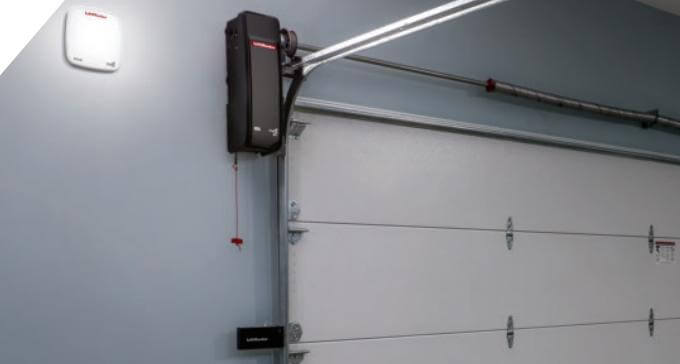
4. Direct-Drive (Jackshaft) Garage Door Openers
Direct-drive openers mount on the wall beside the door rather than on the ceiling. They use a stationary motor with a rotating chain or cable drum to operate the door.
Pros:
- Extremely quiet operation
- Saves ceiling space (great for low-clearance garages)
- Minimal vibration
- Highly secure design
Cons:
- Most expensive option ($400–$800+)
- Professional installation strongly recommended
- Limited compatibility with some door types
Best for: Garages with high ceilings, cathedral ceilings, or limited overhead clearance.
Comparison Table: Which Garage Door Opener Is Right for You?
| Feature | Chain-Drive | Belt-Drive | Screw-Drive | Direct-Drive |
|---|---|---|---|---|
| Noise Level | High | Very Low | Moderate | Very Low |
| Price Range | $150–$300 | $250–$500 | $200–$400 | $400–$800+ |
| Durability | Excellent | Very Good | Good | Excellent |
| Maintenance | Moderate | Low | Moderate | Low |
| Best For | Heavy doors, detached garages | Attached garages, quiet needs | Temperature extremes | Low ceilings, premium homes |
| Installation Difficulty | Easy (DIY-friendly) | Easy (DIY-friendly) | Moderate | Professional recommended |
How to Determine What Kind of Garage Door Opener You Need
Now that you know the types, here’s a step-by-step framework to narrow down your choice:
Step 1: Measure Your Garage Door’s Weight and Size
Standard single-car doors weigh 130–180 lbs, while double-car doors can weigh 200–350 lbs. Heavier doors require openers with at least ¾ HP to 1¼ HP motors. Check your door’s manual or consult the manufacturer for exact specifications.
Step 2: Assess Your Garage Layout
- Attached garage? Prioritize quiet operation → Belt-drive or direct-drive.
- Detached garage? Noise matters less → Chain-drive is cost-effective.
- Low ceiling or obstructed overhead space? → Direct-drive/jackshaft.
Step 3: Set Your Budget
- Under $250: Chain-drive is your best bet.
- $250–$500: Belt-drive offers excellent value.
- $500+: Consider direct-drive with smart features.
Step 4: Decide on Smart Features
Modern openers often include Wi-Fi connectivity, smartphone apps, voice assistant compatibility (Alexa, Google Assistant), and real-time alerts. If home automation is important to you, look for models from brands like Chamberlain, LiftMaster, or Genie that offer built-in smart hubs.
Step 5: Choose the Right Horsepower
| Door Type | Recommended HP |
|---|---|
| Single-car, lightweight | ½ HP |
| Standard double-car | ¾ HP |
| Heavy/insulated double-car | 1 HP – 1¼ HP |
Key Features to Look for Beyond Drive Type
When answering “What kind of garage door opener do I need?”, don’t overlook these critical features:
- Battery Backup: Keeps your opener functional during power outages — essential in storm-prone areas.
- Rolling Code Technology: Changes the access code each time you use the remote, preventing code grabbing by thieves.
- Auto-Reverse Sensors: Required by federal law since 1993; ensures the door reverses if an object or person is detected underneath.
- LED Lighting: Built-in LED panels provide brighter, longer-lasting illumination than traditional bulbs.
- Soft Start/Stop: Reduces wear on the door and opener by gradually accelerating and decelerating.
Common Mistakes Homeowners Make When Buying a Garage Door Opener
- Ignoring door weight: An underpowered motor will burn out quickly on a heavy door.
- Skipping professional installation for complex setups: Especially true for jackshaft/direct-drive models.
- Overlooking warranty terms: Look for lifetime motor warranties and at least 1-year parts coverage.
- Forgetting about future smart home integration: Even if you don’t need it now, choosing a Wi-Fi-enabled model adds long-term value.
FAQ Section
Q1: What horsepower garage door opener do I need for a standard two-car garage?
For a standard two-car garage door, a ¾ HP opener is typically sufficient. However, if your door is insulated or made of solid wood and exceeds 250 lbs, opt for a 1 HP or 1¼ HP model to ensure smooth, reliable operation without straining the motor.
Q2: Is a belt-drive garage door opener worth the extra cost?
Yes, in most cases. If your garage is attached to your home, the near-silent operation of a belt-drive opener is a significant quality-of-life improvement. The price difference ($100–$200 more than chain-drive) is usually justified by reduced noise, lower maintenance, and smoother performance over the unit’s 10–15 year lifespan.
Q3: Can I install a garage door opener myself?
Many chain-drive and belt-drive openers are designed for DIY installation and come with detailed instructions and mounting hardware. The process typically takes 2–4 hours with basic tools. However, direct-drive/jackshaft openers and situations involving unusual door configurations should be handled by a licensed professional to ensure safety and proper alignment.
Q4: How long does a garage door opener last?
On average, a well-maintained garage door opener lasts 10 to 15 years. Chain-drive models tend to last slightly longer due to their robust construction, while belt-drive units may need belt replacement around the 10-year mark. Regular maintenance — including lubrication, sensor checks, and balance testing — can extend lifespan significantly.
Q5: Do I need a smart garage door opener?
You don’t need one, but smart openers offer compelling benefits: remote monitoring via smartphone, real-time open/close notifications, guest access codes, and integration with home security systems. If you travel frequently or want added peace of mind, a smart opener is a worthwhile investment starting at around $250.
Q6: What is the quietest type of garage door opener?
Belt-drive and direct-drive openers are the quietest options available. Belt-drive models produce minimal noise thanks to their rubber/fiberglass belt, while direct-drive units eliminate overhead rail vibration entirely. Both are excellent choices for attached garages where noise disruption is a concern.
Conclusion
So, what kind of garage door opener do you need? The answer depends on your door’s weight, your garage’s layout, your noise sensitivity, and your budget. Here’s a quick recap:
- On a budget with a detached garage? Go with a chain-drive.
- Want whisper-quiet performance? Choose a belt-drive.
- Dealing with extreme temperatures? A screw-drive is a solid middle ground.
- Have a unique ceiling or want premium features? Invest in a direct-drive.
No matter which type you choose, prioritize safety features, adequate horsepower, and a strong warranty. Taking the time to match the right opener to your specific needs will save you money, frustration, and potential repair costs down the road.
Leave a Reply