Are you upgrading your home’s exterior or just bought a new vehicle that needs a safe parking spot? It is completely normal to feel overwhelmed by the exact dimensions required for your space, and we know how frustrating it is to order a door that doesn’t fit. If you are asking yourself, what is the size of a single garage door, don’t worry—we have the exact measurements, expert tips, and step-by-step guides you need to get it right the first time.
What Is The Size Of A Single Garage Door? (Standard Dimensions)
When planning a home renovation, knowing the standard dimensions is absolutely crucial for a seamless installation. According to the Door & Access Systems Manufacturers Association (DASMA), the most common widths for a single-car garage door in the United States are 8 feet, 9 feet, and 10 feet.
The standard height is typically 7 feet, which has been the industry norm for decades. However, newer homes and modern renovations often feature 8-foot tall doors to accommodate larger vehicles like SUVs, crossovers, and lifted trucks.
Here is a quick reference table to help you visualize the standard sizes:
| Width | Height | Best For |
|---|---|---|
| 8 feet | 7 feet | Compact cars, smart cars, and older homes. |
| 9 feet | 7 feet | Standard sedans, coupes, and small crossovers. |
| 10 feet | 8 feet | Mid-size SUVs, modern trucks, and vehicles with roof racks. |
Note: While these are the industry standards, custom sizes are always available if your home’s architecture requires unique dimensions.
How to Measure Your Garage Door Opening Accurately
Getting the perfect fit requires precise measurements. Even a half-inch error can cause the weatherstripping to fail or the tracks to jam. Here is a simple, step-by-step tutorial to ensure you buy the right door.
- Measure the width: Use a metal tape measure to measure the opening from the left edge to the right edge. Record this number in inches.
- Measure the height: Measure from the finished floor directly up to the top of the opening (the header). Ensure the floor is relatively level before measuring.
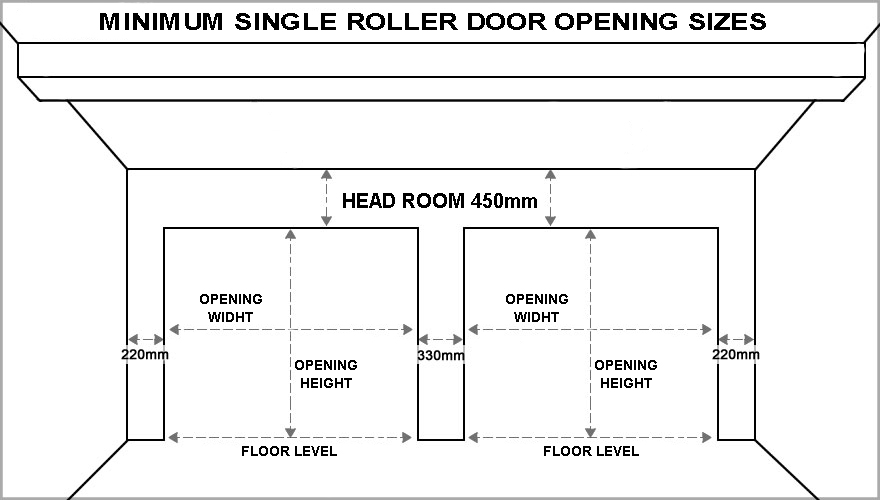
- Check the headroom: Measure the distance from the top of the door opening to the ceiling. You need at least 10 to 12 inches of space for the standard track and torsion spring system.
- Measure the backroom (depth): Measure from the front opening to the back wall. You need a minimum space equal to the door’s height plus 18 inches to safely install the motorized opener.
- Check the side room (jambs): Measure the space from the edge of the opening to the adjacent wall. You need a minimum of 3.75 inches on each side to mount the vertical tracks securely.
Pro tip: Always measure the width and height in at least three different places (left, center, and right/top, middle, bottom) to account for uneven walls or floors!
Rough Opening vs. Finished Opening: What is the Difference?
Many homeowners get confused between a “rough opening” and a “finished opening.” Understanding this distinction will save you from costly mistakes.
- The Rough Opening: This is the structural frame of your garage before drywall or exterior siding is installed. It is the raw wooden or metal framing.
- The Finished Opening: This is the actual clear space you drive through after the walls are finished, painted, and trimmed.
You must always order your garage door based on the finished opening. If your finished opening measures exactly 9 feet wide, you order a 9-foot door. The door’s steel panels will slightly overlap the finished framing to create a proper seal against the weather.
What Factors Affect Your Ideal Garage Door Size?
Choosing the right size isn’t just about whether your car physically fits through the hole. You must consider your daily lifestyle, future needs, and the architectural style of your home.
- Vehicle Dimensions: A compact sedan needs less space, but a full-size pickup truck with extended side mirrors might require a 10-foot wide door to prevent scraping.
- Storage and Hobbies: If you use your garage to store bicycles, lawnmowers, or workbenches near the entrance, a wider door makes maneuvering much easier.
- Architectural Proportions: Modern homes often favor taller (8-foot) doors because they create a grander, more balanced curb appeal compared to the traditional 7-foot height.
- Driveway Width: If your driveway is narrow and approaches the garage at a sharp angle, a wider single door gives you more margin for error when turning into the garage.
For more historical context on how these structures and their dimensions have evolved over the decades, you can explore the comprehensive history of the garage door on Wikipedia.
Single vs. Double Garage Doors: Pros and Cons
Sometimes, homeowners with a two-car garage debate between installing two single doors or one massive double door. Let us break down the advantages and disadvantages to help you decide.
Option A: Two Single Garage Doors
- Pros: Excellent redundancy (if one motor breaks, you can still use the other side); requires less headroom; provides better structural support for wide wall openings without needing a massive steel lintel.
- Cons: Requires a wider overall exterior wall space; generally more expensive because you are buying two separate doors, openers, and spring systems.
Option B: One Double Garage Door (Usually 16 feet wide)
- Pros: Allows side-by-side parking without an annoying center pillar; generally cheaper to install one large unit; creates a cleaner, more modern exterior look.
- Cons: Much heavier panels require stronger, more dangerous spring systems; if the motor or spring fails, your entire garage is completely inaccessible.
Common Mistakes Homeowners Make When Choosing a Size
Even with the best intentions, people make errors during the buying process. Avoid these three common pitfalls:
- Ignoring Exterior Obstructions: Always check for exterior lights, brick moldings, or roof overhangs that might block the door from opening fully.
- Forgetting About the Track Curve: The horizontal track curves parallel to the ceiling. If you have low ceilings or overhead storage racks, the door might hit your belongings when fully open.
- Buying Based on the Old Door’s Size: Never just measure your old door panels. Old doors might have been custom-cut or installed incorrectly. Always measure the actual structural opening.
Frequently Asked Questions
What is the smallest standard single garage door size?
The smallest widely available standard size is 8 feet wide by 7 feet tall. This is typically found in older homes built before the 1980s, or in very compact urban properties where space is at a premium.
Can a mid-size SUV fit through a standard single garage door?
Yes, most mid-size SUVs fit perfectly through a standard 9-foot wide by 7-foot tall door. However, if your SUV is particularly wide, has large towing mirrors, or carries a roof box, upgrading to a 10-foot width is highly recommended for stress-free entry.
How much headroom do I need for a single garage door?
You generally need a minimum of 10 to 12 inches of headroom above the door opening for a standard torsion spring system. If you have a very low ceiling, a professional can install a specialized “low-headroom” track kit, which requires as little as 3.5 inches of clearance.
What is the rough opening size for a 9-foot garage door?
For a 9-foot finished door, your rough structural opening should be exactly 9 feet wide. However, the king studs and jack studs that frame this opening will require additional space, meaning the total wall space consumed will be roughly 9 feet and 7.5 inches.
Does upgrading my single garage door size add value to my home?
Absolutely. According to the annual Remodeling Impact Report by the National Association of Realtors, replacing an old garage door yields a massive return on investment. Homeowners often recoup over 90% of the cost in added property value, and a properly sized, modern door significantly boosts curb appeal.
Final Thoughts
Understanding exactly what is the size of a single garage door saves you from costly installation mistakes, prevents vehicle damage, and ensures your daily routine runs smoothly. Whether you choose a classic 9×7 foot model or a spacious 10×8 foot option, taking accurate measurements and considering your unique lifestyle needs is the key to success.
Leave a Reply