Introduction
If you’re tired of a noisy, bulky overhead chain drive cluttering your garage ceiling, you’re not alone. Many homeowners are asking, “What is the best wall mount garage door opener?” — and for good reason. These sleek, space-saving units mount directly on the wall beside your garage door, freeing up valuable overhead room while delivering whisper-quiet performance. In this comprehensive guide, we’ll break down everything you need to know so you can make a confident, informed purchase.
What Exactly Is a Wall Mount Garage Door Opener?
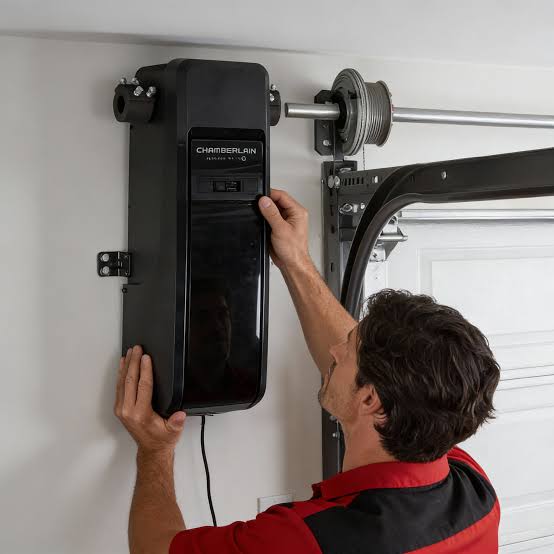
A wall mount garage door opener — also commonly called a jackshaft opener or side-mount opener — is a motorized unit installed on the wall next to your garage door’s torsion spring shaft. Unlike traditional overhead openers that hang from the ceiling with a rail and trolley system, wall mount models rotate the torsion bar directly to lift and lower the door.
This fundamental design difference delivers several immediate advantages:
- Zero ceiling obstruction, ideal for garages with high ceilings, car lifts, or storage racks
- Significantly quieter operation, since there’s no metal chain or belt rattling along a track
- Enhanced security, because many models include automatic deadbolt locking mechanisms
- Cleaner aesthetics, giving your garage a streamlined, modern look
According to industry data from the Door & Access Systems Manufacturers Association (DASMA), jackshaft-style openers have grown in market share by over 35% since 2019, reflecting a clear consumer shift toward space-efficient solutions.
Why Choose a Wall Mount Over a Traditional Overhead Opener?
Before diving into specific product recommendations, it helps to understand why this category has exploded in popularity. Here’s a quick comparison:
| Feature | Traditional Overhead Opener | Wall Mount (Jackshaft) Opener |
|---|---|---|
| Installation Location | Ceiling-mounted | Wall-mounted beside door |
| Noise Level | Moderate to loud | Extremely quiet |
| Ceiling Space Used | Significant | None |
| Security Features | Standard | Often includes auto-lock |
| Compatibility | Most doors | Requires torsion spring system |
| Price Range | $150–$400 | $300–$700 |
| Maintenance | Moderate | Low |
As you can see, the wall mount option wins in nearly every category except upfront cost. However, most homeowners find the long-term value — quieter operation, freed-up space, and reduced maintenance — more than justifies the investment.
Top Picks: What Is The Best Wall Mount Garage Door Opener in 2026?
After evaluating dozens of models based on reliability, noise output, smart-home integration, warranty coverage, and real-world customer feedback, here are our top recommendations.
1. LiftMaster 8500W Elite Series — Best Overall
The LiftMaster 8500W remains the gold standard in the wall mount category. It features a powerful ¾ HP-equivalent DC motor, built-in Wi-Fi via myQ technology, and an automatic garage door lock that engages every time the door closes.
Key Highlights:
- Ultra-quiet P3 motor technology
- Battery backup included (keeps working during power outages)
- Compatible with Amazon Key for in-garage delivery
- 5-year motor warranty, 1-year parts warranty
- Works with doors up to 14 feet tall and 650 lbs
Homeowners consistently rate the 8500W above 4.7 out of 5 stars across major retail platforms, praising its near-silent operation and rock-solid reliability.
2. Chamberlain RJO70 — Best Value
If you want premium jackshaft performance without the premium price tag, the Chamberlain RJO70 is a standout. It shares much of LiftMaster’s core technology (both brands are manufactured by the Chamberlain Group) but comes at a slightly lower price point.
Key Highlights:
- Built-in Wi-Fi and myQ smartphone control
- Automatic deadbolt lock
- Compact design fits tight spaces
- Battery backup capable
- Ideal for doors up to 14 feet and 650 lbs
3. Genie StealthDrive Connect 7155-TKV — Best Budget Alternative
While technically a belt-drive overhead model, the Genie StealthDrive 7155 deserves mention for buyers who want near-jackshaft quietness at a fraction of the cost. If your garage layout doesn’t support a true wall mount, this is the next best thing.
4. LiftMaster 8500 — Best for Commercial/Heavy-Duty Use
For larger or heavier doors — think double-wide carriage house doors or commercial bay doors — the original LiftMaster 8500 offers robust torque and industrial-grade durability. It lacks the integrated Wi-Fi of the 8500W but makes up for it in raw lifting power.
How to Know If a Wall Mount Opener Will Work With Your Garage Door
Not every garage door is compatible with a jackshaft opener. Before purchasing, verify the following:
- Your door must use a torsion spring system. Extension spring setups are generally incompatible. Look for a metal shaft running horizontally above your door — that’s the torsion bar.
- Adequate wall clearance. You’ll need approximately 7–8 inches of flat wall space on either side of the door, plus about 3 inches of clearance between the door and the ceiling.
- Door weight and height limits. Most residential wall mount openers handle doors up to 650 pounds and 14 feet tall. Check manufacturer specs carefully.
- Electrical access. A standard 120V outlet should be within 3–4 feet of the installation location.
If you’re unsure about compatibility, consult a certified garage door technician. Improper installation can void warranties and create safety hazards. For a deeper understanding of how torsion spring systems work, you can refer to the Garage door entry on Wikipedia.
Step-by-Step Installation Overview
While professional installation is strongly recommended (and often required to maintain warranty coverage), here’s a general overview of what the process involves:
- Disconnect the existing opener (if applicable) and manually test the door balance. An unbalanced door will strain any new opener.
- Mount the bracket plate to the wall adjacent to the torsion shaft, ensuring it is perfectly level using a 4-foot spirit level.
- Attach the opener unit to the bracket and align the drive coupler with the torsion bar.
- Secure the coupler to the torsion shaft using the provided set screws — torque to manufacturer specifications (typically 15–20 ft-lbs).
- Connect wiring to a nearby 120V outlet and install the safety sensors 4–6 inches above the floor on both sides of the door.
- Program travel limits and force settings using the unit’s control panel or companion app.
- Test the auto-reverse safety feature by placing a 2×4 board flat on the ground under the door. The door should reverse immediately upon contact.
⚠️ Safety Warning: Torsion springs store enormous amounts of energy. Never attempt to adjust or replace them yourself. Always hire a trained professional for spring-related work.
Smart Features to Look For
Modern wall mount openers are far more than simple motors. When shopping, prioritize these smart capabilities:
- Wi-Fi connectivity for remote monitoring and control via smartphone
- Voice assistant integration (Alexa, Google Assistant, Apple HomeKit)
- Real-time alerts notifying you when the door opens or closes
- Scheduled automation to close the door automatically at bedtime
- Guest access codes for temporary entry without sharing your main credentials
- Battery backup to ensure operation during power outages — critical in storm-prone regions
The convenience factor is significant: a 2025 survey by the National Association of Home Builders found that 72% of new homebuyers consider smart garage door integration a “desirable” or “essential” feature.
Pros and Cons of Wall Mount Garage Door Openers
Pros:
- Virtually silent operation (under 55 decibels for most models)
- Frees up the entire ceiling for storage, lifts, or décor
- Enhanced security with automatic locking
- Lower long-term maintenance costs
- Sleek, minimalist appearance
Cons:
- Higher initial purchase price ($300–$700 vs. $150–$400)
- Requires a torsion spring door system
- Professional installation often necessary
- Limited compatibility with very old or custom doors
- Fewer budget-tier options compared to chain-drive openers
Frequently Asked Questions (FAQ)
Q1: Can I install a wall mount garage door opener myself?
Technically, yes — if you have advanced DIY skills and your door already uses a torsion spring system. However, most manufacturers require professional installation to honor the warranty. Given the safety risks associated with torsion springs and electrical wiring, hiring a certified technician is the smarter choice. Expect to pay $150–$300 for professional installation.
Q2: Are wall mount openers quieter than belt-drive openers?
Yes, significantly. Belt-drive openers typically operate around 60–65 decibels, while wall mount jackshaft models often register below 55 decibels — comparable to a quiet conversation. The absence of a moving trolley and rail eliminates the primary source of vibration noise found in overhead systems.
Q3: Will a wall mount opener work with my insulated garage door?
In most cases, yes. Insulated doors are heavier than single-layer doors, so confirm that your chosen opener’s weight capacity exceeds your door’s actual weight. The LiftMaster 8500W, for example, handles doors up to 650 lbs, which covers virtually all residential insulated doors.
Q4: Do wall mount openers come with battery backup?
Many premium models do, either built-in or as an add-on accessory. The LiftMaster 8500W and Chamberlain RJO70 both support battery backup systems that provide approximately 20–40 full open/close cycles during a power outage. This feature is especially valuable in areas prone to severe weather.
Q5: How long does a wall mount garage door opener last?
With proper maintenance, a quality jackshaft opener should last 10–15 years. The DC motors used in modern units experience less wear than AC motors, and the simplified mechanical design means fewer components that can fail. Annual lubrication of the torsion shaft bearings and periodic sensor alignment checks will maximize lifespan.
Q6: Can I use a wall mount opener on a one-piece tilt-up garage door?
Generally, no. Wall mount openers are designed specifically for sectional roll-up doors with torsion spring systems. One-piece tilt-up doors use a completely different lifting mechanism and are incompatible with jackshaft technology. If you have a tilt-up door, a traditional overhead opener is your best option.
Conclusion
So, what is the best wall mount garage door opener? For most homeowners, the LiftMaster 8500W Elite Series stands out as the top choice thanks to its whisper-quiet performance, robust smart-home features, automatic locking, and proven long-term reliability. If you’re working with a tighter budget, the Chamberlain RJO70 delivers remarkably similar functionality at a more accessible price point.
Ultimately, the right choice depends on your specific garage configuration, door type, and desired features. Take the time to verify compatibility, invest in professional installation, and enjoy the dramatic upgrade in convenience, security, and peace of mind that a quality wall mount opener provides.
Found this guide helpful? Share it with friends and family on Facebook, X (Twitter), or Pinterest who might be planning their own garage upgrade! A quick share could save someone hours of research — and maybe even a costly installation mistake. 🏡✨
Leave a Reply