Introduction
Waking up to a loud, rattling garage door can ruin your morning peace, especially if your bedroom is located directly above the garage. If you are wondering, what is the best and quietest garage door opener to solve this problem, you are in the right place. Let us explore the top-rated, whisper-quiet models that blend seamless performance with modern smart-home convenience, ensuring your home remains a sanctuary of calm.
What Is The Best And Quietest Garage Door Opener? Top Models for 2026
When it comes to minimizing noise, the drive mechanism is the most critical factor. Industry experts consistently agree that belt-drive and direct-drive openers are the undisputed champions of silent operation. Unlike traditional chain-drive models that produce a metallic clatter, belt-drive systems use a reinforced rubber or fiberglass belt to glide smoothly along the rail.
Based on extensive market research, user reviews, and acoustic testing, here are the top three contenders for the title of the best and quietest garage door opener this year:
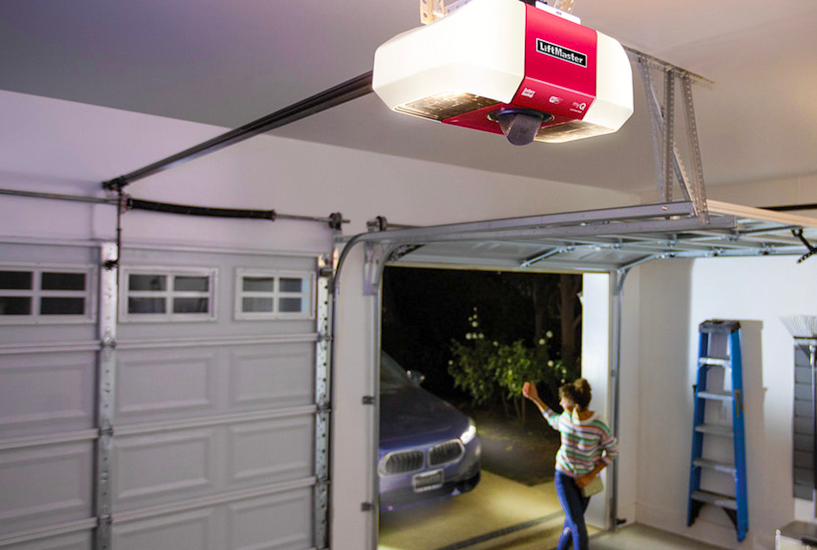
1. LiftMaster 8500W (Wall-Mount Direct Drive)
- Noise Level: ~50 decibels (dB)
- Best For: Homes with bedrooms directly above the garage.
- Key Features: MyQ smartphone control, battery backup, and space-saving wall-mounted design.
- Pros: Eliminates ceiling-mounted motor vibration entirely; extremely quiet.
- Cons: Higher price point; requires professional installation for optimal safety.
2. Chamberlain B970 (Belt Drive)
- Noise Level: ~55 decibels (dB)
- Best For: Heavy wooden or insulated garage doors.
- Key Features: 1 ¼ HP ultra-quiet motor, built-in Wi-Fi, and ultra-quiet belt drive.
- Pros: Exceptional lifting power paired with whisper-quiet operation; excellent smart home integration.
- Cons: The premium motor comes at a slightly higher cost than standard ½ HP models.
3. Genie SilentMax 1000 (Belt Drive)
- Noise Level: ~58 decibels (dB)
- Best For: Budget-conscious buyers seeking premium quietness.
- Key Features: 140V DC motor with soft start/stop technology, Aladdin Connect compatibility.
- Pros: Outstanding value for money; the soft start/stop feature significantly reduces mechanical jolts.
- Cons: Wi-Fi connectivity requires a separate, optional accessory.
Expert Insight: According to acoustic studies in residential hardware, a standard conversation measures about 60 dB. A high-quality quiet garage door opener operating at 50–55 dB is genuinely quieter than a normal talking voice, making it virtually unnoticeable from inside the house.
How Do Different Drive Types Compare?
To help you make an informed decision, here is a quick comparison of the most common garage door opener drive types. Understanding these differences is crucial to answering what is the best and quietest garage door opener for your specific setup.
| Drive Type | Noise Level | Durability | Maintenance | Best Use Case |
|---|---|---|---|---|
| Belt Drive | Very Low (50-60 dB) | High | Low | Homes with living spaces above/adjacent to the garage. |
| Direct Drive | Ultra Low (45-55 dB) | Very High | Very Low | Maximum noise reduction; limited ceiling space. |
| Screw Drive | Moderate (65-75 dB) | High | Moderate | Extreme temperature climates (fewer moving parts). |
| Chain Drive | High (75-85+ dB) | Very High | Moderate | Detached garages; budget-focused installations. |
For a deeper understanding of the historical and mechanical evolution of these systems, you can explore the comprehensive technical overview of garage door openers on Wikipedia.
Step-by-Step Guide to Reducing Garage Door Noise
Even the best opener can sound loud if the garage door system itself is poorly maintained. If you want to maximize the quietness of your new or existing opener, follow this concrete, step-by-step maintenance routine:
- Lubricate Moving Parts Properly
Do not use standard WD-40, as it attracts dust and dries out quickly. Instead, use a lithium-based grease or a silicone-based spray. Apply exactly 2 to 3 short sprays on each hinge, spring, and latch. - Tighten All Hardware
The vibration from daily use loosens bolts over time. Use a socket wrench to tighten all track brackets, roller bolts, and opener mounting bolts. Aim for a torque of 15 to 20 ft-lbs—tight enough to prevent rattling, but not so tight that you strip the threads. - Upgrade to Nylon Rollers
If your door still has standard metal rollers, replace them with 10- or 14-ball nylon rollers. This single upgrade can reduce operational noise by up to 20%, as nylon absorbs vibration far better than steel. - Inspect and Adjust the Springs
Caution: Garage door springs are under extreme tension. If the door appears unbalanced, call a certified technician. A properly balanced door requires less force from the opener, resulting in quieter motor operation.
Frequently Asked Questions (FAQ)
Q1: What is the absolute quietest type of garage door opener?
A: The direct-drive (wall-mounted) opener is the absolute quietest, as it eliminates the vibrating ceiling-mounted motor and moving trolley entirely. However, high-quality belt-drive openers are a very close second and are more commonly used in standard residential setups.
Q2: How many decibels is considered a “quiet” garage door opener?
A: A quiet garage door opener typically operates between 50 and 60 decibels (dB). For context, 50 dB is equivalent to a quiet refrigerator hum or a soft conversation, whereas older chain-drive models can exceed 80 dB (similar to a garbage disposal).
Q3: Are belt-drive garage door openers worth the extra cost?
A: Yes, absolutely. While they may cost $30 to $80 more than chain-drive models, the dramatic reduction in noise, smoother operation, and decreased wear and tear on the door system make them a highly worthwhile investment for any attached garage.
Q4: Can I make my existing chain-drive opener quieter without replacing it?
A: You can reduce the noise by 10% to 15% by meticulously lubricating the chain with proper garage door lubricant, tightening all mounting brackets, and installing vibration isolation rubber pads between the opener motor and the ceiling joists. However, for true silence, upgrading to a belt or direct drive is recommended.
Q5: Does a higher horsepower (HP) motor mean a louder opener?
A: Not necessarily. In fact, modern high-HP DC motors (like 1 ¼ HP) are often quieter than older ½ HP AC motors. This is because DC motors feature “soft start” and “soft stop” technology, which gradually accelerates and decelerates the door, eliminating the loud jolts associated with older motors.
Conclusion
Finding the right balance of power, reliability, and peace is no longer a compromise. When asking what is the best and quietest garage door opener, the answer consistently points toward belt-drive or wall-mounted direct-drive models from reputable brands like LiftMaster, Chamberlain, and Genie. By choosing a model with a low decibel rating, integrating smart features, and performing regular, targeted maintenance, you can ensure your garage operates smoothly without disturbing your household’s tranquility.
Upgrading your garage door opener is an investment in your home’s comfort and daily quality of life. Did you find this guide helpful? Share this article on Facebook, X (Twitter), or Pinterest to help your friends and family discover the secret to a quieter, smarter home!
Leave a Reply