There is nothing quite as frustrating as rushing out the door in the morning, hitting the remote, and watching your garage door lift just a few inches before stopping dead in its tracks. It disrupts your routine, leaves your vehicle exposed, and raises immediate safety concerns. If you are thinking, “My garage door will only open a few inches,” you are not alone, and more importantly, this is often a fixable issue that does not always require an expensive professional service call.
In this guide, we will walk you through the most common causes for this specific malfunction, provide safe DIY troubleshooting steps, and help you determine when it is time to call a certified technician. Let’s get your door moving smoothly again.
Why Does My Garage Door Stop After Opening Slightly?
When a garage door opens only a few inches and then reverses or stops, it is usually triggering a safety mechanism or encountering a physical obstruction. Modern garage door openers are designed with sensitive sensors to prevent injury and property damage. Understanding why this happens is the first step to fixing it.
The most frequent culprits include misaligned safety eyes, obstructed tracks, or incorrect limit settings. According to industry standards, garage doors must reverse if they encounter resistance during closing, but similar sensitivity applies to opening if the motor detects an abnormal load or if the travel limits are set incorrectly.
The Role of Safety Sensors
Your garage door is equipped with photo-eye sensors near the floor on both sides of the door. These create an invisible beam. If this beam is interrupted—even by a speck of dust or a slight misalignment—the door will refuse to close fully or may stop shortly after opening as a precautionary measure. While these primarily affect closing, severe misalignment can cause system errors that restrict all movement.
Check for Physical Obstructions in the Tracks
Before touching any screws or electronic components, always start with a visual inspection. Debris in the tracks is one of the most common reasons a door will only open a few inches.
Step-by-Step Inspection:
- Disconnect the Opener: Pull the red emergency release cord to disengage the door from the automatic opener. This allows you to move the door manually.
- Lift the Door Manually: Try to lift the door by hand. If it feels heavy or gets stuck at the same spot, the issue is mechanical, not electronic.
- Inspect the Tracks: Look for rocks, sticks, hardened grease, or bent metal sections in the vertical and horizontal tracks.
- Check the Rollers: Ensure the rollers are intact and sitting properly within the track. A broken roller can jam the door immediately after it starts moving.
If you find debris, clean it out with a stiff brush and a rag. For sticky residue, use a mild degreaser. Never use WD-40 on the tracks themselves, as it attracts more dirt over time; instead, use a silicone-based lubricant specifically designed for garage doors.
Adjusting the Travel Limit Settings
If the tracks are clear and the door moves smoothly by hand, the issue likely lies with the travel limit settings on your garage door opener unit. These settings tell the motor how far to go up (open limit) and how far to go down (close limit). If the “up” limit is set too low, the door will stop after opening just a few inches.
Most modern openers have two adjustment screws or dials labeled “Up” and “Down” or “Open” and “Close.”
How to Adjust the Up Limit:
- Locate the adjustment panel on the side or back of your motor unit.
- Identify the “Up” or “Open” limit screw. It is often colored differently (e.g., green or blue) than the down limit.
- Turn the screw slightly in the direction indicated by the arrow for “more travel.” Usually, a quarter-turn makes a significant difference.
- Reconnect the door to the opener and test it.
- Repeat in small increments until the door opens fully.
Warning: Do not adjust these settings drastically in one go. Over-adjusting can cause the door to slam into the header or strain the springs.
Inspect the Torsion Springs and Cables
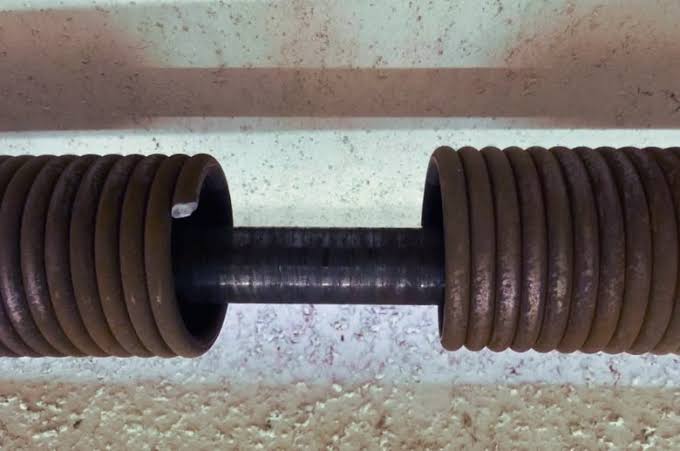
If your garage door feels extremely heavy when you try to lift it manually, the problem might be a broken or worn-out spring. Garage doors weigh hundreds of pounds, and the springs do the heavy lifting. If a spring breaks, the opener motor cannot lift the door more than a few inches before it overheats or triggers a safety stop.
Signs of Spring Issues:
- A loud “bang” noise preceded the problem.
- Visible gap in the torsion spring above the door.
- Cables hanging loose or detached from the bottom brackets.
Safety Alert: Never attempt to repair or replace garage door springs yourself. Torsion springs are under extreme tension and can cause severe injury or death if handled improperly. If you suspect a spring issue, contact a professional immediately.
For more detailed information on garage door mechanics and safety standards, you can refer to general safety guidelines provided by Wikipedia’s entry on Garage Doors, which outlines the basic components and operational principles.
Lubrication and Maintenance Best Practices
Sometimes, the issue is friction. If the hinges, rollers, and bearings are dry, the motor has to work harder to lift the door. If the resistance exceeds the motor’s force setting, it will stop to prevent burnout.
Recommended Maintenance Routine:
| Component | Recommended Lubricant | Frequency |
|---|---|---|
| Rollers | Silicone Spray or Lithium Grease | Every 6 Months |
| Hinges | Silicone Spray | Every 6 Months |
| Springs | Light Machine Oil | Every 6 Months |
| Tracks | Do Not Lubricate | Clean Only |
| Lock Assembly | Graphite Powder | Annually |
Using the right lubricant reduces wear and tear and ensures smooth operation. Avoid heavy greases that can gum up in cold weather.
When to Call a Professional
While many issues causing your garage door to only open a few inches can be resolved with DIY methods, some situations require expert intervention.
Call a Pro If:
- You suspect a broken spring or cable.
- The door makes grinding or screeching noises despite lubrication.
- The opener motor hums but does not move the door at all.
- You have adjusted the limits and checked sensors, but the problem persists.
- The door panels are damaged or bent.
Professional technicians have the tools and training to handle high-tension components and complex electronic diagnostics safely.
FAQ Section
Q: Why does my garage door open a few inches and then go back down?
A: This is typically caused by misaligned safety sensors. If the sensors do not see each other clearly, the system assumes an obstacle is present and reverses the door. Check that the LED lights on both sensors are solid (not blinking) and that nothing is blocking the beam.
Q: Can a cold garage cause my door to stick?
A: Yes. In colder climates, metal tracks can contract, and lubricants can thicken, increasing friction. Additionally, ice can form on the bottom seal, sticking it to the concrete floor. Ensure your tracks are clean and use a cold-weather appropriate lubricant.
Q: How do I reset my garage door opener?
A: Most openers can be reset by unplugging the unit for 30 seconds and plugging it back in. For specific models, consult your manual. Some smart openers may require a reset via their mobile app or a dedicated reset button on the motor unit.
Q: Is it dangerous if my garage door only opens partially?
A: It can be. A partially open door may not engage the locking mechanisms properly, leaving your home vulnerable. Additionally, if the door is unstable due to a broken spring, it could fall unexpectedly. Address the issue promptly.
Q: What is the average lifespan of a garage door opener?
A: Most garage door openers last between 10 to 15 years with regular maintenance. If your unit is older and experiencing frequent issues, it may be more cost-effective to replace it rather than repair it.
Conclusion
Dealing with a garage door that says, “My garage door will only open a few inches,” is stressful, but it is rarely a catastrophic failure. By systematically checking for obstructions, aligning sensors, adjusting limit settings, and maintaining proper lubrication, you can often resolve the issue yourself.
Remember, safety is paramount. If you encounter high-tension components like springs or cables, step back and call a professional. Regular maintenance not only prevents these inconvenient stops but also extends the life of your entire garage door system.
Found this guide helpful? Share it with your neighbors or on social media to help others troubleshoot their garage door woes! A well-functioning garage door is key to home security and convenience—don’t let a few inches stand in your way.
Leave a Reply