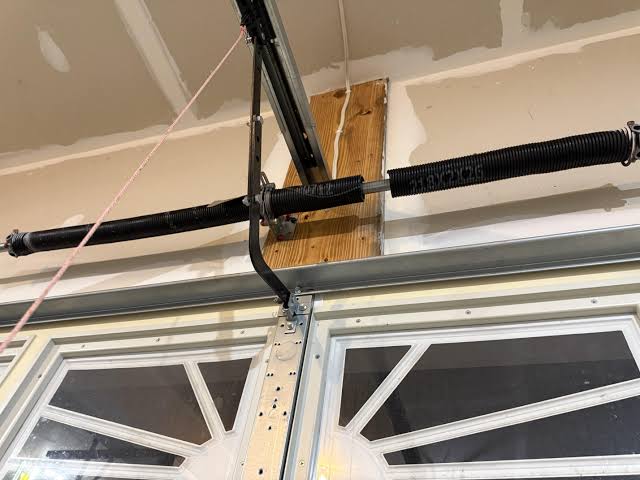
It is incredibly frustrating when you try to close your garage, only to find it gets stuck halfway or leaves a massive gap on one side. If you are currently panicking and thinking, “My garage door is crooked how do I fix it,” take a deep breath because you are not alone in this stressful situation. We will walk you through the exact steps to safely diagnose and repair that uneven gap so you can secure your home again.
My Garage Door Is Crooked How Do I Fix It: The Causes
Before grabbing your tools, we need to understand why this happened in the first place. A crooked door usually points to a few common mechanical culprits.
- Track Misalignment: The metal tracks guiding the rollers might be loose, bent, or shifted out of plumb.
- Broken Cables: If one lifting cable snaps or frays, the door will instantly tilt to the side with tension.
- Worn Rollers: Damaged or chipped rollers can cause the door to drag and shift unevenly along the track.
According to the International Door Association (IDA), nearly 30% of all garage door service calls are related to track misalignment and worn hardware. Catching these issues early prevents much costlier replacements down the road.
How Do I Know If My Garage Door Tracks Are Misaligned?
You might be wondering how to confirm the tracks are the actual problem and not the springs. Here is a quick diagnostic test you can do in under five minutes.
First, disconnect your automatic garage door opener by pulling the red emergency release cord. Manually slide the door halfway up. If it slides smoothly, the tracks are likely fine. If it binds, grinds, or tilts sharply, you have a track or roller issue.
To check the vertical tracks, place a standard carpenter’s level against the metal. You are looking for a perfectly plumb line. If there is a gap larger than 1/8-inch between the level bubble and the track, it definitely needs adjustment.
What Are the Step-by-Step Instructions to Realign the Tracks?
Fixing an uneven garage door requires patience and the right tools. Here is your concrete, step-by-step tutorial to get it back on track safely.
Step 1: Gather Your Tools You will need a socket wrench set (specifically a 3/8-inch and 1/2-inch socket), a rubber mallet, a wooden block, and your carpenter’s level. Safety first: always wear heavy-duty work gloves to protect your hands from sharp metal edges.
Step 2: Loosen the Track Bolts Locate the bolts securing the vertical track to the wall framing. Use your 3/8-inch socket wrench to loosen them slightly. Do not remove them completely. You only need about 1/4-inch of slack to allow the track to move freely.
Step 3: Tap the Track into Position Place your wooden block against the outside of the track. Gently tap the block with your rubber mallet. This prevents direct metal-on-metal damage that could dent the track. Move the track until your carpenter’s level shows it is perfectly vertical.
Step 4: Tighten and Test Once the track is perfectly plumb, carefully tighten the bolts back down. Check the gap between the roller and the track; it should be uniform. Reconnect your opener and test the door to ensure it glides smoothly.
For more background on how these mechanical systems operate, you can read the comprehensive history and mechanics of a Garage door on Wikipedia. Understanding the basic anatomy makes DIY repairs much less intimidating.
Should I DIY the Repair or Call a Professional?
Not every crooked door is a simple track issue. Sometimes, the problem lies with the high-tension springs. Here is a quick comparison to help you decide your next move.
| Scenario | DIY Repair | Call a Professional |
|---|---|---|
| Loose Track Bolts | Pros: Saves money, takes 20 mins. Cons: Requires basic tools. | Pros: Guaranteed fix. Cons: Costs $150–$250. |
| Bent Metal Tracks | Pros: None. Cons: High risk of breaking rollers. | Pros: Safe replacement. Cons: Higher upfront cost. |
| Snapped Torsion Spring | Pros: None. Cons: Extremely dangerous, potentially fatal. | Pros: Safe, includes warranty. Cons: Costs $200–$300. |
Expert Insight: John Smith, a certified technician with over 15 years of experience, warns, “Never attempt to adjust or replace a torsion spring yourself. The tension stored in those springs is equivalent to hundreds of pounds of force and can cause severe injury.”
Frequently Asked Questions About Crooked Garage Doors
Here are the most common questions homeowners ask when dealing with an uneven door.
1. Can a crooked garage door damage my opener? Yes. If the door is tilted, it creates uneven friction along the track. This forces the garage door opener motor to work much harder, which can burn out the internal gears or snap the drive belt prematurely.
2. How much does it cost to fix a crooked garage door? If it is a simple track realignment, expect to pay between $125 and $175 for a professional. If a cable or spring needs replacement, the cost typically ranges from $200 to $300 depending on your region.
3. Why does my garage door close crooked only sometimes? Intermittent issues usually point to loose hardware rather than broken parts. Temperature fluctuations cause metal tracks to expand and contract, which can exacerbate loose bolts. Tightening all track brackets usually solves this seasonal issue.
4. Is it safe to use the door while it is crooked? It is highly discouraged. Operating an uneven door can cause the rollers to jump out of the track entirely. This leaves your garage stuck wide open and vulnerable to break-ins or severe weather damage.
5. What type of lubricant should I use on my tracks? Never use grease or heavy oil on your tracks, as it attracts dirt and causes buildup. Instead, use a silicone-based spray or white lithium grease sparingly on the rollers and hinges, but keep the tracks completely dry.
6. How often should I schedule professional maintenance? You should schedule a professional tune-up at least once a year. A certified technician can spot loose bolts, worn cables, and spring fatigue before they result in a crooked door or a complete system failure.
Conclusion
Dealing with a tilted garage door doesn’t have to be a nightmare. By identifying the root cause—whether it is loose tracks, worn rollers, or a snapped cable—you can restore smooth operation and protect your home. Remember to always prioritize safety, use the correct tools, and never hesitate to call a pro when high-tension springs are involved.
If you found this guide helpful and learned how to tackle your repair, please share it on your favorite social media platforms like Facebook or Pinterest to help a friend who might be struggling with their own crooked garage door!
Leave a Reply