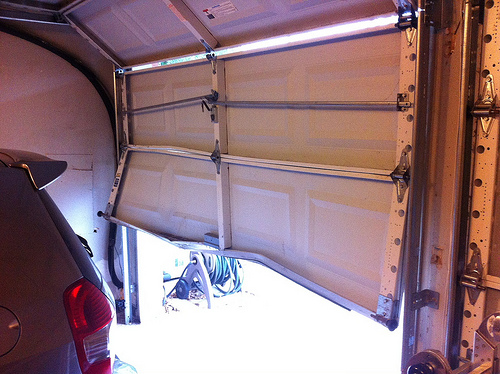
Is there anything more frustrating than watching your garage door start to close, only to reverse direction and go back up at the last second? You press the button again, hoping for a different result, but the cycle repeats. If you find yourself thinking, “my garage door goes down and comes back up,” you are not alone. This is one of the most common issues homeowners face, and while it can be alarming, it is usually a simple safety feature doing its job rather than a catastrophic mechanical failure.
In this guide, we will walk you through the most likely causes, from misaligned sensors to track obstructions, and provide clear, step-by-step solutions to get your door working smoothly again.
Why Does My Garage Door Reverse Immediately?
Before diving into tools and repairs, it is crucial to understand why this happens. Modern garage door openers are equipped with mandatory safety mechanisms designed to prevent injury or damage. According to federal safety standards established in 1993, all residential garage door openers must have an auto-reverse feature.
When the door encounters resistance or perceives an obstacle, it automatically reverses. While this saves fingers and cars, it can become a nuisance if triggered falsely. The issue typically stems from three main areas:
- Safety Sensors (Photo Eyes)
- Travel Limit Settings
- Physical Obstructions or Track Issues
Understanding which of these is the culprit is half the battle. Let’s break them down.
Check the Safety Sensors First
The most common reason for a garage door reversing immediately after touching the ground—or even before it touches—is a problem with the safety sensors. These are the small units located near the bottom of your garage door tracks, facing each other.
How Sensors Work
These sensors emit an invisible infrared beam across the doorway. If the beam is broken, the opener assumes something (or someone) is in the way and stops the door from closing.
Common Sensor Issues
- Misalignment: Even a slight shift in the bracket can break the beam.
- Dirty Lenses: Dust, spiderwebs, or mud can block the signal.
- Sunlight Interference: Direct sunlight hitting the sensor receiver can sometimes overwhelm the infrared signal.
Step-by-Step Sensor Fix
- Inspect the Lights: Look at the LED lights on both sensors. Typically, one has a green light (power) and the other has an amber or red light (signal). If the receiving sensor’s light is blinking or off, the beam is blocked.
- Clean the Lenses: Use a soft, dry cloth to wipe both sensor lenses gently.
- Check Alignment: Ensure both sensors are pointing directly at each other. They should be at the same height. You can loosen the wing nut, adjust the angle until the solid light returns, and then tighten it back.
- Remove Obstructions: Clear any boxes, bikes, or debris between the sensors.
If the lights are solid and aligned, but the door still reverses, move on to the next step.
Adjust the Travel Limits and Force Settings
If your sensors are working perfectly, the issue might lie in the opener’s internal settings. Garage door openers have two critical adjustments: Travel Limits and Force Settings.
What Are Travel Limits?
Travel limits tell the motor how far to move the door up and down. If the “down” limit is set too low, the door may try to push into the ground, encounter resistance, and reverse.
What Are Force Settings?
Force settings determine how much power the motor uses to move the door. If the force is set too low, the motor may struggle against normal friction (like cold weather stiffening the rollers) and interpret it as an obstruction.
How to Adjust Them
Note: Consult your specific opener’s manual, as locations vary by brand (LiftMaster, Chamberlain, Genie, etc.).
- Locate the Adjustment Screls: On most modern openers, these are dials or screws on the motor unit labeled “Up/Down” or “Force.”
- Adjust the Down Limit: Turn the “Down” adjustment slightly in the direction that reduces travel distance. Test the door. It should close fully without pressing hard into the floor.
- Increase Force Slightly: If the door reverses before hitting the floor, increase the down force incrementally. Warning: Do not set this too high, as it compromises safety. The door should still reverse if it hits a solid object like a 2×4 piece of wood placed on the floor.
For more detailed technical specifications on safety standards, you can refer to the U.S. Consumer Product Safety Commission guidelines regarding garage door openers.
Inspect the Tracks and Rollers
Sometimes, the problem is purely mechanical. If the door is physically sticking, the motor detects the extra load and reverses to prevent burnout.
Signs of Mechanical Issues
- Grinding Noises: Indicates worn gears or lack of lubrication.
- Jerky Movement: Suggests bent tracks or damaged rollers.
- Visible Gaps: Rollers coming out of the track.
Maintenance Checklist
| Component | Action Required | Frequency |
|---|---|---|
| Tracks | Clean with damp cloth; check for bends | Monthly |
| Rollers | Inspect for cracks; replace if nylon is chipped | Every 6 Months |
| Hinges | Lubricate with silicone-based spray | Every 3 Months |
| Springs | Do not touch. Call a professional if damaged | Annual Inspection |
Pro Tip: Never use WD-40 on garage door parts. It attracts dust and gums up over time. Instead, use a silicone-based lubricant or white lithium grease for smooth operation.
When to Call a Professional
While many issues can be DIY-fixed, some scenarios require expert attention. Garage doors are under extreme tension, especially the springs.
Call a pro if:
- The torsion spring (the large spring above the door) is broken or loose.
- The cables are frayed or snapped.
- The door feels excessively heavy when lifted manually.
- You have adjusted limits and sensors, but the problem persists.
Attempting to repair springs yourself can result in serious injury. Always prioritize safety over cost savings.
FAQ Section
Q1: Why does my garage door go down halfway and then come back up?
A: This is often a sign that the force setting is too low, or the travel limit is incorrectly set. It could also indicate that the rollers are sticking in the track at that specific point. Check for obstructions in the track and adjust the force settings slightly higher.
Q2: Can cold weather cause my garage door to reverse?
A: Yes. In cold temperatures, metal tracks contract, and lubricants thicken, increasing friction. The motor may interpret this increased resistance as an obstruction. Lubricating the moving parts with a cold-weather appropriate silicone spray can help.
Q3: My garage door closes fine but reverses when I try to open it. What’s wrong?
A: This is less common but usually points to an issue with the “Up” travel limit or the up-force setting. It could also mean the springs are losing tension and cannot support the door’s weight, causing the motor to struggle.
Q4: How do I know if my safety sensors are bad?
A: If the LED light on the receiving sensor is off or blinking despite being clean and aligned, the sensor itself may be faulty. You can test this by swapping the wires at the motor head (if comfortable) or replacing the sensor pair.
Q5: Is it dangerous to bypass the safety sensors?
A: Yes, extremely. Bypassing sensors removes the primary safety feature preventing the door from crushing objects, pets, or people. It is illegal in many jurisdictions and voids insurance policies. Always fix the sensors rather than bypassing them.
Conclusion
Dealing with a garage door that says “my garage door goes down and comes back up” is a common headache, but it is rarely a disaster. In most cases, a quick clean of the safety sensors or a minor adjustment to the travel limits will resolve the issue instantly. By performing regular maintenance—such as lubricating rollers and checking track alignment—you can prevent these interruptions and extend the life of your opener.
Remember, safety always comes first. If you are unsure about handling springs or electrical components, do not hesitate to call a certified technician.
Found this guide helpful? Share it with your neighbors or on social media to help others troubleshoot their garage door woes! A well-functioning garage door is a safe garage door.
Leave a Reply