Have you ever returned home after a storm only to find your garage door stuck shut? It’s a frustrating situation that thousands of Americans face every year when severe weather knocks out the power. Knowing how to re-engage garage door after power outage is an essential skill that can save you time, money, and unnecessary stress during these inconvenient moments.
Power outages are more common than many people realize. According to the U.S. Energy Information Administration, the average American household experiences approximately 1.3 power outages per year, with some regions facing significantly more frequent disruptions. When electricity fails, your automatic garage door opener becomes useless unless you know how to manually operate and reconnect it properly.
This comprehensive guide will walk you through everything you need to know about restoring your garage door functionality after a power failure. Whether you have a chain-drive, belt-drive, or screw-drive opener, these steps will help you get back to normal quickly and safely.
Understanding Your Garage Door Opener System
Before diving into the re-engagement process, it’s crucial to understand how your garage door system works. Most residential garage door openers consist of several key components that work together to lift and lower your door smoothly.
The motor unit houses the driving mechanism and connects to your door via a trolley assembly. This trolley moves along a rail and attaches to your door through an arm bracket. When power is available, the motor drives the trolley, which pulls or pushes your door open and closed.
During a power outage, this electrical connection is severed, leaving your door in whatever position it was in when the power failed. If your door was partially open, it may remain suspended mid-air, creating both an inconvenience and a potential safety hazard.
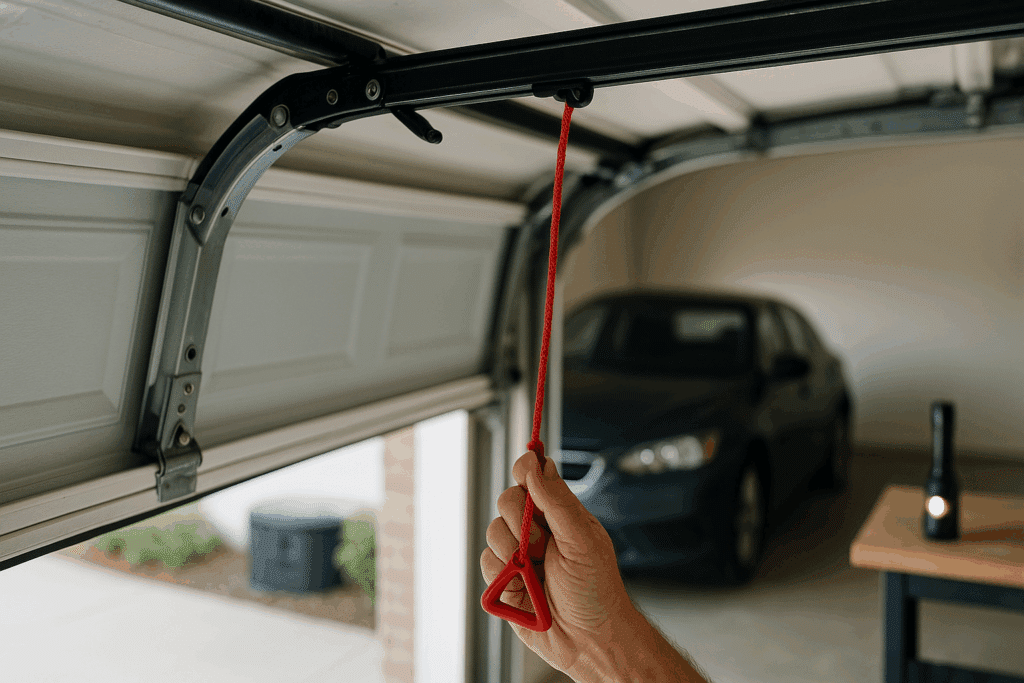
Modern garage door openers include a critical safety feature called the emergency release mechanism. This red cord with a handle hangs from the trolley assembly and allows you to disconnect the door from the opener manually. Understanding this feature is fundamental to learning how to re-engage garage door after power outage effectively.
Safety First: Essential Precautions Before You Begin
Safety should always be your top priority when working with garage doors. These heavy mechanical systems can cause serious injury if handled improperly, especially when operating without electrical assistance.
Never attempt to force your garage door if it feels stuck or unusually heavy. This could indicate a broken spring or other mechanical issue that requires professional attention. Garage door springs are under extreme tension and can cause severe injuries if they snap unexpectedly.
Before starting any work, ensure the area around your garage door is clear of obstacles, children, and pets. Wear sturdy shoes and consider using work gloves to protect your hands from sharp edges or pinch points.
If your garage door has windows, check them for cracks or damage before attempting to move the door manually. Broken glass can create additional hazards during the re-engagement process.
For more detailed information about garage door safety standards, you can refer to the Consumer Product Safety Commission guidelines which provide comprehensive safety recommendations for residential garage door systems.
Step-by-Step Guide: How to Re-Engage Garage Door After Power Outage
Follow these detailed steps to safely restore your garage door functionality after a power interruption. Each step builds upon the previous one, ensuring a smooth and safe re-engagement process.
Step 1: Locate the Emergency Release Cord
The emergency release cord is typically a red rope with a plastic handle hanging from the center of your garage door opener rail. It’s usually positioned about 6 feet above the ground and within easy reach when standing in your garage.
If you cannot locate the cord immediately, look for a red handle or knob attached to a rope near the motor unit. Some newer models may have a slightly different design, but the emergency release mechanism remains a standard feature across most brands.
Step 2: Disconnect the Door from the Opener
Pull the emergency release cord firmly downward until you hear a clicking sound. This action disengages the trolley from the door, allowing you to operate the door manually. You should feel the resistance change as the connection releases.
Important: Only pull the cord straight down. Pulling at an angle can damage the mechanism or cause it to jam.
Step 3: Manually Lift the Garage Door
With the door disconnected from the opener, grasp the bottom edge of the door with both hands. Lift slowly and steadily, keeping your back straight and using your leg muscles rather than your back.
If your door has proper spring tension, it should lift relatively easily. A well-balanced garage door should stay in place when lifted halfway, neither falling down nor rising up on its own.
Warning: If the door feels extremely heavy or won’t stay in position, stop immediately and call a professional. This indicates a spring problem that requires expert repair.
Step 4: Close the Door Completely
Once you’ve tested the manual operation, close the door completely by lowering it gently until it sits flush with the ground. Ensure the door is fully closed before proceeding to the next step.
Check that all sections of the door are aligned properly and that the weather stripping makes good contact with the ground. This ensures proper sealing and security once power is restored.
Step 5: Wait for Power Restoration
Keep the door in the closed position while waiting for electricity to return. Avoid opening and closing the door repeatedly during this time, as this can strain the manual operation mechanism.
If you have a battery backup system installed, you may be able to operate the door normally even during the outage. Check your owner’s manual to see if your model includes this feature.
Step 6: Reconnect the Door to the Opener
Once power is restored, locate the emergency release cord again. This time, you’ll need to pull it toward the motor unit (away from the door) to re-engage the trolley with the opener mechanism.
You should hear a distinct clicking sound as the trolley reconnects. The handle should move smoothly and lock into place automatically.
Step 7: Test the Automatic Operation
Press the wall button or remote control to test whether the door operates correctly. The door should open and close smoothly without unusual noises or hesitation.
If the door doesn’t respond immediately, try pressing the button again. Some openers require a brief moment to reset after power restoration.
Troubleshooting Common Re-Engagement Problems
Even when following the correct procedure, you might encounter issues during the re-engagement process. Here are solutions to the most common problems homeowners face.
| Problem | Possible Cause | Solution |
|---|---|---|
| Door won’t reconnect | Trolley misaligned | Manually move trolley to proper position |
| Opener doesn’t respond | Safety sensors blocked | Clean sensor lenses and check alignment |
| Door reverses immediately | Force settings incorrect | Adjust force settings per manufacturer specs |
| Unusual grinding noise | Lack of lubrication | Apply garage door lubricant to moving parts |
Door Won’t Reconnect Properly
If the trolley won’t re-engage with the opener, check that it’s positioned correctly on the rail. Sometimes the trolley can become misaligned during manual operation. Gently move the trolley along the rail until it aligns with the re-engagement point, then pull the release cord toward the motor.
Opener Doesn’t Respond After Power Returns
Modern garage door openers often have built-in delay features that prevent immediate operation after power restoration. Wait 30-60 seconds after power returns before testing the system. If the opener still doesn’t respond, check your circuit breaker to ensure the garage outlet has power.
Safety Sensor Issues
Most garage door openers include safety sensors near the floor that prevent the door from closing if something blocks the beam. During power outages, these sensors can become misaligned or dirty. Clean the sensor lenses with a soft cloth and ensure they’re pointing directly at each other. The indicator lights should be solid (not blinking) when properly aligned.
Preventive Measures for Future Power Outages
While you can’t prevent power outages, you can prepare for them to minimize inconvenience and potential damage to your garage door system.
Install a Battery Backup System: Many modern garage door openers offer battery backup options that allow limited operation during power failures. These systems typically provide 20-50 cycles of operation depending on usage patterns.
Regular Maintenance Schedule: Lubricate moving parts quarterly and inspect springs, cables, and rollers annually. Well-maintained doors operate more smoothly and are less likely to develop problems during stressful situations like power outages.
Keep Emergency Tools Accessible: Store a flashlight, work gloves, and your owner’s manual in an easily accessible location in your garage. Having these items readily available makes handling power outage situations much easier.
Consider a Generator: For areas prone to extended power outages, a portable generator can keep essential systems running, including your garage door opener. Ensure proper ventilation and follow all safety guidelines when using generators.
FAQ Section
How long does it take to re-engage a garage door after power outage?
The re-engagement process typically takes 5-10 minutes if you follow the proper steps. This includes locating the emergency release cord, manually operating the door, and reconnecting it to the opener once power returns. However, if you encounter complications like misaligned sensors or mechanical issues, it may take longer.
Can I damage my garage door by operating it manually during a power outage?
Manual operation itself won’t damage a properly maintained garage door. However, forcing a door that feels unusually heavy or stuck can cause damage to springs, cables, or rollers. Always lift gently and stop if you encounter significant resistance. Regular maintenance helps ensure smooth manual operation.
What should I do if my garage door won’t stay closed after re-engagement?
If your door won’t stay closed, first check that the trolley has properly re-engaged with the opener. Listen for the clicking sound when pulling the release cord toward the motor. If it’s properly connected but still won’t stay closed, the limit settings may need adjustment. Consult your owner’s manual or contact a professional technician.
Is it safe to leave my garage door partially open during a power outage?
It’s not recommended to leave your garage door partially open during extended power outages. Partially open doors are vulnerable to wind damage and can pose security risks. If possible, close the door completely using manual operation. If the door won’t close due to mechanical issues, secure the area and contact a professional immediately.
How often should I test my garage door’s emergency release feature?
Test your emergency release feature every 3-6 months to ensure it operates smoothly. This regular testing helps you become familiar with the process and identifies any potential problems before they become emergencies. Make sure to reconnect the door properly after each test.
Will my garage door opener remember its settings after a power outage?
Most modern garage door openers retain their programming and settings after brief power outages. However, extended outages or power surges might reset some units to factory defaults. If your opener loses its memory, you’ll need to reprogram remotes and adjust limit settings according to your owner’s manual.
Conclusion
Learning how to re-engage garage door after power outage is a valuable skill that every homeowner should master. By understanding your garage door system, following proper safety procedures, and practicing the re-engagement steps, you can handle power outages confidently and efficiently.
Remember that prevention and preparation are key to minimizing the impact of power failures on your daily routine. Regular maintenance, proper lubrication, and familiarity with your system’s emergency features will serve you well when unexpected outages occur.
Don’t wait for the next storm to test your knowledge. Take a few minutes this week to locate your emergency release cord and practice the manual operation process. Your future self will thank you when the next power outage strikes.
Found this guide helpful? Share it with friends and family on social media to help them prepare for their next garage door emergency. Knowledge shared is safety multiplied!
Leave a Reply