Introduction
There is nothing quite as alarming as the loud clang of your garage door jumping off its rails. It stops working instantly, leaving your car trapped inside or your home vulnerable. If you are wondering how to put a garage door roller back on track, you are not alone; this is one of the most common household maintenance issues in the US.
The good news? You often do not need to call an expensive technician immediately. With the right tools, a bit of patience, and strict adherence to safety protocols, you can realign those rollers yourself. This guide will walk you through the process safely and effectively.
Why Do Garage Door Rollers Derail?
Before fixing the problem, it helps to understand why it happened. Garage doors are heavy mechanical systems under constant tension. When a roller comes off the track, it is rarely a random event. Understanding the root cause prevents it from happening again next week.
Common Causes of Misalignment
- Loose Hardware: Over time, vibration loosens the bolts holding the track brackets to the wall or ceiling.
- Obstructions: Dirt, leaves, or small rocks in the track can force a roller out of place.
- Worn-Out Rollers: Nylon rollers can crack, and steel rollers can develop flat spots, causing them to jump.
- Impact Damage: Did you hit the door with your car? Even a minor bump can bend the track slightly.
According to general maintenance data, nearly 30% of garage door service calls are related to track alignment or roller issues caused by loose hardware. Regular inspection can prevent most of these emergencies.
Safety First: Critical Precautions
Warning: Garage doors are under extreme tension, especially if they use torsion springs (the spring above the door). Never attempt to adjust, repair, or loosen torsion springs yourself. This task is dangerous and should only be performed by certified professionals.
For putting a roller back on the track, we are dealing with the door weight and alignment, not the spring tension. However, you must still take precautions:
- Disconnect the Opener: Pull the red emergency release cord to disconnect the door from the automatic opener. This prevents the motor from activating while you work.
- Secure the Door: Use C-clamps or locking pliers to clamp the door to the track below the bottom roller. This prevents the door from sliding down unexpectedly.
- Wear Protective Gear: Use safety glasses to protect your eyes from debris and heavy-duty gloves to protect your hands from sharp metal edges.
Tools You Will Need
Gather these tools before starting. Having everything ready makes the job faster and safer.
- Adjustable Wrench or Socket Set: For tightening bolts.
- Rubber Mallet: To gently tap the track or rollers without damaging them.
- Level: To ensure the track is straight.
- Lubricant: Silicone-based or lithium grease spray (avoid WD-40 as it attracts dust).
- Step Ladder: To reach the upper tracks safely.
- Assistant: Highly recommended. A second pair of hands makes lifting and aligning the door much easier.
Step-by-Step: How To Put A Garage Door Roller Back On Track
Follow these steps carefully. If at any point you feel unsure or the door feels too heavy, stop and call a professional.
Step 1: Inspect the Track and Rollers
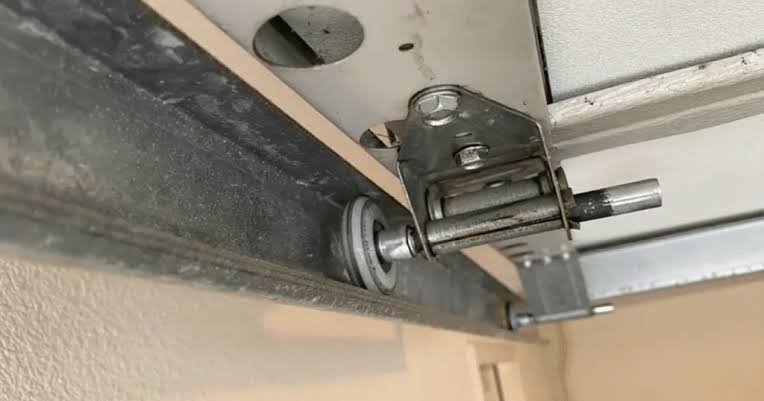
Look closely at the section where the roller came off. Is the track bent? Are there dents? If the metal track is severely bent, simply putting the roller back will not solve the problem. The track may need to be replaced or professionally straightened.
Check the roller itself. Is it cracked or broken? If the roller is damaged, it will just come off again. You may need to replace the roller before proceeding. For more detailed information on garage door components, you can refer to Wikipedia’s entry on Garage Doors to understand the mechanical structure better.
Step 2: Loosen the Track Bolts
Do not remove the bolts completely. Just loosen them enough so that the track can move slightly. This gives you the flexibility to align the track with the roller.
- Focus on the brackets near the area where the derailment occurred.
- Loosen the bolts on both the vertical and horizontal sections if necessary.
Step 3: Lift and Align the Door
This is the trickiest part. You need to lift the door slightly to relieve pressure on the roller.
- Have your assistant lift the door gently from the bottom.
- While they hold the weight, use your hands to guide the roller back into the track channel.
- If the roller is stuck, use the rubber mallet to gently tap the track outward to widen the opening slightly. Do not hit the roller directly.
Step 4: Realign the Track
Once the roller is inside the track, you need to ensure the track is perfectly aligned.
- Use your level to check that the vertical track is plumb (perfectly vertical).
- Check that the horizontal track is level.
- Adjust the track position by tapping it gently with the rubber mallet until it sits correctly around all the rollers.
Step 5: Tighten the Bolts
While your assistant holds the door in place, tighten all the bolts you loosened in Step 2. Start from the top and work your way down. Ensure the track is snug against the brackets but not distorted.
Step 6: Test the Movement
Remove the C-clamps or locking pliers. Manually lift and lower the door a few times. It should move smoothly without binding, grinding, or jumping. If it feels rough, re-check the alignment.
Step 7: Lubricate and Reconnect
Once the door moves smoothly:
- Apply a silicone-based lubricant to the rollers and the inside of the track. This reduces friction and noise.
- Reconnect the garage door opener by pulling the release handle toward the motor unit.
- Test the automatic opener. Watch the first cycle closely to ensure everything runs smoothly.
Troubleshooting Common Issues
Even after following the steps, you might encounter hiccups. Here is a quick comparison of common problems and solutions.
| Problem | Possible Cause | Solution |
|---|---|---|
| Door still binds | Track misalignment | Re-check level and plumb; adjust brackets. |
| Loud grinding noise | Dry or damaged rollers | Lubricate rollers; replace if cracked. |
| Roller keeps falling off | Bent track | Straighten track with mallet or replace section. |
| Door feels heavy | Spring issue | Call a professional. Do not touch springs. |
When to Call a Professional
While knowing how to put a garage door roller back on track is a valuable skill, some situations require expert help.
- Torsion Spring Issues: If the door is hard to lift even when disconnected, the spring may be broken or lose tension. This is extremely dangerous.
- Severe Track Damage: If the track is kinked or crushed, it needs professional replacement.
- Cable Problems: If the lifting cables are frayed or loose, do not operate the door.
According to industry standards, garage door springs have a lifecycle of about 10,000 cycles. If your door is older than 10 years, consider a professional inspection to prevent future failures.
FAQ Section
Q1: Can I put a garage door roller back on track by myself?
Yes, if the issue is simple misalignment and the track is not bent. However, always have an assistant to help support the door’s weight. Never work on a door under spring tension alone.
Q2: What type of lubricant should I use for garage door rollers?
Use a silicone-based spray or lithium grease. Avoid standard WD-40 or oil-based lubricants, as they attract dirt and dust, which can gum up the track and cause more derailments in the future.
Q3: Why does my garage door keep coming off the track?
Repeated derailments usually indicate an underlying issue. Common causes include loose track brackets, a bent track, worn-out rollers, or an unbalanced door. If it happens more than once, inspect the hardware thoroughly or call a pro.
Q4: Is it safe to use a hammer to fix the track?
Only use a rubber mallet. A steel hammer can dent or deform the metal track, making the problem worse. Gentle taps are sufficient to adjust the track position.
Q5: How much does it cost to fix a derailed garage door?
If you do it yourself, the cost is minimal (just lubricant and possibly new rollers). A professional service call typically ranges from $150 to $300, depending on your location and whether parts need replacement.
Q6: Can I operate my garage door if one roller is off?
No. Operating the door with a derailed roller can damage the track, break other rollers, and strain the opener motor. It can also cause the door to fall, creating a serious safety hazard. Fix it before using it.
Conclusion
Learning how to put a garage door roller back on track can save you time and money. By following the safety steps, loosening the track bolts, and carefully realigning the system, you can get your garage door working smoothly again. Remember, regular maintenance—like tightening bolts and lubricating rollers—can prevent this issue from recurring.
If you found this guide helpful, please share it with your friends or neighbors on social media. You never know who else might be stuck with a derailed garage door! Stay safe, and keep your home running smoothly.
Leave a Reply