Introduction
There are few things more stressful than pressing your garage remote and hearing a loud bang followed by silence, leaving you trapped or locked out. If you are currently stranded and searching for how to open your garage door when the spring breaks, please know that this is a common mechanical failure that can be managed safely with the right precautions. While the immediate goal is to move your vehicle, understanding the risks involved is crucial because a broken spring system stores immense kinetic energy that can cause severe injury if mishandled. This guide will walk you through the safe emergency release process, explain why professional repair is non-negotiable, and help you navigate this frustrating situation without compromising your safety.
Understanding Why Your Garage Door Won’t Open
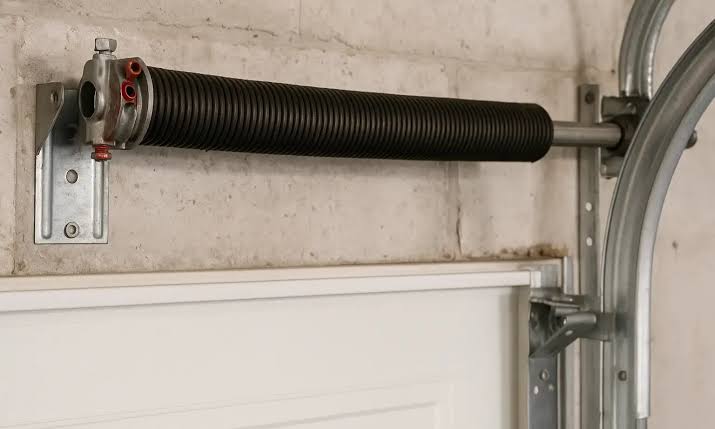
Before attempting any manual override, it is vital to understand the mechanics at play. Garage doors are heavy, often weighing between 150 and 300 pounds for standard residential models in the US. The springs (either torsion or extension) act as a counterbalance system, offsetting roughly 90% of the door’s weight so the opener motor only has to lift about 10–20 pounds.
When a spring snaps, that counterbalance is instantly lost. The full dead weight of the door transfers to the opener carriage or the bottom brackets. According to industry data from the International Door Association (IDA), spring failure accounts for nearly 80% of all garage door service calls, typically occurring after 10,000 cycles (approximately 7–10 years of daily use). Attempting to lift this unassisted weight manually is not just difficult; it is potentially dangerous. For a deeper technical understanding of the physics behind these counterbalance systems, you can refer to the Garage Door Wikipedia entry, which details the evolution and mechanics of modern overhead door systems.
Safety First: Critical Warnings Before You Proceed
STOP AND READ: Before you touch the emergency release cord, acknowledge these non-negotiable safety rules. Ignoring them can result in crushed fingers, head trauma, or property damage.
- Never Disconnect the Opener While the Door is Open: If the door is partially or fully open when the spring breaks, do not pull the emergency release. The door will crash down violently. Secure the door with C-clamps on the tracks first.
- Wear Protective Gear: Always wear safety glasses and heavy-duty work gloves. Broken spring fragments can be sharp, and grease/debris often falls during failures.
- Clear the Area: Ensure children, pets, and bystanders are at least 15 feet away from the door path.
- Assess the Damage Visually: Look for snapped cables, derailed rollers, or bent tracks. If anything besides the spring looks damaged, do not attempt manual operation. Call a professional immediately.
- Two-Person Rule: Never attempt to manually lift a door with a broken spring alone. You need a spotter to stabilize the door and assist with lifting.
Step-by-Step: How To Open Your Garage Door When The Spring Breaks
If the door is closed and visually intact aside from the broken spring, follow this precise procedure. This method uses the emergency release mechanism designed into every US-standard garage door opener manufactured since the 1990s.
Step 1: Disconnect Power to the Opener
Unplug the garage door opener from the ceiling outlet or switch off the dedicated circuit breaker. This prevents the motor from accidentally activating while you are working near the carriage assembly. Wait 30 seconds to ensure residual capacitor charge dissipates.
Step 2: Locate and Pull the Emergency Release Cord
Find the red emergency release cord hanging from the opener rail (usually near the motor unit or trolley). Firmly grasp the handle and pull it straight down toward the floor. You should hear/feel a distinct click as the trolley disengages from the carriage. This physically separates the door from the motorized drive system.
Step 3: Lift the Door Manually With Assistance
With the trolley disconnected, grip the door handle or bottom edge firmly. Using your legs (not your back), lift slowly and steadily. Expect the door to feel extremely heavy—potentially 200+ lbs of dead weight. Your assistant should stand beside you, ready to support the door if it becomes too heavy or starts to bind. Lift only high enough to clear your vehicle or allow passage.
Step 4: Secure the Door in the Open Position
Once open, immediately secure the door. Use locking pliers or C-clamps on both vertical tracks just below the bottom roller. Do NOT rely on the opener carriage to hold the door, as it is now disconnected and cannot bear the load. If clamps aren’t available, prop the door with sturdy wooden braces rated for the weight.
Step 5: Re-engage Only After Professional Repair
Do not reconnect the opener until a certified technician replaces the spring(s). Operating the opener with a broken spring will burn out the motor and void warranties. Keep the emergency release pulled until repairs are complete.
Manual Override vs. Professional Repair: What You Need to Know
Many homeowners wonder if they can simply keep using the manual override temporarily. Here is a clear comparison:
| Factor | Manual Override (Emergency Only) | Professional Spring Replacement |
|---|---|---|
| Safety Risk | High (unbalanced weight, potential derailment) | Low (trained techs with proper tools) |
| Effort Required | Extreme (full door weight) | None (system restored to balance) |
| Opener Longevity | Risk of motor/gear damage | Protected and calibrated |
| Time Investment | 15–30 min per use + constant vigilance | 1–2 hours one-time fix |
| Cost Implication | Free short-term; expensive if injury/damage occurs | $200–$400 avg. US national cost |
| Sustainability | Unsustainable beyond 1–2 emergencies | Restores 7–10 years of function |
Key Takeaway: Manual override is strictly an emergency egress solution, not a workaround. Prolonged use dramatically increases risk and cost.
Signs Your Springs Are Failing (Prevention Tips)
Catching spring wear early can prevent being stranded. Watch for these warning signs:
- Loud Bang or Twang: The most obvious indicator of sudden failure.
- Door Feels Heavy Manually: If manual lifting requires noticeable effort even when connected, springs are losing tension.
- Opener Strains or Reverses: Motor hums loudly, stops mid-cycle, or reverses unexpectedly.
- Visible Gap in Torsion Spring: A 2-inch gap in the center coil indicates breakage.
- Uneven Movement: One side lags or jerks during operation.
- Age Over 7 Years: Proactive replacement is cheaper than emergency service calls.
Schedule annual maintenance inspections to measure spring cycle life and lubricate components. Most US technicians recommend replacing both springs simultaneously even if only one fails, as they share identical wear patterns.
Frequently Asked Questions (FAQ)
Q1: Can I replace a broken garage door spring myself?
No. Spring replacement requires specialized winding bars, torque calibration, and knowledge of stored energy hazards. The Consumer Product Safety Commission (CPSC) reports hundreds of finger amputations and ER visits annually from DIY spring repairs. Always hire an IDA-certified technician. The savings aren’t worth the risk.
Q2: How much does garage door spring replacement cost in the US?
National averages range from $200 to $400 for torsion springs and $150–$300 for extension springs, including parts and labor. Prices vary by region, door size, and spring type. Get 2–3 quotes and verify the technician carries liability insurance and offers a warranty (minimum 1 year recommended).
Q3: Will my garage door opener be damaged if the spring broke?
Possibly. If you attempted to operate the opener after the break, the motor may have overheated or stripped gears. A technician should test amp draw and gear integrity during spring replacement. Modern openers with DC motors and soft-start features are more resilient but still vulnerable to unbalanced loads.
Q4: How long do garage door springs typically last?
Standard torsion springs are rated for 10,000 cycles (open/close = 1 cycle). At 4 cycles/day, that’s ~7 years. High-cycle springs (25,000–50,000 cycles) are available for heavy-use households. Extension springs typically last 5,000–7,000 cycles. Track your usage and replace proactively.
Q5: Is it safe to leave the garage door open with a broken spring?
Only if properly secured with mechanical clamps on both tracks. Never leave it unsecured—the door can fall without warning due to wind, vibration, or component fatigue. Treat an unbalanced door as an active hazard zone until repaired.
Q6: Can I use WD-40 to lubricate garage door springs?
Avoid standard WD-40. It attracts dust and gums up over time. Use lithium-based grease or silicone spray specifically formulated for garage doors. Apply sparingly to coils (not cables) during maintenance. Proper lubrication extends spring life by reducing friction-induced metal fatigue.
Conclusion: Prioritize Safety Over Convenience
Knowing how to open your garage door when the spring breaks gives you critical peace of mind during emergencies, but it should never replace professional repair. The manual override exists solely for safe egress—not daily operation. Your safety, your family’s wellbeing, and your property’s integrity depend on respecting the immense forces stored in these components.
If you’ve used this guide to safely manage a broken spring situation, we’d be grateful if you shared this article on social media to help other homeowners avoid dangerous mistakes. Tag a friend who might benefit from knowing these emergency protocols before they’re stranded. Remember: when in doubt, call a certified professional. No convenience is worth compromising your safety. Stay safe, stay informed, and keep your home functioning smoothly!
Leave a Reply