Introduction
There are few feelings more frustrating than standing in your driveway, keys in hand, realizing your garage door opener has failed and you have no way inside. Whether caused by a power outage, a dead remote battery, or a broken motor, knowing how to open my garage door manually from the outside is an essential homeowner skill that can save you from costly locksmith fees and unnecessary stress. This comprehensive guide provides safe, expert-approved methods to regain entry while prioritizing your safety and the integrity of your door system.
Understanding Why Your Automatic Opener Failed
Before attempting any manual override, it is crucial to diagnose why the automatic system isn’t working. According to industry data from the International Door Association (IDA), nearly 70% of garage door malfunctions stem from simple issues like misaligned sensors, disconnected power sources, or worn-out gears rather than catastrophic mechanical failure.
Understanding the root cause helps determine if manual opening is a temporary fix or if immediate professional repair is necessary. Common culprits include:
- Power Outages: Tripped breakers or GFCI outlet resets.
- Remote/Keypad Issues: Dead batteries or signal interference.
- Sensor Misalignment: Safety eyes blocked by debris or knocked out of level.
- Mechanical Failure: Broken torsion springs, snapped cables, or stripped drive gears.
⚠️ Critical Safety Warning: Never attempt to force a garage door open if you suspect a broken spring or cable. These components store immense kinetic energy and can cause severe injury or property damage. If the door feels excessively heavy (over 50 lbs of lift resistance), stop immediately and call a certified technician.
Does Your Garage Have an External Emergency Release?
The answer to “how to open my garage door manually from the outside” depends entirely on whether your garage was installed with an external emergency release kit. Modern building codes in many U.S. jurisdictions require this feature, but older homes may lack it.
Identifying the External Release Mechanism
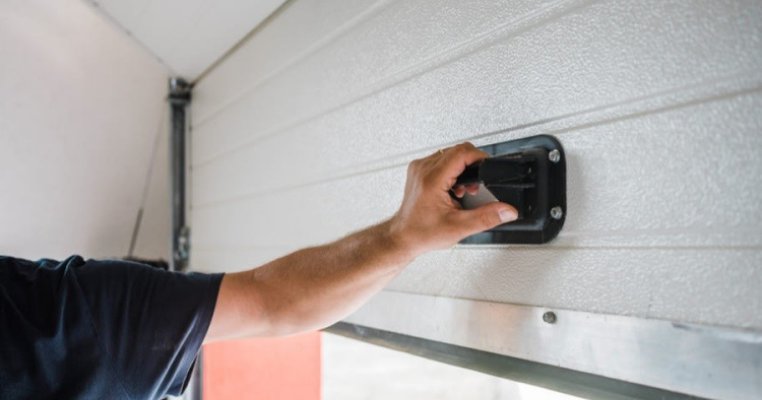
Look for a small, key-operated lock cylinder typically located near the top center or upper corner of the garage door exterior. This is distinct from standard deadbolts or handle locks. When unlocked and turned, this mechanism disengages the opener carriage from the door, allowing free manual movement.
| Feature | External Emergency Release | Standard Deadbolt/Handle Lock |
|---|---|---|
| Primary Function | Disengage opener for manual lift | Secure door against intrusion |
| Location | Upper panel, centered or offset | Mid-height or bottom rail |
| Key Type | Specialized barrel/vault key | Standard residential key |
| Allows Manual Lift? | Yes | No |
| Code Required? | Often yes (post-1990s) | Varies by jurisdiction |
If your door lacks this external release, your options become significantly more limited and may require alternative entry points or professional assistance. For detailed technical specifications on garage door safety standards and release mechanisms, refer to the Garage Door Wikipedia Entry, which outlines historical code changes and mechanical designs.
Step-by-Step: Using the External Emergency Release Key
If your garage is equipped with an external release, follow these precise steps to safely open the door:
- Locate the Release Cylinder: Find the keyhole on the exterior door panel. It is usually marked with a small icon resembling a door or labeled “Emergency Release.”
- Insert the Correct Key: Use the specialized vault key provided during installation. Do not use makeshift tools or excessive force, as this can shear the internal locking pin.
- Turn and Pull: Rotate the key 90 degrees clockwise (direction may vary by manufacturer; check for directional arrows). Simultaneously pull the release handle outward until you hear or feel a distinct click. This disengages the trolley from the opener rail.
- Lift the Door Evenly: Place both hands flat on the bottom panel, shoulder-width apart. Lift smoothly using your legs, not your back. A properly balanced door should require no more than 10–15 lbs of force to raise.
- Secure the Door Open: Once fully raised, engage the manual locking bar or prop the door securely with a rated support rod. Never rely on the opener’s disconnected trolley to hold the door open.
- Re-engage After Power Returns: When electricity is restored, lower the door completely, then push the release handle back into its locked position and turn the key counterclockwise to reconnect the opener.
💡 Pro Tip: Test your external release mechanism every six months during routine maintenance. Lubricate the cylinder with graphite powder (never oil-based lubricants, which attract dust and gum up the mechanism). Keep the vault key in a weatherproof lockbox mounted discreetly near the garage or with a trusted neighbor.
What If There Is No External Release? Alternative Methods
Many homeowners asking “how to open my garage door manually from the outside” discover they lack an external release. In this scenario, prioritize non-destructive alternatives before considering forced entry:
1. Check Adjacent Entry Points
- Side Service Door: Most attached garages have a pedestrian door with a standard lock. Verify this hasn’t been overlooked.
- Interior House Door: If attached to your home, check if the interior connecting door is unlocked.
- Window Access: Some garages have operable windows large enough for safe entry. Ensure the window isn’t alarmed and can be resecured afterward.
2. Temporary Power Restoration
If the issue is purely electrical:
- Locate your main electrical panel and verify the garage circuit breaker hasn’t tripped.
- Check GFCI outlets in the garage, bathroom, or exterior walls—these often control garage opener circuits and can trip due to moisture.
- Use a portable jump starter or battery backup designed for garage openers (available at hardware stores) to provide temporary power for one cycle.
3. Professional Locksmith or Door Technician
When all else fails, a licensed professional can:
- Pick or bypass exterior locks without damage.
- Install an external emergency release kit retroactively ($150–$300 average cost).
- Diagnose and repair underlying mechanical failures preventing operation.
🚫 Avoid Destructive Methods: Drilling through panels, prying weather seals, or cutting cables will void warranties, compromise security, and create repair costs far exceeding professional service fees. Insurance claims for self-inflicted damage are frequently denied.
Preventing Future Lockouts: Maintenance Checklist
The best solution to needing to know how to open my garage door manually from the outside is ensuring you never need to. Implement this quarterly maintenance routine:
- Test Manual Release: Operate the external and internal release mechanisms to ensure smooth function.
- Balance Check: Disconnect the opener and lift the door halfway. It should stay in place; if it drifts, springs need adjustment.
- Battery Replacement: Change remote and keypad batteries annually, or when signal range decreases.
- Sensor Cleaning: Wipe safety eye lenses with a microfiber cloth and verify alignment indicators show solid green.
- Lubrication: Apply white lithium grease to rollers, hinges, and tracks; silicone spray to weather seals.
- Backup Power Investment: Consider a UPS (Uninterruptible Power Supply) rated for garage openers or a smart opener with built-in battery backup.
Statistics from Consumer Reports indicate that proactive maintenance reduces emergency service calls by up to 85% and extends opener lifespan by 5–7 years.
Frequently Asked Questions (FAQ)
Can I open a garage door manually from the outside without a key?
Generally, no. External emergency releases require a specific vault key for security reasons. Without it, you must use alternative entry points or hire a professional. Attempting to pick or force the release cylinder often causes permanent damage and compromises home security.
Is it safe to manually lift a garage door alone?
Yes, if the door is properly balanced and springs are intact. A balanced residential door should lift with minimal effort. However, always use proper lifting technique (bend knees, keep back straight) and never attempt solo lifting if the door feels unusually heavy, sticks, or makes grinding noises—these indicate mechanical failure requiring professional service.
How much does it cost to install an external emergency release?
Retrofitting an external release kit typically costs between $150 and $300, including parts and labor. DIY kits are available for $40–$80 but require moderate mechanical skill and understanding of your specific opener model. Professional installation ensures correct alignment and maintains warranty coverage.
Will manually opening the door damage my automatic opener?
No, provided you correctly disengage the release mechanism first. Lifting the door while still connected to the opener carriage can strip gears or bend rails. Always confirm the trolley is fully released before lifting, and re-engage only after the door is completely closed and aligned.
What should I do if the door won’t stay open after manual release?
This indicates a broken spring or cable. Do not attempt to prop the door open or continue use. Lower the door slowly and carefully (it may fall rapidly), secure it in the closed position, and contact a certified garage door technician immediately. Operating a door with failed counterbalance components risks severe injury and further damage.
Can smart garage openers prevent manual lockouts?
Absolutely. Smart openers with Wi-Fi connectivity allow remote operation via smartphone apps even when remotes fail. Models with integrated battery backups maintain functionality during power outages. Many also send maintenance alerts and diagnostic notifications, helping identify issues before they cause complete failure.
Conclusion
Knowing how to open my garage door manually from the outside transforms a stressful lockout into a manageable situation. By understanding your door’s release mechanism, following safe lifting procedures, and maintaining your system proactively, you protect both your property and personal safety. Remember: when in doubt, professional assistance is always safer and more cost-effective than risky improvisation.
Found this guide helpful? Share it with friends, family, or neighbors on social media so they’re prepared for their next garage emergency! Tag us @YourHomeSafetyHub and use #GarageDoorTips to help others avoid lockout frustration. Stay safe, stay prepared! 🔧🏠
Leave a Reply