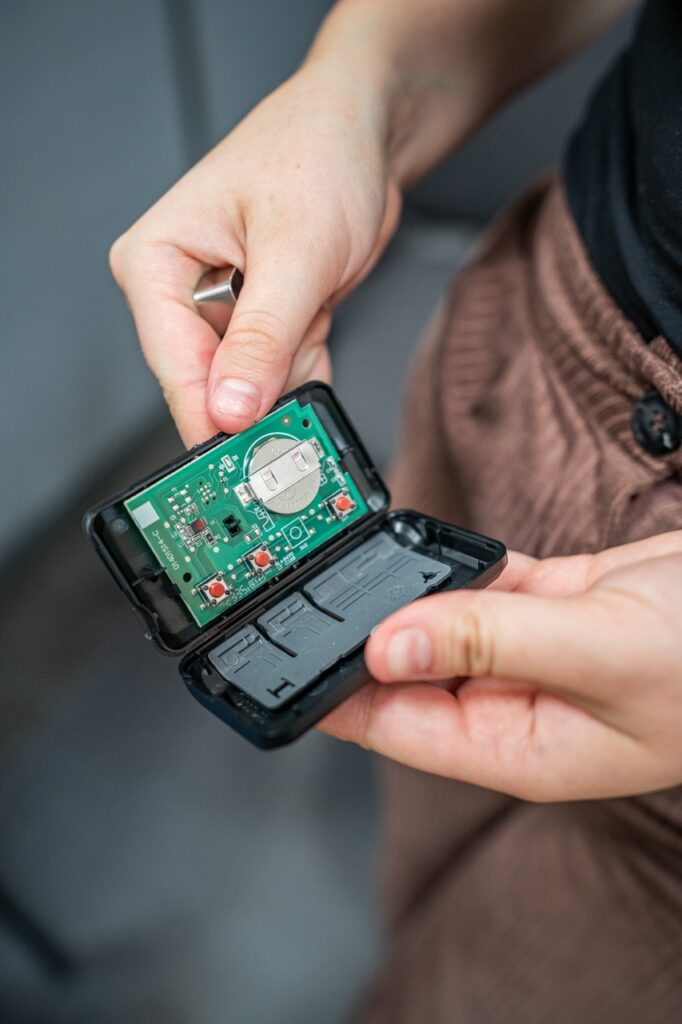
A dead battery during a sudden power outage can leave your car trapped inside, but learning how to open garage door opener to change battery is surprisingly simple. Don’t worry if you aren’t particularly handy; we will walk you through this quick fix so you can get your automatic backup running smoothly again.
How To Open Garage Door Opener To Change Battery: Gather Your Tools
Before climbing up to the motor unit, preparation is key. Having the right tools on hand will turn a 20-minute chore into a 5-minute task.
Here is what you need to gather before you begin:
- A sturdy step ladder: Ensure it is tall enough so you don’t have to overreach.
- Phillips-head screwdriver: Most battery compartments require a standard #2 size.
- Replacement battery: Most systems require a 12V 5Ah Sealed Lead Acid (SLA) battery. Always check your old battery’s label to match the exact voltage and amperage.
- Safety glasses: To protect your eyes from any falling dust or debris.
Pro Tip: Purchase an F1 or F2 terminal battery depending on what your current wires require. The F1 terminal is slightly narrower (0.187 inches) than the F2 terminal (0.250 inches).
How Do I Know If My Garage Door Opener Battery Is Dead?
You might be wondering if your battery is actually dead or if the motor itself is malfunctioning. Fortunately, modern openers are designed to alert you when it is time for a replacement.
Look out for these three common warning signs:
- Audible Beeping: The unit will emit a intermittent “chirp” or beep every 30 to 60 seconds.
- Blinking LED Indicator: Look at the motor housing. A blinking yellow or red LED light specifically indicates a low battery backup.
- Failure During Outages: If the door operates fine on main power but refuses to move when you unplug the unit, the backup battery has failed.
According to industry data, the average 12V 5Ah sealed lead-acid battery typically lasts between 3 to 5 years. If your system is older than that, replacement is highly recommended.
Step-by-Step Instructions for Popular Brands
While the internal mechanics vary slightly, the general process remains the same. Always prioritize safety by disconnecting the power first.
1. Chamberlain and LiftMaster Models
These two brands share nearly identical designs, making the process very straightforward.
- Step 1: Unplug the garage door opener from the ceiling outlet. Wait exactly 10 seconds to let any residual electrical charge dissipate.
- Step 2: Locate the battery compartment. On most modern models, this is a white or grey plastic cover on the back or bottom of the motor unit.
- Step 3: Slide the cover. You usually do not need a screwdriver. Push the tab inward and slide the cover 2 inches to the left to remove it.
- Step 4: Disconnect the wires. Pull the red (positive) and black (negative) wire harnesses straight off the battery terminals. Do not pull by the wires themselves.
- Step 5: Slide the old battery out and insert the new one.
- Step 6: Reconnect the red wire to the positive (+) terminal and the black wire to the negative (-) terminal. Push them firmly until they click.
- Step 7: Slide the cover back into place until it clicks, then plug the unit back in.
2. Genie Models
Genie openers sometimes house the battery differently, often requiring a screwdriver.
- Step 1: Unplug the opener from the power source.
- Step 2: Remove the light lens. Gently squeeze the sides of the light cover and pull it down to expose the interior.
- Step 3: Locate the battery cover. Use your Phillips-head screwdriver to remove the two screws securing the battery compartment cover.
- Step 4: Lift the cover and gently pull the battery out.
- Step 5: Disconnect the wire harness. Swap the battery and reconnect the wires, ensuring a snug fit.
- Step 6: Replace the cover, tighten the screws securely, and snap the light lens back into place.
Battery Backup Systems: Pros and Cons
To help you understand the value of maintaining this feature, here is a quick breakdown of the advantages and disadvantages of garage door battery backups.
| Feature | Pros (Advantages) | Cons (Disadvantages) |
|---|---|---|
| Convenience | Allows you to enter and exit during power outages. | Requires purchasing a $30–$50 replacement every few years. |
| Safety | Prevents you from being trapped inside or locked out. | Adds slight weight to the motor housing. |
| Security | Keeps your home secure; you don’t have to manually unlock the door. | The battery will eventually degrade and require maintenance. |
Expert Insights and Safety Precautions
When dealing with electrical components, it is always best to consult reliable information. According to the comprehensive Wikipedia entry on garage door openers, modern systems utilize various drive mechanisms, but the electrical standards for backup power remain largely consistent across the industry.
We also reached out to industry professionals for advice. Mike Torres, a certified garage door technician with over 15 years of installation experience, shares this crucial tip:
“Always match the exact amperage-hour (Ah) rating of your original battery. Many homeowners try to save money by buying a cheaper 4.5Ah battery for a system designed for 5.0Ah. This mismatch forces the motor’s charger to work overtime, leading to premature failure of both the battery and the logic board.”
Crucial Safety Warning: Never attempt to change the battery while the unit is plugged into the wall outlet. Furthermore, do not dispose of your old lead-acid battery in your regular household trash. Take it to a local hardware store or auto parts shop, as they almost always offer free recycling for these specific types of batteries.
Frequently Asked Questions
How often should I change the battery in my garage door opener?
You should plan to change the battery every 3 to 5 years. However, if you live in an area with extreme temperature fluctuations or experience frequent power outages that drain the battery often, you may need to replace it closer to the 3-year mark.
Can I use a car battery for my garage door opener?
No, you should never use a car battery. Garage door openers require a specific 12V Sealed Lead Acid (SLA) battery. Car batteries are designed for a completely different discharge cycle and can vent dangerous gases or even cause an electrical fire if used in a confined indoor motor housing.
Why is my garage door opener beeping continuously?
A continuous beep usually indicates one of two things. First, it could mean the unit is running on battery power because of a main power outage. Second, if the power is on and it is still beeping, the battery is likely completely dead and needs immediate replacement.
Do all garage door openers have a battery?
No, not all openers have a battery. Only models specifically advertised with a “Battery Backup” feature contain one. However, due to safety regulations, the state of California and a few other regions now mandate that all newly sold residential garage door openers must include a battery backup system.
Can I change the battery without a ladder?
While it is technically possible if your opener is mounted very low, it is highly discouraged. For safety and leverage, you should always use a sturdy step ladder to ensure you can see the terminal connections clearly and avoid dropping tools on your head.
Conclusion
Knowing how to open garage door opener to change battery is an essential home maintenance skill that guarantees you will never be locked out of your own garage during a blackout. By keeping a spare 12V 5Ah battery on hand and following these simple, brand-specific steps, you can easily restore your system’s backup power in less than ten minutes. Regular maintenance not only extends the life of your opener but also ensures the safety and security of your home year-round.
Leave a Reply