Introduction
There are few things more frustrating than arriving home during a storm or returning from work to find your electricity is out and you are locked out of your own garage. If you have ever stood in the rain wondering how to open electric garage door without power from outside, you know that panic can set in quickly when standard remotes fail. Fortunately, most modern garage systems include an external emergency release mechanism designed specifically for this scenario, allowing you safe access without damaging your equipment. This guide will walk you through the exact steps, safety precautions, and maintenance tips to ensure you are never stranded outside again.
Understanding Your Garage Door’s External Release Mechanism
Before attempting any manual operation, it is vital to understand that not all garage doors operate identically. However, building codes in the United States generally require an external emergency release for garages that do not have a separate pedestrian entry door. This requirement stems from safety standards established to prevent entrapment and ensure emergency access. According to Wikipedia, modern overhead garage doors are counterbalanced by springs to reduce the lifting force required, but the external release bypasses the motor entirely to allow manual movement.
The external release typically consists of a small lock cylinder located near the top center or side of the door panel. When unlocked with a specific key, it disengages the trolley (the part connected to the opener chain or belt) from the door itself. This mechanical separation is what allows you to lift the door by hand even when the motor is dead or unpowered.
Types of External Release Systems
| Release Type | Key Required? | Common Location | Difficulty Level |
|---|---|---|---|
| Standard Cylinder Lock | Yes | Top Center Panel | Low |
| Slide Bolt Emergency Kit | No (Internal only) | N/A (No exterior access) | High |
| Quick-Release Lever | Special Tool | Side Frame | Medium |
| Smart Lock Integration | Digital/App | Handle Area | Variable |
Note: If your home was built before 1990 or lacks a separate entry door, verify your local building codes, as older installations may lack compliant external releases.
Step-by-Step: How To Open Electric Garage Door Without Power From Outside
When facing a power outage, follow these precise steps to gain entry safely. Rushing this process can result in injury due to high-tension springs or damage to the opener carriage.
Step 1: Locate and Inspect the Emergency Release Lock
Find the keyhole on the exterior of your garage door. It is usually positioned at the top center section, roughly 6–8 inches below the header. Before inserting your key, visually inspect the area for ice, debris, or rust that could jam the mechanism. If frozen, apply a silicone-based lubricant or de-icer; never use hot water, as it can refreeze and worsen the problem.
Step 2: Unlock and Disengage the Trolley
Insert the designated emergency release key into the cylinder. Turn the key firmly (usually clockwise) until you feel or hear a distinct click. This click indicates that the internal cable has pulled the release lever on the trolley assembly inside. Pull the key out immediately after turning; leaving it inserted can interfere with the door’s movement.
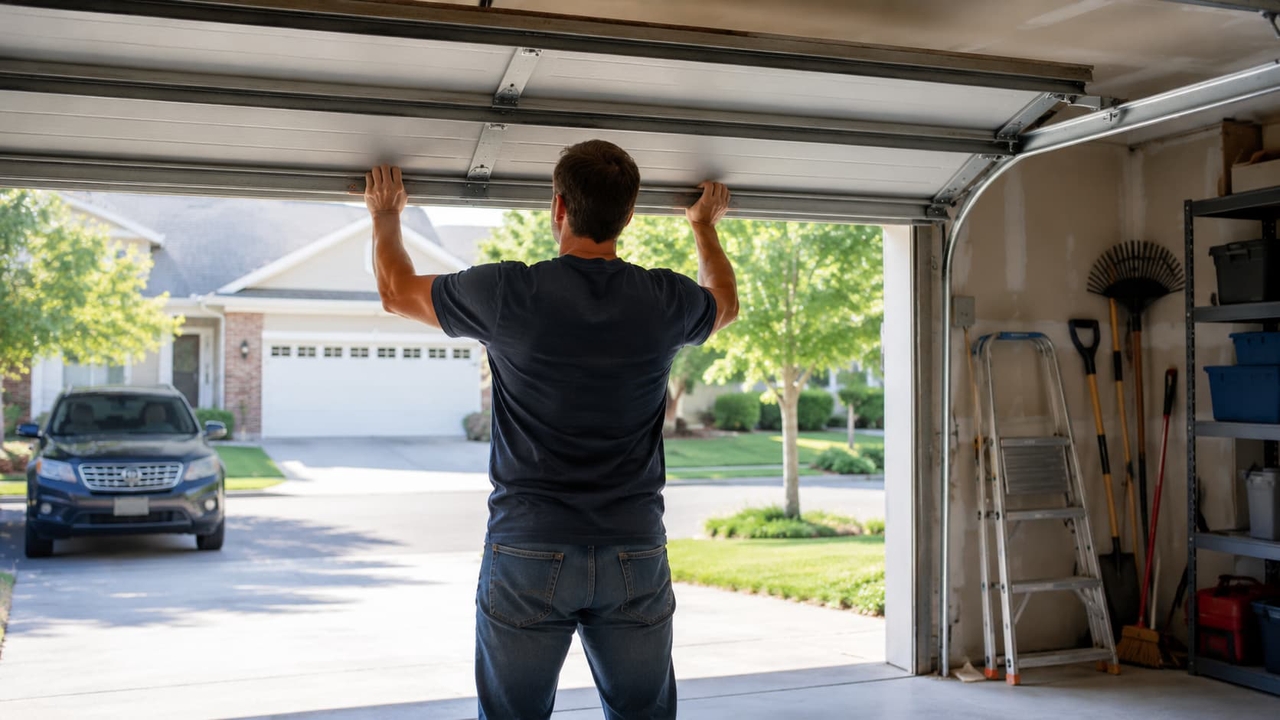
Step 3: Lift the Door Manually With Proper Form
Place both hands flat against the bottom panel of the door, shoulder-width apart. Bend your knees and lift using your legs, not your back. A properly balanced residential garage door should weigh no more than 10–15 pounds of effective lift force. If the door feels excessively heavy (over 30 lbs of resistance), stop immediately. This indicates broken torsion springs or damaged cables, which require professional repair.
Step 4: Secure the Door in the Open Position
Once fully open, the door will not stay up automatically because the opener’s locking mechanism is disengaged. You must manually secure it. Use a C-clamp on the track just above a roller, or engage the manual slide locks if equipped. Leaving an unsecured door open during a power outage is a significant security risk and a fall hazard.
Step 5: Re-engage the Opener After Power Returns
This step is frequently overlooked. When electricity is restored, the opener will not automatically reconnect to the door. You must pull the red emergency release cord inside the garage toward the motor unit until the trolley clicks back into place. Test the automatic cycle while standing clear of the door path to ensure proper re-engagement.
Critical Safety Warnings and Expert Insights
Safety must be your primary concern when operating heavy mechanical systems manually. Industry professionals emphasize that the majority of garage-related injuries occur during manual overrides due to improper technique or neglected maintenance.
- Never Force a Stuck Door: If the door binds or stops mid-travel, do not push harder. Binding often signals a track alignment issue or spring failure. Forcing it can cause the door to derail catastrophically.
- Beware of Spring Tension: Torsion springs store immense kinetic energy. Even when disconnected from the opener, a broken spring can snap violently. If you notice gaps in the spring coils or frayed cables, do not attempt manual operation.
- Disconnect Power First: If power flickers intermittently, turn off the breaker to the garage door opener before manual operation. Sudden restoration of power while you are lifting could activate the motor unexpectedly, causing severe crushing injuries.
- Regular Testing Protocol: Experts recommend testing your external release mechanism every six months. Locks seize over time due to oxidation. A quick test during routine maintenance ensures the system works when you actually need it.
Expert Tip: “Most homeowners discover their emergency release key is missing or the lock is seized only during an actual emergency. Treat this component like a fire extinguisher—inspect it regularly so it functions when seconds count.” — Certified Garage Door Technician Association Guidelines
Pros and Cons of Manual External Override
Understanding the trade-offs helps set realistic expectations during an outage.
Advantages:
- Provides guaranteed access regardless of electrical status
- Requires no batteries or backup power systems
- Complies with safety building codes for habitable structures
- Mechanical simplicity means fewer failure points than electronic backups
Disadvantages:
- Physical effort required; challenging for elderly or mobility-impaired users
- Security vulnerability if key is lost or lock is picked
- Does not restore automatic closing or locking features
- Risk of injury if door balance is compromised
Frequently Asked Questions (FAQ)
Can I open my garage door from outside without the emergency release key?
Generally, no. The external release is intentionally keyed to prevent unauthorized access. If you have lost the key, a locksmith can often rekey the cylinder without replacing the entire mechanism. Drilling out the lock is possible but will permanently disable the external release feature and compromise security. Always keep a spare key in a weatherproof lockbox or with a trusted neighbor.
Why is my garage door too heavy to lift manually even after releasing the opener?
Excessive weight almost always indicates spring system failure. Garage door springs are rated for approximately 10,000 cycles (about 7 years of normal use). When they lose tension or break, the full weight of the door (often 150–200 lbs) transfers to your arms. Do not continue lifting. Call a certified technician for spring replacement, as DIY spring repair accounts for thousands of ER visits annually.
Will manually opening the door damage my electric opener?
No, provided you correctly disengage the trolley first. The emergency release is designed precisely to isolate the motor from manual force. Damage occurs only if you attempt to lift without disengaging the trolley, which strains the gear assembly. Always confirm the audible click before lifting.
How do I know if my garage has an external release mechanism?
Look for a small keyhole on the exterior door surface, typically centered horizontally and positioned in the upper third of the door. If absent, check whether your garage has a separate pedestrian entry door. Homes with alternative entry points were sometimes exempted from external release requirements in older building codes. Consult your original installation manual or a licensed installer for verification.
Should I install a battery backup instead of relying on manual release?
Battery backups are excellent supplements but should not replace manual capability. Batteries degrade over 3–5 years and can fail during extended outages. Best practice combines both: maintain a functional external release and install a UPS-rated battery backup for convenience. This dual approach satisfies both safety compliance and modern usability expectations.
What temperature range affects manual garage door operation?
Extreme cold (below 20°F/-6°C) thickens lubricants and contracts metal tracks, increasing friction. In freezing conditions, apply white lithium grease to rollers and hinges quarterly. Conversely, extreme heat (above 100°F/38°C) can soften nylon rollers and expand aluminum tracks. Seasonal maintenance adjustments significantly reduce manual lifting effort year-round.
Conclusion
Knowing how to open electric garage door without power from outside transforms a stressful emergency into a manageable task. By understanding your specific release mechanism, following proper lifting techniques, and maintaining regular testing schedules, you protect both your property and personal safety. Remember that manual override is a backup system, not a daily solution—if you find yourself using it frequently, investigate underlying electrical or mechanical issues promptly.
Don’t wait for the next storm to test your readiness. Take five minutes today to locate your emergency key, verify smooth operation, and share this guide with family members who might face the same situation. Found this helpful? Share it on Facebook, X (Twitter), or Pinterest to help others avoid being locked out in the dark! Your proactive preparation could save someone else from hours of frustration and potential danger. Stay safe, stay prepared, and keep those garage doors moving smoothly—rain or shine, powered or not.
Leave a Reply