Introduction
There’s nothing more frustrating than pulling into your driveway after a long day, only to realize the power is out and your garage door won’t budge. Whether it’s a storm-related blackout, a tripped breaker, or a malfunctioning opener, knowing how to open and close a garage door without power is an essential skill every homeowner should have. In this comprehensive guide, we’ll walk you through every step so you can handle the situation safely, confidently, and without calling for expensive emergency help.
Why Your Garage Door Won’t Open During a Power Outage
Most modern garage doors rely on an electric motor — commonly called a garage door opener — to lift and lower the heavy door. When electricity is cut off, that motor stops working entirely. According to the U.S. Energy Information Administration (EIA), the average American household experiences approximately 5–7 power interruptions per year, making this a surprisingly common scenario.
The good news? Every automatic garage door system is equipped with a manual release mechanism specifically designed for these situations. Understanding how this system works is the first step toward regaining control of your garage door.
Understanding Your Garage Door System
Before diving into the steps, it helps to understand the key components involved:
| Component | Function |
|---|---|
| Garage Door Opener Motor | Provides electric power to lift/lower the door |
| Trolley/Carriage | Connects the door to the opener rail |
| Emergency Release Cord | Disconnects the trolley from the motor |
| Torsion/Extension Springs | Counterbalance the door’s weight |
| Manual Lock | Secures the door when closed |
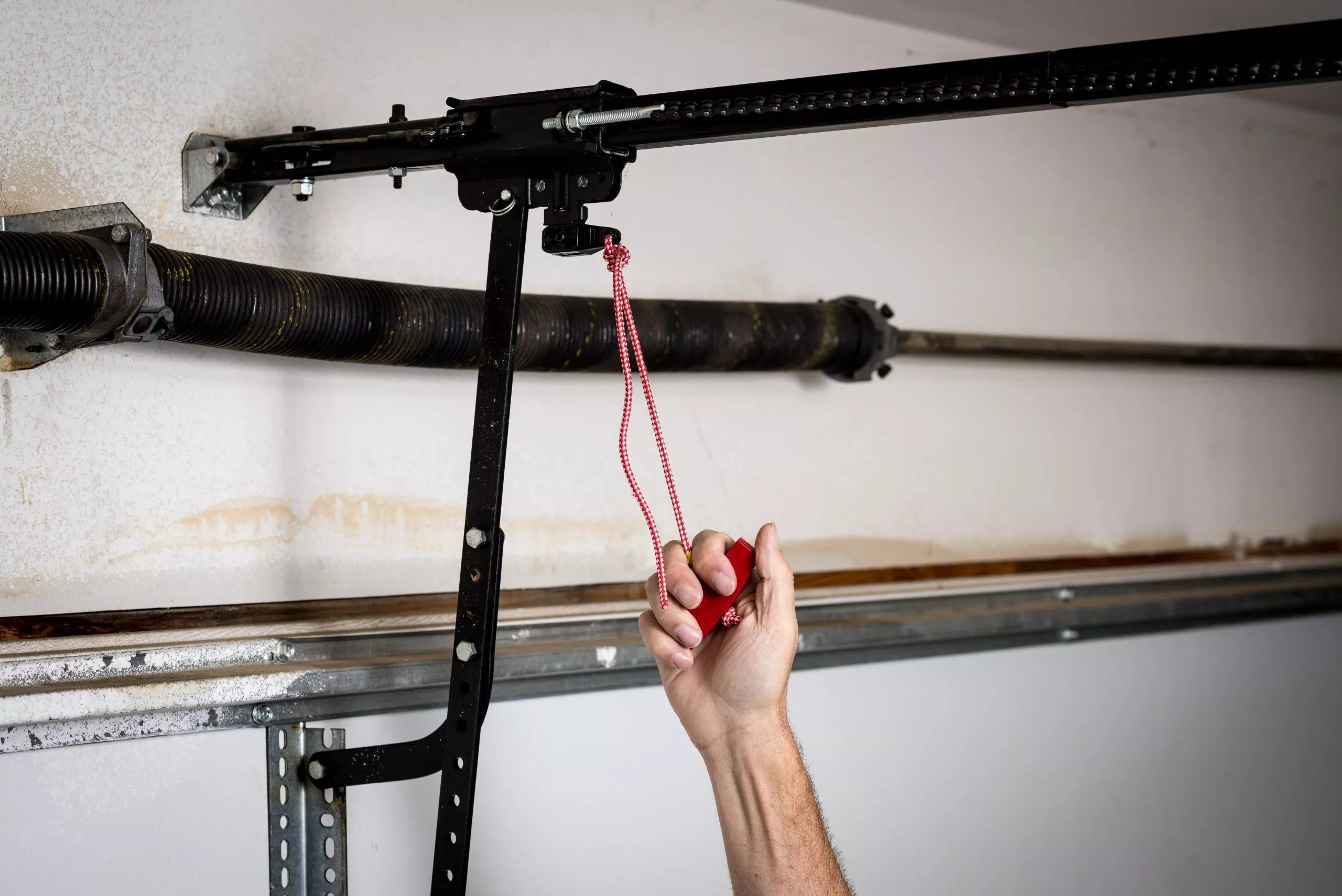
The emergency release cord (usually a red rope hanging from the opener rail) is the single most important component when operating your door manually. Pulling this cord disengages the trolley from the motor, allowing you to move the door by hand.
⚠️ Important Safety Note: Garage doors can weigh between 130 to 400 pounds. The springs are designed to counterbalance this weight, but if a spring is broken, the door becomes extremely dangerous to operate manually. If you suspect a broken spring, do not attempt to lift the door yourself — contact a professional immediately. For more information on garage door mechanics, you can visit Wikipedia’s article on garage doors.
Step-by-Step: How To Open And Close A Garage Door Without Power
Step 1: Locate the Emergency Release Cord
Look up at your garage door opener rail. You should see a red cord with a handle hanging down, typically about 6 feet from the floor. This is your emergency release cord. Make sure you can reach it comfortably. If it’s too high, use a sturdy step stool — never stand on unstable objects.
Step 2: Ensure the Door Is Fully Closed
Before pulling the release cord, make sure the garage door is completely closed. If the door is partially open, releasing the trolley could cause it to slam shut unexpectedly due to the spring tension. This poses a serious injury risk, especially to children and pets.
Step 3: Pull the Emergency Release Cord
Grasp the handle firmly and pull it straight down toward the floor. You should hear or feel a distinct click as the trolley disengages from the opener carriage. Once released, the door is no longer connected to the motor and can be moved manually.
Pro tip: Some models require you to pull the cord slightly toward the door before pulling down. Check your owner’s manual if the cord doesn’t seem to release on the first try.
Step 4: Lift the Door Manually
Stand inside the garage, face the door, and place both hands on the bottom edge or handle. Lift slowly and evenly, using your legs rather than your back. A properly balanced door should feel relatively light — the springs do most of the work.
- If the door feels extremely heavy, stop immediately. This likely indicates a broken or weakened spring.
- If the door lifts smoothly, continue raising it until it’s fully open.
- Once fully open, the door should stay in place on its own if the springs are functioning correctly.
Step 5: Secure the Door in the Open Position
If you need to leave the door open for an extended period, consider using a C-clamp or locking pliers on the track just below a roller. This prevents the door from accidentally sliding down. Alternatively, some doors have a built-in latch or prop rod for this purpose.
Step 6: Closing the Door Manually
To close the door, simply lower it slowly and steadily using both hands. Guide it down the tracks until it sits flush against the ground. Avoid letting it drop freely, as this can damage the panels, tracks, or weather stripping.
Once closed, engage the manual lock (if your door has one) to secure it. This is usually a sliding bolt located on the inside of the door near the bottom.
How To Reconnect Your Garage Door Opener After Power Returns
Once electricity is restored, you’ll need to re-engage the opener:
- Pull the emergency release cord toward the door (in the direction of the motor). This re-engages the trolley with the carriage.
- You should hear a click confirming the connection.
- Press the wall button or remote to test the opener.
- If the door doesn’t respond, repeat the process or consult your owner’s manual.
Note: Some newer openers automatically re-engage when you press the remote after power returns. Always verify the connection before leaving the door unattended.
Common Mistakes to Avoid
Here are the most frequent errors homeowners make when operating a garage door manually:
- ❌ Pulling the release cord while the door is open — This can cause the door to crash down violently.
- ❌ Using excessive force — If the door resists, something is wrong. Don’t force it.
- ❌ Ignoring unusual noises — Grinding, popping, or snapping sounds may indicate damaged components.
- ❌ Forgetting to re-engage the opener — This leaves your door vulnerable and your opener non-functional.
- ❌ Letting children play near the release cord — Accidental disengagement can lead to serious injuries.
Tips for Preparing Ahead of Future Power Outages
Being proactive can save you significant stress the next time the lights go out:
- Keep a flashlight mounted near the garage door opener for easy access in the dark.
- Lubricate the tracks and rollers every 6 months to ensure smooth manual operation.
- Test the emergency release at least twice a year to confirm it works properly.
- Consider a battery backup system for your garage door opener. Many modern openers, such as those from Chamberlain and LiftMaster, offer integrated battery backups that provide up to 20 cycles during an outage.
- Know the weight of your door — this helps you assess whether you can safely lift it alone or need assistance.
FAQ Section
Q1: Can I open my garage door from the outside without power?
Yes, but it depends on your setup. Many garage doors have an external emergency release kit — a small lock cylinder near the top of the door. Inserting the key and turning it releases a cable that disconnects the opener, allowing you to lift the door from outside. If your door doesn’t have this feature, consider having one installed by a professional.
Q2: Is it safe to manually operate a garage door with a broken spring?
No. A broken spring means the full weight of the door (up to 400 lbs) is unsupported. Attempting to lift or lower it manually can result in severe injury or property damage. Contact a licensed garage door technician immediately.
Q3: Will manually opening my garage door damage the opener?
Not if done correctly. The emergency release mechanism is specifically designed for manual operation. However, always make sure to re-engage the trolley once power returns to avoid putting unnecessary strain on the system.
Q4: How often should I test my garage door’s emergency release?
Experts recommend testing the emergency release at least twice a year — ideally during your seasonal home maintenance routine. Simply pull the cord, lift the door manually, and then reconnect the opener to ensure everything functions smoothly.
Q5: Can I install a battery backup on my existing garage door opener?
In many cases, yes. Several manufacturers offer universal battery backup kits compatible with older opener models. Check your opener’s model number and consult the manufacturer’s website to confirm compatibility. Installation typically takes less than an hour.
Q6: What should I do if my garage door gets stuck halfway during a power outage?
Do not attempt to force it. First, check the tracks for obstructions like debris or ice. If the tracks are clear and the door still won’t move, the issue may be with the springs or rollers. In this case, it’s safest to call a professional rather than risk injury.
Conclusion
Knowing how to open and close a garage door without power isn’t just a handy trick — it’s a critical home safety skill. By understanding your emergency release mechanism, following proper lifting techniques, and maintaining your door regularly, you can handle any power outage with confidence and ease.
Remember: safety always comes first. If anything feels wrong — whether it’s unusual weight, strange noises, or visible damage — don’t hesitate to call a qualified technician. A few minutes of caution can prevent costly repairs and serious injuries.
Leave a Reply