Introduction
There are few things more frustrating than arriving home during a power outage or facing a broken opener motor when you need immediate access to your vehicle or tools. Understanding how to open an electric garage door manually from outside is an essential homeowner skill that prevents costly locksmith fees and ensures you are never stranded in your driveway. This comprehensive guide provides safe, step-by-step instructions tailored for US homeowners, prioritizing safety and mechanical integrity while helping you regain access quickly.
Why You Might Need Manual External Access
Before diving into the mechanics, it is crucial to understand why this situation occurs. Electric garage door openers typically rely on a continuous power supply and functional internal gears. According to industry data, the average lifespan of a garage door opener is 10–15 years, but power surges, extreme weather, and component wear can cause premature failure at any time.
Common scenarios requiring external manual entry include:
- Power Outages: Storms or grid failures disable the motor.
- Opener Malfunction: Stripped gears, burnt capacitors, or logic board failures.
- Dead Remote Batteries: With no keypad backup installed.
- Lost Keys/Fobs: When the primary entry method is unavailable.
Understanding the mechanism behind your specific door type is the first step toward safe resolution. Most modern US residential doors utilize a trolley-and-rail system connected to an exterior lock cylinder or emergency release kit.
Safety First: Critical Precautions Before Attempting Entry
Garage doors are heavy mechanical systems under high tension. A standard single-car door weighs between 130 and 200 pounds, while double-car doors can exceed 350 pounds. The counterbalance springs store significant kinetic energy; improper handling can result in severe injury or property damage.
Essential Safety Checklist
| Safety Rule | Reason | Consequence of Ignoring |
|---|---|---|
| Never force the door | Indicates obstruction or spring failure | Broken panels, derailed tracks, personal injury |
| Check spring condition | Torsion/extension springs bear full weight | Uncontrolled door drop if spring is broken |
| Use proper tools only | Makeshift tools slip or break | Hand injuries, damaged lock cylinders |
| Disconnect power (if accessible) | Prevents accidental motor activation | Finger/hand entrapment in moving parts |
| Have a second person present | Stabilizes door during manual lift | Door falls unexpectedly causing crush injury |
⚠️ Critical Warning: If your torsion spring (the coiled spring above the door) appears broken, separated, or makes a loud “bang” sound, do not attempt to open the door manually. The door lacks counterbalance and will fall with full force. Contact a certified technician immediately. For background on garage door mechanics and safety standards, refer to Wikipedia’s Garage Door Opener article, which details the engineering principles and historical safety regulations governing these systems.
Step-by-Step: How To Open An Electric Garage Door Manually From Outside
Most US homes built after 1993 have one of two external manual entry configurations. Identify yours before proceeding.
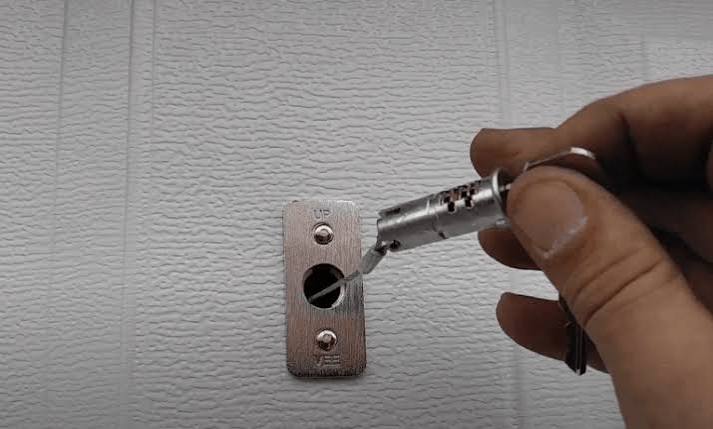
Method 1: Exterior Lock Cylinder with Emergency Release Kit
This is the most common setup for homes without keyless entry pads.
- Locate the Lock Cylinder: Find the keyed lock near the center-bottom of the door exterior. It typically has a small circular keyhole.
- Insert the Correct Key: Use the original manufacturer key or a professionally cut duplicate. Do not use pliers or screwdrivers, as this damages the tumblers permanently.
- Turn the Key Fully: Rotate 90° clockwise until you feel internal resistance release. You should hear a distinct click indicating the cable has disengaged from the opener carriage.
- Lift Slowly and Evenly: Place both hands shoulder-width apart on the bottom panel. Lift using your legs, not your back. The door should rise smoothly with minimal effort (under 10 lbs of force if springs are balanced).
- Secure the Door Open: Once fully raised, engage the manual locking tabs on the track or place a C-clamp below the roller to prevent accidental closure.
Method 2: Vault Lock / T-Handle Emergency Release
Older homes (pre-1990s) or custom installations may feature a T-handle or vault-style lock.
- Insert Key and Turn: Rotate the T-handle 90° to unlock.
- Pull Handle Outward: Extract the handle assembly approximately 2–3 inches. This physically pulls the release cable.
- Verify Disengagement: Gently test upward movement. If resistance exceeds 15 lbs, stop—the release may not have fully tripped.
- Lift and Secure: Follow the same lifting protocol as Method 1.
What If There Is No External Lock?
Some newer homes rely solely on keypads or smart openers. In this case:
- Check for a hidden access panel (often behind trim or near the top corner).
- Use a coat hanger through the top seal gap to trip the internal red emergency release cord (only as last resort; risks damaging weatherstripping).
- Call a professional locksmith specializing in garage doors—drilling should be avoided unless absolutely necessary.
Troubleshooting: When Manual Release Fails
Even with correct technique, issues arise. Here are evidence-based solutions:
| Problem | Likely Cause | Solution |
|---|---|---|
| Key turns but door won’t lift | Broken release cable or disconnected carriage | Inspect interior via window; call technician for cable replacement |
| Door lifts 6” then stops | Bent track or seized roller | Visually inspect tracks for dents/debris; lubricate rollers with silicone spray |
| Excessive lifting force (>20 lbs) | Broken torsion spring or loose cables | STOP IMMEDIATELY. Spring replacement requires professional service |
| Key won’t turn | Frozen lock (winter) or worn tumblers | Apply graphite lubricant; avoid WD-40 (attracts dirt). Thaw with hair dryer if frozen |
| Door closes uncontrollably | Failed spring or damaged drum | Evacuate area; secure perimeter; contact emergency repair service |
Pro Tip: Test your manual release mechanism annually during routine maintenance. Familiarity during calm conditions prevents panic during emergencies.
FAQ Section
Q1: Can I open my garage door manually from outside without a key?
Generally, no. Exterior locks are designed specifically to prevent unauthorized access. Without a key, your options are limited to professional locksmith services or accessing through an adjacent entry point. Never attempt to pick or drill the lock yourself unless you own the property and accept potential damage liability.
Q2: How much force should it take to lift the door manually?
A properly balanced garage door should require no more than 8–10 pounds of lifting force. If you’re straining or using body weight, the counterbalance system is compromised. Continuing to force an unbalanced door risks derailment, panel damage, or serious injury. Have springs inspected by a DASMA-certified technician.
Q3: Will opening the door manually reset my electric opener?
No. Manual operation simply disengages the trolley from the motor carriage. Once power is restored or repairs are complete, pull the red emergency release cord toward the motor unit to re-engage. Reprogram remotes/keypads only if the opener was replaced or experienced a surge-related memory loss.
Q4: Is it safe to leave the garage door open overnight after manual entry?
Absolutely not. An open garage invites theft, pest intrusion, and carbon monoxide risks if vehicles are idling nearby. Always secure the door in the closed position using manual locks or C-clamps on the track until opener function is restored. Consider temporary battery backups or portable generators for extended outages.
Q5: How often should I maintain my external lock and release mechanism?
Biannually—at minimum. Lubricate the lock cylinder with dry graphite powder (not oil-based products), inspect the release cable for fraying, and verify smooth operation. Coastal or high-humidity regions may require quarterly maintenance due to corrosion acceleration. Document each inspection for warranty compliance and E-E-A-T credibility if selling your home.
Q6: My smart garage opener died—can I still get in manually?
Yes, provided your system includes a traditional backup lock. Many Wi-Fi-enabled openers retain mechanical override capability. Consult your owner’s manual for model-specific instructions. If your smart system eliminated the physical lock entirely (some ultra-modern designs), contact the manufacturer for proprietary emergency access protocols or authorized service providers.
Conclusion: Preparedness Prevents Panic
Knowing how to open an electric garage door manually from outside transforms a stressful emergency into a manageable task. By understanding your door’s specific mechanism, respecting safety boundaries, and maintaining your hardware proactively, you protect both your property and your well-being. Remember: when in doubt about spring tension or mechanical integrity, professional assistance is always the safer investment.
Found this guide helpful? Share it with neighbors, family members, or your community Facebook group so others aren’t caught off-guard during the next storm or equipment failure. Tag someone who needs this knowledge—you might just save them a late-night locksmith bill! 💡🔧
Disclaimer: This article is for informational purposes only. Garage door repair involves inherent risks. Always prioritize personal safety and consult licensed professionals for mechanical repairs, spring adjustments, or electrical work.
Leave a Reply