Introduction
There are few feelings more frustrating than standing in your driveway with groceries in hand, only to realize your garage door opener isn’t responding. Whether you are dealing with a sudden power outage, a dead remote battery, or a malfunctioning motor, knowing how to open an automatic garage door from the outside is an essential homeowner skill. This guide provides safe, manufacturer-approved methods to regain access without damaging your property or compromising your home’s security.
Understanding Your Garage Door System Before Attempting Entry
Before you attempt any manual override, it is critical to understand that automatic garage doors are heavy mechanical systems under high tension. According to the U.S. Consumer Product Safety Commission (CPSC), garage doors are often the largest moving object in a home and can cause severe injury if handled incorrectly.
Most modern automatic garage doors operate via a trolley system connected to a motor. When power fails or the remote is lost, the mechanical connection remains, but the automation is disabled. Understanding this distinction helps you realize that you aren’t “breaking in”; you are simply engaging the manual backup system designed for this exact scenario. For a deeper technical understanding of these counterbalance mechanisms, you can refer to the Garage Door Opener entry on Wikipedia.org, which details the evolution of safety standards and mechanical designs.
Method 1: Using the External Emergency Release Kit
Many homes built after the early 2000s, or those with updated safety compliance, feature an external emergency release kit. This is the safest and most intended method for opening an automatic garage door from the outside during a power failure.
Step-by-Step Instructions
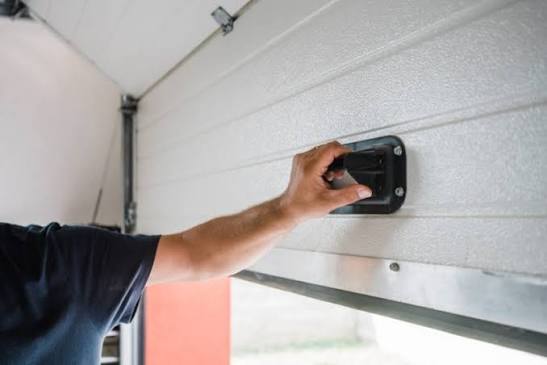
- Locate the Release Lock: Look for a small, cylindrical lock near the top center of the garage door exterior. It is usually positioned just below the top panel seam.
- Insert the Key: Use the specific key provided by the manufacturer (often stored inside the garage or given at closing). If you do not have the key, do not attempt to pick it; proceed to Method 2.
- Turn and Pull: Turn the key 90 degrees and pull the cylinder outward. This action pulls the internal release cord, disengaging the trolley from the motor carriage.
- Lift Manually: With the trolley disengaged, grasp the bottom handle of the door and lift smoothly. The door should feel balanced. If it feels excessively heavy (>20 lbs of lift force), stop immediately—the springs may be broken.
- Re-engage After Use: Once power is restored or the issue is resolved, push the cylinder back in and turn the key to re-lock. You must then pull the interior red emergency release cord toward the motor to re-engage the automatic opener.
⚠️ Critical Safety Warning: Never attempt to force the emergency release lock. Drilling or prying can permanently damage the locking mechanism and void your warranty.
Method 2: Accessing Through Adjacent Entry Points
If your garage lacks an external release kit and you cannot open the main door, the next best option is secondary access. This avoids the risks associated with forcing a primary barrier.
- Pedestrian Side Door: Check for a standard entry door adjacent to the garage. Many homeowners forget they have a keyed entry separate from the overhead door.
- Interior Connecting Door: If you can enter your home through the front or back door, access the garage from the inside. Locate the red emergency release cord hanging from the opener rail. Pull it firmly downward and toward the motor unit to disengage the trolley, then lift the door manually.
- Window Access: Some older garages have operable windows. While not ideal, gaining entry through an unlocked window allows you to reach the interior release cord safely.
Method 3: What To Do If You Are Completely Locked Out
If you have no external release kit, no side door, and no way to enter the house, your options become limited. Do not attempt to pry the door open with tools, as this will bend the tracks and cost hundreds of dollars in repairs.
Recommended Actions
| Action | Estimated Cost | Time Required | Risk Level |
|---|---|---|---|
| Call a Licensed Garage Door Technician | $75–$150 | 30–60 mins | Low |
| Contact a Locksmith (Side Door) | $50–$120 | 20–45 mins | Low |
| Wait for Power Restoration | Free | Variable | None |
| DIY Prying / Forcing | $200–$800+ repair | Immediate | High |
Hiring a professional is almost always cheaper than repairing damage caused by forced entry. Technicians carry universal release tools and can diagnose whether a broken spring or snapped cable is preventing operation.
Troubleshooting: Why Won’t My Garage Door Open Even With Power?
Sometimes the issue isn’t a power outage but a mechanical failure. Understanding the symptoms helps you communicate effectively with professionals:
- Door Opens Partially Then Stops: Likely a broken torsion spring or extension spring. Do not attempt manual lift.
- Motor Hums But Door Doesn’t Move: Stripped drive gear or disconnected trolley. The manual release may still work.
- Remote Works But Wall Button Doesn’t: Wiring issue or locked control panel. Try the external release.
- Door Is Crooked Or Stuck: Track misalignment or roller failure. Manual lifting is dangerous in this state.
Preventive Measures To Avoid Future Lockouts
The best solution to learning how to open an automatic garage door from the outside is ensuring you rarely need to. Implement these proactive strategies:
- Install an External Keypad: Battery-operated keypads mount outside and provide code-based entry independent of the main power supply (they connect directly to the opener’s low-voltage terminals).
- Keep a Spare Key Accessible: Store the emergency release key in a weatherproof lockbox mounted discreetly on the property, or give a copy to a trusted neighbor.
- Test Monthly: Pull the interior release cord once a month to ensure it hasn’t seized. Lubricate moving parts with silicone-based spray quarterly.
- Battery Backup System: Invest in an opener with integrated battery backup or add an aftermarket UPS. These systems provide 10–20 cycles during outages.
- Smart Opener Upgrade: Modern smart openers offer Wi-Fi connectivity, allowing you to open the door via smartphone app even if the remote is lost—provided your home internet and router have backup power.
Frequently Asked Questions (FAQ)
Can I open my automatic garage door from the outside without a key?
Only if your system has an external keypad, a smart opener with app access, or an unlocked side entry. If your garage has a keyed external release and you lack the key, there is no safe non-destructive method. Forcing the door will cause expensive damage and potential injury. Always prioritize calling a licensed technician over destructive entry.
Is it safe to manually lift an automatic garage door?
Yes, if the emergency release has been properly engaged and the springs are intact. A properly balanced garage door should require no more than 15–20 pounds of force to lift. If the door feels extremely heavy, drops suddenly, or makes grinding noises, stop immediately. This indicates spring failure, and the door is unsafe to operate manually. Springs store significant kinetic energy and should only be serviced by professionals.
Will manually opening the door damage my automatic opener?
No, as long as you disengage the trolley using the designated release mechanism first. Lifting the door while it is still engaged to the motor carriage can strip the drive gear or burn out the motor. Always pull the release cord (or use the external key) before attempting to lift. Re-engaging the opener after manual use is equally important to restore automatic function.
How much does it cost to install an external emergency release kit?
Professional installation of an external emergency release kit typically ranges from $100 to $200, including parts and labor. DIY kits are available for $30–$60 but require drilling into the door and precise alignment. Given the safety implications, professional installation is recommended to ensure the release functions correctly during an actual emergency.
My garage door opened manually but won’t close automatically afterward. What’s wrong?
After manual operation, the trolley must be fully re-engaged with the motor carriage. Pull the interior release cord toward the motor until you hear a distinct click. Then, run the opener through one complete cycle. If it still fails, the safety sensors may be misaligned (check for blinking indicator lights) or the travel limits may need recalibration. Consult your owner’s manual or a technician for sensor realignment.
Can extreme weather prevent my garage door from opening?
Yes. In freezing temperatures, moisture can freeze the door seal to the concrete floor, or lubricants can thicken, increasing resistance. In extreme heat, metal components expand and may bind. If weather-related, try gently breaking the ice seal with warm (not hot) water along the bottom edge, or apply silicone lubricant to rollers and hinges. Never force a frozen door open, as this can tear the bottom seal or damage panels.
Conclusion
Knowing how to open an automatic garage door from the outside transforms a stressful lockout into a manageable situation. By understanding your system’s emergency release mechanisms, prioritizing safety over speed, and implementing preventive measures like external keypads and battery backups, you protect both your property and your peace of mind. Remember: when in doubt, call a professional. No amount of convenience is worth the risk of injury or costly damage.
Found this guide helpful? Share it on Facebook, X (Twitter), or Pinterest to help fellow homeowners avoid garage door lockouts! Tag a friend who just moved into a new home—they’ll thank you later. 🔧🏡
Leave a Reply