Introduction
Is your Genie garage door opener grinding, squeaking, or struggling to lift the door? You are not alone; this is a common issue that usually signals a lack of proper maintenance rather than a mechanical failure. Learning how to lubricate a Genie screw drive garage door opener correctly is the single most effective way to restore quiet operation and extend the lifespan of your unit. In this comprehensive guide, we will walk you through the exact steps, safety precautions, and specific products needed to get your system running smoothly again.
Why Is Lubricating Your Genie Screw Drive Critical?
Before grabbing a can of spray, it is vital to understand why this specific maintenance task matters. Unlike chain-drive or belt-drive openers, a Genie screw drive uses a threaded steel rod that rotates inside a trolley carriage to move the door. This metal-on-metal contact generates significant friction and heat.
Without adequate lubrication, three things happen:
- Premature Wear: The plastic liner inside the trolley wears down rapidly against the dry steel rod.
- Motor Strain: The opener motor must work harder to overcome friction, leading to overheating and potential burnout.
- Noise Pollution: Dry screw drives are notoriously loud, creating a grinding sound that disturbs household peace.
According to general mechanical engineering principles outlined on Wikipedia, lubricants serve to reduce friction between surfaces in mutual contact, which directly translates to reduced wear and energy consumption in electromechanical systems like garage door openers. Applying this principle to your Genie unit ensures optimal performance.
What Type of Lubricant Should You Use?
This is where most homeowners make a costly mistake. Do not use standard WD-40, grease, or heavy oil. These products attract dust and grime, creating an abrasive paste that accelerates wear on the screw drive.
Recommended vs. Prohibited Lubricants
| Lubricant Type | Verdict | Reason |
|---|---|---|
| Genie Screw Drive Lube | ✅ Best Choice | Formulated specifically for the plastic/steel interface; non-gumming. |
| White Lithium Grease | ⚠️ Use Caution | Acceptable for hinges/springs, but often too thick for the screw rod itself. |
| Silicone Spray | ❌ Avoid | Can degrade certain plastic components over time; lacks staying power. |
| Standard WD-40 | ❌ Never Use | It is a solvent/cleaner, not a long-term lubricant; strips existing lube. |
| Motor Oil / 3-in-1 | ❌ Avoid | Attracts dirt, creates sludge, and damages the trolley liner. |
Expert Tip: Always purchase lubricant labeled specifically for “Screw Drive Garage Door Openers.” Genie manufactures its own proprietary lubricant (Part #36179R) designed to maintain the correct viscosity across temperature extremes, preventing the lube from dripping in summer or solidifying in winter.
Safety First: Pre-Lubrication Checklist
Safety is non-negotiable when working with high-tension springs and electrical components. Before you begin learning how to lubricate a Genie screw drive garage door opener, complete these checks:
- Disconnect Power: Unplug the opener or turn off the circuit breaker to prevent accidental activation.
- Secure the Door: Ensure the garage door is fully closed and locked in place, or manually secured if the spring tension is compromised.
- Wear Protection: Use safety glasses and nitrile gloves. Old lubricant and metal shavings can irritate skin and eyes.
- Inspect Components: Check the screw rod for visible damage, bends, or missing threads. If the rod is damaged, lubrication will not fix it; professional replacement is required.
Step-by-Step: How To Lubricate A Genie Screw Drive Garage Door Opener
Follow this detailed tutorial for professional-grade results. Allocate approximately 20–30 minutes for this task.
Step 1: Clean the Existing Residue
You cannot apply new lubricant over old, gunky residue. Use a clean rag and a mild degreaser (or isopropyl alcohol) to wipe down the entire length of the screw rod. Rotate the rod manually by hand (with power disconnected) to expose all sides. Remove any built-up sludge, as this acts as an abrasive.
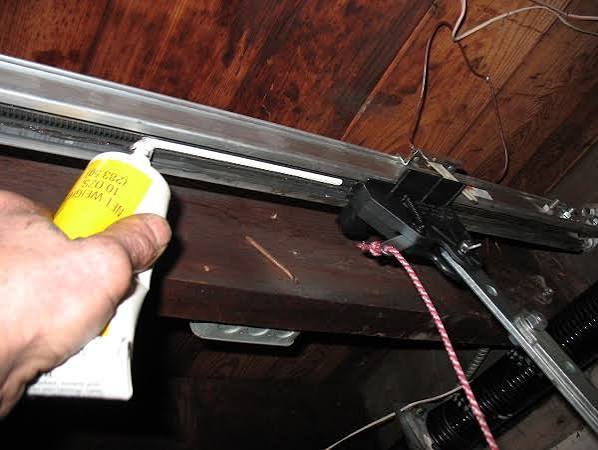
Step 2: Apply Lubricant to the Screw Rod
Shake the bottle of Genie Screw Drive Lubricant well. Apply a thin, even bead along the top of the screw rod from end to end. Less is more. You do not need to drench the rod; excess lubricant will simply drip onto your floor and collect dust.
- Quantity Guideline: Approximately 1–2 ounces of lubricant is sufficient for a standard 7-foot rail.
- Temperature Note: Perform this task when the garage temperature is between 50°F and 80°F (10°C–27°C) for optimal absorption and distribution.
Step 3: Distribute the Lubricant
Reconnect power to the opener. Operate the garage door through two complete open-and-close cycles. This allows the trolley to carry the fresh lubricant across the entire length of the screw rod, ensuring even coating inside the carriage assembly.
Step 4: Lubricate Secondary Moving Parts
While focusing on the screw drive, do not neglect other friction points. Apply white lithium grease or appropriate garage door lubricant to:
- Roller bearings (nylon rollers typically do not require lube; steel rollers do).
- Hinge pivot points.
- Torsion spring coils (lightly coat to prevent rust; never lubricate extension springs).
- Lock bars and latch mechanisms.
Step 5: Wipe Excess and Test
After cycling the door, disconnect power again and wipe away any excess lubricant that has squeezed out of the trolley or dripped onto the rail. Reconnect power and perform a final test cycle. Listen for smooth, consistent operation without grinding or binding.
Maintenance Schedule: How Often Should You Lubricate?
Consistency prevents costly repairs. Follow this schedule based on usage and climate:
- Standard Residential Use: Every 6 months (spring and fall).
- High-Frequency Use (4+ cycles/day): Every 3–4 months.
- Extreme Climates: Monthly inspection during very hot summers or freezing winters, as temperature swings affect lubricant viscosity.
- After Any Repair: Always re-lubricate after replacing the trolley, screw rod, or motor.
Statistical Insight: Industry data suggests that properly maintained garage door openers last 10–15 years, while neglected units often fail within 5–7 years due to friction-related motor burnout. Regular lubrication is the most cost-effective insurance policy for your opener.
FAQ: Common Questions About Genie Screw Drive Lubrication
Q1: Can I use silicone spray on my Genie screw drive?
A: No. Silicone spray is generally not recommended for Genie screw drives because it lacks the necessary film strength for the high-pressure metal-to-plastic interface and may degrade the trolley’s internal plastic liner over time. Always use lubricant specifically formulated for screw drive openers.
Q2: My Genie opener is still noisy after lubrication. What’s wrong?
A: If noise persists after proper lubrication, the issue may be worn trolley liner, misaligned rail, damaged roller bearings, or loose hardware. Inspect the trolley for excessive play; if the plastic liner is visibly worn or cracked, the trolley assembly needs replacement. Also check that all mounting brackets and rail bolts are tightened to manufacturer torque specifications.
Q3: How much lubricant should I apply to the screw rod?
A: Apply a thin, continuous bead—approximately 1–2 ounces for a standard rail. Over-application attracts dust and creates mess without improving performance. The goal is a light film, not a wet coating. After cycling the door twice, wipe away any visible excess.
Q4: Do I need to lubricate the motor itself?
A: No. Genie screw drive motors are sealed and permanently lubricated at the factory. Never attempt to open the motor housing or add oil/grease to internal gears. Doing so voids the warranty and creates electrical hazards. Only lubricate external moving parts as described above.
Q5: Is it safe to lubricate the opener while it’s plugged in?
A: No. Always disconnect power before cleaning or applying lubricant to prevent accidental activation, which could cause severe injury. Only reconnect power during Step 3 to distribute the lubricant via door cycling, then disconnect again for final wiping.
Q6: Can I use automotive grease instead of Genie-specific lubricant?
A: Automotive grease is typically too viscous and attracts excessive debris in the garage environment. It can also chemically interact with the trolley’s plastic components. Stick with lubricants explicitly labeled for screw drive garage door openers to ensure compatibility and longevity.
Conclusion
Mastering how to lubricate a Genie screw drive garage door opener is a straightforward yet impactful maintenance task that pays dividends in quiet operation, extended equipment life, and peace of mind. By using the correct lubricant, following safety protocols, and adhering to a regular schedule, you protect one of your home’s most-used mechanical systems from premature failure.
Remember: the right product matters as much as the right technique. Invest in genuine Genie screw drive lubricant, avoid shortcuts with inappropriate substitutes, and treat this biannual task as essential home upkeep—not an optional chore.
Found this guide helpful? Share it on Facebook, Pinterest, or Reddit to help fellow homeowners keep their Genie openers running silently and safely. Have questions or personal maintenance tips? Drop them in the comments below—we’d love to hear from you! 🔧🏡
Leave a Reply