Introduction
There are few things more frustrating than realizing you cannot access your vehicle or secure your home simply because the electricity has failed. If you are currently searching for how to keep garage door open when power is out, you are likely dealing with an immediate emergency or preparing for future storm season reliability. While modern automatic openers are convenient, understanding the manual override mechanism is a critical safety skill that ensures you maintain access and ventilation during extended blackouts without damaging your expensive equipment.
Understanding Your Garage Door’s Manual Release Mechanism
Before attempting to operate your door manually, it is vital to understand the engineering behind the system. Most residential garage doors utilize a torsion spring or extension spring system designed to counterbalance the door’s weight. The automatic opener merely acts as a motorized assistant; the springs do the heavy lifting.
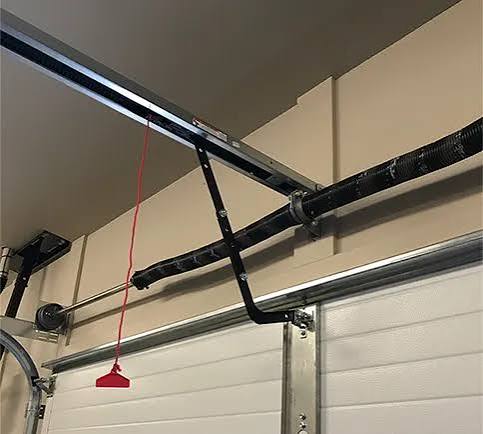
According to the Wikipedia entry on garage door openers, the trolley release mechanism was standardized to ensure homeowners could disengage the motor carriage from the track during emergencies. This red cord hanging from your opener rail is not just a decorative feature—it is your primary lifeline during a power failure. However, using it incorrectly can lead to severe injury or mechanical failure.
Why You Should Never Force an Automatic Opener During Outages
Attempting to push the door while the motor is still engaged can strip the plastic gears inside the opener unit. These gears are designed to be sacrificial components to protect the motor, but replacing them costs between $150 and $300 in parts and labor. Always disengage the carriage first.
Step-by-Step: How to Manually Open and Secure Your Door
Follow this precise tutorial to safely open your garage door and keep it in the open position. Warning: Garage doors weigh between 150 and 400 pounds. Ensure the area beneath the door is clear of children, pets, and objects before proceeding.
Step 1: Locate and Pull the Emergency Release Cord
Find the red emergency release cord hanging from the trolley carriage on the opener rail. Firmly pull the cord straight down toward the floor. You should hear or feel a distinct “click” indicating the trolley has disengaged from the motor drive.
Step 2: Lift the Door Using Proper Ergonomics
Stand facing the door with feet shoulder-width apart. Grip the bottom handle or panel edge firmly. Lift using your legs, not your back. A properly balanced door should require no more than 10–15 pounds of force to lift. If the door feels excessively heavy (over 30 lbs), stop immediately—your springs may be broken or improperly calibrated.
Step 3: Secure the Door in the Open Position
This is the most critical step for answering how to keep garage door open when power is out. Unlike automatic operation, manual mode lacks a locking brake.
- Option A (Built-in Lock): Some older models have a manual slide lock on the side track. Slide it into the locked position once fully open.
- Option B (C-Clamp Method): Place a sturdy C-clamp or locking pliers on the vertical track just below the bottom roller bracket. This physically prevents the door from sliding down.
- Option C (Prop Rod): Use a wooden dowel or metal prop rod cut to exact height placed vertically under the door center. Never use makeshift items like buckets or chairs, as they can slip catastrophically.
Step 4: Verify Stability Before Leaving
Gently test the door by applying slight downward pressure. Ensure your clamping or propping method holds firm. Only leave the door unattended once stability is confirmed.
Pros and Cons of Keeping Your Garage Door Open During Outages
Understanding the trade-offs helps you make informed decisions during emergencies.
| Factor | Keeping Door OPEN | Keeping Door CLOSED |
|---|---|---|
| Ventilation | ✅ Excellent airflow; reduces heat buildup | ❌ Poor air circulation; potential CO₂ risk if generator used nearby |
| Security | ❌ Vulnerable to theft and wildlife entry | ✅ Maintains home security perimeter |
| Temperature Control | ❌ Loss of conditioned air from adjacent rooms | ✅ Preserves indoor climate efficiency |
| Emergency Access | ✅ Immediate vehicle egress capability | ❌ Requires manual operation each time |
| Moisture/Pest Risk | ❌ High exposure to rain, insects, rodents | ✅ Protected interior environment |
Expert Insight: According to FEMA guidelines on power outage preparedness, ventilation is crucial if portable generators are operated near structures. However, security experts recommend closing and securing doors overnight even during outages to prevent opportunistic crime that often spikes during widespread blackouts.
Critical Safety Warnings You Must Follow
Safety must supersede convenience. Please adhere to these non-negotiable rules:
- Never Disconnect Springs Yourself: Torsion springs store lethal amounts of kinetic energy. Spring adjustment requires certified professionals only.
- Check Balance Monthly: An unbalanced door can fall unexpectedly. Test balance by opening halfway manually; the door should stay in place without support.
- Avoid Pinch Points: Keep fingers away from section joints and rollers. Over 30,000 garage door injuries occur annually in the US according to CPSC data.
- Re-engage Before Restoring Power: Forgetting to reconnect the trolley before power returns can cause the opener to activate unexpectedly, potentially causing damage or injury.
Frequently Asked Questions (FAQ)
Q1: Can I leave my garage door open indefinitely during a multi-day power outage?
While technically possible with proper securing methods, leaving your door open indefinitely is not recommended. Extended exposure invites moisture damage, pest infestation, and security vulnerabilities. Open only when actively needed for ventilation or vehicle access, then re-secure promptly.
Q2: My garage door won’t stay open manually—what’s wrong?
If the door falls when released, your counterbalance springs are likely broken or severely under-tensioned. Do not attempt to prop it open as a permanent solution. This indicates a mechanical failure requiring professional repair. Operating an unbalanced door risks catastrophic collapse.
Q3: How do I re-engage the automatic opener after power is restored?
First, ensure the door is fully closed. Pull the emergency release cord toward the motor unit until you hear the trolley click back into engagement. Then, press the wall button or remote to test operation. If the opener struggles or makes grinding noises, the carriage may not be fully seated—repeat the engagement process.
Q4: Is it safe to use a battery backup instead of manual operation?
Absolutely. Battery backup systems (like those from LiftMaster or Genie) provide 10–20 cycles during outages, eliminating manual risks entirely. They cost $100–$200 installed and represent the gold standard for outage preparedness. Consider this investment if you live in areas with frequent storms.
Q5: What temperature range affects garage door spring performance during outages?
Extreme cold (below 20°F/-6°C) can stiffen lubricants and increase friction, making manual operation harder. Conversely, extreme heat (above 100°F/38°C) can accelerate spring fatigue. Maintain garage temperatures between 40–90°F when possible, and apply silicone-based lubricant to rollers and hinges quarterly regardless of power status.
Q6: Can smart garage openers help during power outages?
Smart openers with integrated battery backups allow remote monitoring and operation via smartphone apps even during blackouts. However, Wi-Fi dependency means functionality ceases if internet routers also lose power. Pair smart systems with UPS-backed networking equipment for true resilience.
Conclusion: Stay Prepared, Stay Safe
Knowing how to keep garage door open when power is out transforms a stressful emergency into a manageable situation. By mastering the manual release mechanism, employing proper securing techniques, and prioritizing safety over convenience, you protect both your property and your family. Remember: preparation beats panic every time.
We hope this comprehensive guide empowers you to handle power outages with confidence. Found this helpful? Share it on Facebook, X (Twitter), or Nextdoor to help neighbors prepare before the next storm hits. Tag us in your posts—we’d love to see your garage safety setups and answer any follow-up questions in the comments! Stay safe, stay prepared, and keep those doors functioning smoothly no matter what Mother Nature throws your way. 🔧🏠
Leave a Reply