Introduction
There are few things more frustrating than pulling into your driveway during a storm or blackout, only to realize you have no idea how to get garage door open without power from outside. Being locked out of your own home is stressful, especially when weather conditions are poor or you have perishable groceries in the car. Fortunately, most modern residential garage doors in the United States are equipped with a mechanical emergency release system designed specifically for this scenario. This guide will walk you through the safe, manufacturer-approved methods to regain access without damaging your property or voiding your warranty.
Understanding the Emergency Release Kit Mechanism
Before attempting any physical intervention, it is vital to understand why your door is locked and what tools are at your disposal. When the electric opener loses power, the trolley mechanism disengages from the motor drive, but the door remains secured by the locking bars or the weight of the springs.
According to industry standards outlined by the International Door Association, nearly all post-1990s residential garage door openers sold in the US must feature a manual release mechanism. However, accessing this from the outside requires a specific component often overlooked during installation: the exterior emergency release kit.
What Is an Exterior Emergency Release Kit?
An exterior emergency release kit consists of three main components:
- A keyed lock cylinder mounted on the exterior face of the door.
- A steel cable running through the door panel.
- A connection point attached to the interior manual release lever.
If your garage does not have a keyhole on the outside panel near the top center, you likely do not have this kit installed. In that case, skip to the alternative entry methods below. Never attempt to drill into a garage door panel yourself, as this can compromise structural integrity and insulation ratings.
Step-by-Step: Using the Exterior Emergency Release Key
If you have confirmed your door has an exterior release lock, follow these precise steps to open it safely.
Tools Required
- Original emergency release key (usually tubular or barrel-style)
- Flashlight (if operating in low light)
- Work gloves (optional, for grip)
The Opening Procedure
- Locate the Lock: Find the keyhole positioned in the upper third of the garage door, typically centered horizontally.
- Insert and Turn: Insert the key fully. Turn it 90 degrees clockwise. You should feel a distinct “click” or resistance release as the internal cable pulls the red emergency cord inside.
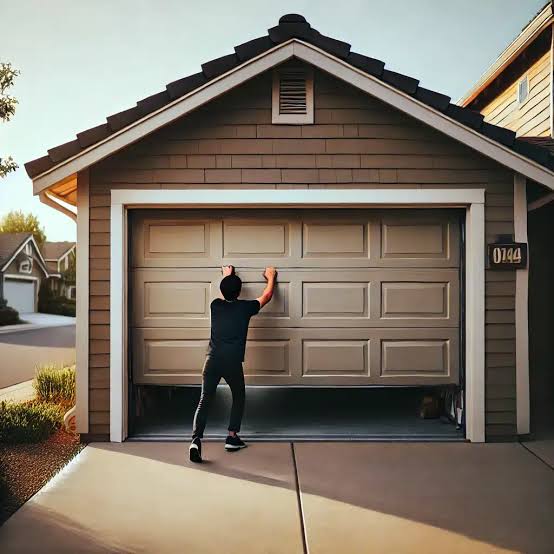
- Lift Manually: With the lock turned, grasp the bottom handle or edge of the door. Lift smoothly using your legs, not your back. The door should move freely along the tracks.
- Secure the Door: Once open, prop the door securely or re-engage the lock in the “open” position if your model supports it, to prevent accidental closure while you restore power.
⚠️ Critical Safety Warning: If the door feels excessively heavy (over 50 lbs of lift force) or drops suddenly when released, stop immediately. This indicates a broken torsion spring. Do not attempt to force it; call a licensed technician. Broken springs store lethal kinetic energy.
Alternative Methods When No Exterior Key Exists
Many US homes lack the exterior release kit. If you cannot find a keyhole, use these secondary strategies ranked by safety and effectiveness.
Method 1: Access Through Adjacent Entry Points
Check for unlocked side doors, windows, or pet doors connected to the garage. This is always the preferred first option because it avoids mechanical manipulation entirely.
Method 2: The Coat Hanger Hook Technique (Last Resort)
Only applicable if there is a visible gap between the door and frame, and you can see the interior red release cord.
- Straighten a wire coat hanger, leaving a small hook at one end.
- Carefully slide the hook through the top corner gap.
- Fish for the red emergency release cord hanging from the trolley rail.
- Pull the cord downward firmly until you hear the disengagement click.
- Lift the door manually.
Note: This method risks scratching paint or damaging weather stripping. Use only in genuine emergencies. Modern insulated doors with tight seals may make this impossible.
Method 3: Temporary Power Supply
If the outage is localized and you have access to a portable generator or jump starter with AC outlets, you can temporarily power the opener. Most US residential openers draw 3–5 amps at startup. Ensure your power source meets this specification before connecting.
Comparison: Manual Override Methods at a Glance
| Method | Difficulty | Risk Level | Required Tools | Best For |
|---|---|---|---|---|
| Exterior Release Key | Easy | Low | Original Key | Homes with installed kit |
| Side Door Entry | Very Easy | None | House Keys | Any home with adjacent access |
| Wire Hook Technique | Hard | Medium | Coat Hanger | Emergencies only, older doors |
| Portable Generator | Moderate | Low-Medium | Generator/Inverter | Extended outages |
| Professional Service | N/A | None | Phone | Broken springs/no options |
Expert Tips for Preventing Future Lockouts
Prevention is significantly cheaper than emergency service calls. Industry professionals recommend these proactive measures:
- Install an Exterior Release Kit: Average cost ranges from $75–$150 including professional installation. Consider this essential insurance.
- Test Quarterly: Every three months, disconnect power and test both interior and exterior manual releases. Cables can corrode or detach over time.
- Keep Spare Keys Accessible: Store the emergency key in a waterproof outdoor lockbox or give a copy to a trusted neighbor. Never leave it under the mat.
- Maintain Spring Balance: Have springs inspected annually. A balanced door should stay in place when lifted halfway; imbalance makes manual operation dangerous.
- Label Your Opener: Write the model number and installation date on the motor unit. This speeds up parts sourcing during emergencies.
Frequently Asked Questions (FAQ)
Can I damage my garage door by opening it manually without power?
Generally, no—if done correctly. The manual release is engineered for this purpose. Damage occurs only when users force unbalanced doors, use improper tools, or fail to re-engage the opener after power returns. Always lift smoothly and stop if resistance exceeds normal levels.
Why won’t my garage door stay open after I manually lift it?
This almost always indicates a broken or weakened torsion spring. Springs counterbalance the door’s weight (typically 100–200 lbs). Without proper tension, gravity wins. Do not attempt DIY spring repair; hire a certified technician immediately.
Is it legal to modify my garage door for exterior access?
Yes, installing manufacturer-approved exterior release kits is fully compliant with US building codes and UL safety standards. However, unauthorized modifications like drilling holes or bypassing safety sensors may violate local ordinances and void insurance coverage. Always use OEM-compatible hardware.
How much does professional emergency garage door service cost?
National averages range from $150–$350 for after-hours emergency calls, depending on region and complexity. Spring replacement adds $200–$400. Installing a preventive exterior release kit typically costs less than a single emergency visit, making it a financially sound investment.
Will my smart garage opener work during a power outage?
Most Wi-Fi-enabled openers still require mains power for the motor. Some premium models include battery backup systems providing 10–20 cycles during outages. Check your unit’s specifications; if battery backup isn’t listed, assume it won’t function without external power.
How do I re-engage the opener after restoring power?
After power returns, pull the red emergency release cord toward the motor unit until it clicks back into the trolley. Then press the wall button once to cycle the opener. The trolley should reconnect automatically. If it doesn’t, consult your owner’s manual—forcing re-engagement can strip gears.
Conclusion: Stay Prepared, Stay Safe
Knowing how to get garage door open without power from outside transforms a potential crisis into a manageable inconvenience. Whether you utilize an exterior release key, access adjacent entries, or employ temporary power solutions, prioritizing safety over speed protects both you and your property. Remember: if anything feels wrong during manual operation, trust your instincts and call a professional.
We hope this guide gives you confidence and peace of mind during unexpected outages. Found this helpful? Share it on Facebook, X (Twitter), or Nextdoor so your neighbors aren’t left stranded in the dark. Prepared communities are resilient communities—and your share might save someone a costly emergency call tonight.
Stay safe, stay prepared, and keep those garage doors moving smoothly! 🏡🔧
Leave a Reply