Introduction
There are few things more frustrating than being trapped inside your garage during a storm or realizing you cannot access your vehicle right before an important appointment. If you are currently staring at a closed door and wondering how to get garage door open when power is out, please know that this is a common issue with a straightforward mechanical solution. You do not need to be a technician to resolve this; with the right safety precautions and clear instructions, you can manually operate your door in minutes and regain access to your home or vehicle.
Understanding Your Garage Door’s Emergency Release System
Before attempting to force anything, it is vital to understand the mechanism that allows for manual operation. Modern automatic garage doors are equipped with an emergency release kit designed specifically for power failures. This system bypasses the motorized trolley, allowing the door to move freely along its tracks via human effort.
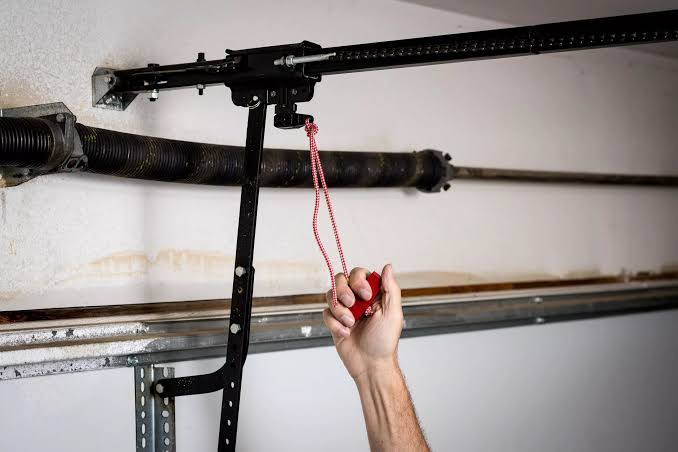
According to industry standards documented on Wikipedia, most residential torsion and extension spring systems utilize a red release cord hanging from the opener rail. This cord disengages the carriage from the drive chain or belt. However, because garage doors are heavy mechanical objects under high tension, understanding the weight distribution is critical. A standard single-car garage door weighs between 130 and 250 pounds, while double-car doors can exceed 400 pounds. The springs are designed to counterbalance this weight, making manual lifting possible only if the springs are properly calibrated.
⚠️ Critical Safety Warning: Never attempt to pull the emergency release cord while the door is in motion or partially open. Doing so can cause the door to slam shut violently due to unbalanced spring tension, leading to severe injury or property damage. Always ensure the door is fully closed before engaging the manual release.
Step-by-Step: How To Get Garage Door Open When Power Is Out
Follow these precise steps to safely disengage the opener and lift the door manually. Do not skip any safety checks.
1. Locate the Emergency Release Cord
Find the red handle hanging from the center rail of your garage door opener assembly. It is typically located near the motor unit or the top of the door header. Ensure you have stable footing and adequate lighting (use a flashlight or headlamp).
2. Disengage the Trolley Mechanism
Firmly grasp the red handle and pull it straight down toward the floor. You should hear or feel a distinct “click” as the latch releases the trolley from the drive system.
- If it resists: Do not yank violently. Gently wiggle the handle while applying downward pressure.
- Visual Check: Verify that the trolley has physically separated from the chain/belt carriage.
3. Lift the Door Using Proper Form
Stand with feet shoulder-width apart, bend at the knees, and grip the bottom edge of the door or designated lift handles. Lift smoothly using your leg muscles, not your back.
- Expected Resistance: The door should feel relatively light (approx. 10–20 lbs of perceived weight) if springs are balanced.
- Red Flag: If the door feels extremely heavy (>50 lbs) or sticks, stop immediately. This indicates broken springs or track misalignment. Do not force it.
4. Secure the Door in the Open Position
Once fully raised, engage the manual lock or use C-clamps on the tracks just below the bottom rollers to prevent accidental closure. Automatic openers often lack secondary locking mechanisms when disengaged, so physical securing is mandatory for safety.
5. Re-engage After Power Returns
When electricity is restored, close the door completely. Pull the release cord again (or push the lever back toward the motor) until it clicks into place. Test the automatic cycle by pressing the wall button once to verify proper re-engagement.
Pros and Cons: Manual Operation vs. Battery Backup
Understanding your options helps you decide whether manual operation is sufficient or if an upgrade is warranted.
| Feature | Manual Release Method | Battery Backup System |
|---|---|---|
| Cost | $0 (Built-in) | $100–$300 + Installation |
| Setup Time | Immediate | Requires Pre-installation |
| Physical Effort | Moderate to High | Zero (Motorized) |
| Safety Risk | Moderate (User Error) | Low (Automated Safety Sensors) |
| Reliability | Dependent on Spring Health | Dependent on Battery Charge |
| Best For | Rare Outages / Emergencies | Frequent Outages / Mobility Issues |
Expert Insight: “For homeowners in areas prone to extended outages, relying solely on manual release is a short-term fix,” notes certified garage door technician Mark Reynolds. “A battery backup not only provides convenience but eliminates the risk of improper manual handling during stressful situations.”
Troubleshooting: When the Door Won’t Budge Manually
If you have pulled the release cord but still cannot lift the door, diagnose the issue before proceeding:
- Broken Torsion Spring: Look for a gap in the spring coil above the door. Do not attempt repair. Call a professional.
- Track Obstruction: Inspect tracks for debris, ice, or bent sections. Clear visible obstructions carefully.
- Frozen Weather Seal: In winter, rubber seals may freeze to the concrete. Use a hairdryer or warm water (not boiling) to thaw the seal line gently.
- Cable Off Drum: If cables appear loose or derailed, the door is unsafe to touch. Professional service is required.
Frequently Asked Questions (FAQ)
Can I damage my garage door opener by using the manual release?
No, the emergency release is a designed feature, not a hack. Damage only occurs if you pull the cord while the motor is running or force the mechanism beyond its intended range. Always ensure the door is stationary before disengaging.
How much force should it take to lift the door manually?
A properly balanced garage door should require no more than 10–20 pounds of lifting force. If you struggle to lift it or it slams down when released halfway, your springs are likely worn or broken. Continuing to force an unbalanced door risks personal injury and further mechanical damage.
Will my garage door remote work during a power outage?
No. Remotes communicate with the motorized receiver, which requires AC power. Even with a battery backup, some older models may disable wireless functions to conserve energy. Always rely on the manual release or wired keypad (if battery-operated) during outages.
How long can I leave my garage door in manual mode?
You can leave it in manual mode indefinitely, but it is not recommended for daily use. Manual operation lacks safety sensors, auto-reverse features, and security locks. Re-engage the opener as soon as power is restored to maintain safety compliance and convenience.
Is it safe to manually open a garage door with a broken spring?
Absolutely not. Broken springs mean the door’s full weight (150–400+ lbs) is unsupported. Attempting to lift it can cause catastrophic failure, severe injury, or death. Tag the door as “Out of Service” and contact a licensed technician immediately.
Do all garage door openers have a manual release cord?
Most residential openers manufactured after 1990 include a red emergency release cord per UL 325 safety standards. However, some commercial units or very old models may use different mechanisms (e.g., sliding latches). Consult your owner’s manual or manufacturer website if no cord is visible.
Conclusion: Stay Safe and Prepared
Knowing how to get garage door open when power is out transforms a stressful emergency into a manageable task. By following the step-by-step manual release procedure, respecting safety warnings, and understanding your door’s mechanical limits, you protect both yourself and your property. Remember: if the door feels too heavy or something seems wrong, stop and call a professional—your safety outweighs convenience.
We hope this guide gives you confidence and clarity during unexpected outages. Found this helpful? Share it on Facebook, X (Twitter), or Pinterest to help friends and neighbors stay prepared! Bookmark this page for future reference, and consider scheduling annual spring maintenance to ensure your manual release works flawlessly when you need it most. Stay safe, stay prepared, and keep your garage accessible no matter the weather.
Leave a Reply