Introduction
Is your garage door making unusual noises or refusing to open smoothly? You might be dealing with a common but potentially dangerous issue: a derailed cable. Knowing how to get garage door cable back on track is essential for maintaining your home’s security and convenience. In this comprehensive guide, we’ll walk you through the entire process, from identifying the problem to completing the repair safely and effectively.
Garage door cables are critical components that work alongside springs to lift and lower your door. When these cables slip off their tracks or drums, it can cause significant operational issues and even pose serious safety risks. While some homeowners might consider calling a professional immediately, understanding the repair process can help you make informed decisions and potentially save money on minor fixes.
Understanding Garage Door Cable Systems
Before attempting any repairs, it’s crucial to understand how your garage door system works. Most residential garage doors use either torsion spring or extension spring systems, both of which rely on properly tensioned cables for safe operation.
Types of Garage Door Cables
| Cable Type | Common Use | Risk Level |
|---|---|---|
| Lift Cables | Connected to bottom brackets | High tension |
| Safety Cables | Run through extension springs | Moderate tension |
| Counterbalance Cables | Work with torsion springs | Very high tension |
According to the International Door Association, improperly maintained garage doors account for thousands of injuries annually in the United States. This statistic underscores why proper knowledge and caution are essential when working with these systems.
Warning Signs of Derailed Garage Door Cables
Identifying the problem early can prevent further damage and costly repairs. Here are the most common indicators that your garage door cable has come off track:
- Visible cable displacement: The cable appears loose or hangs away from its normal path
- Uneven door movement: One side of the door moves differently than the other
- Unusual grinding or scraping sounds: Metal-on-metal contact indicates misalignment
- Door sticking or jerking: Irregular motion suggests cable tension issues
- Gap between cable and drum: The cable isn’t wrapping properly around the winding drum
If you notice any of these signs, stop using your garage door immediately until the issue is resolved.
Safety Precautions Before Starting
This cannot be emphasized enough: garage door springs and cables operate under extreme tension. Attempting repairs without proper knowledge can result in serious injury or death.
Essential Safety Equipment
- Safety glasses: Protect your eyes from snapping cables or debris
- Heavy-duty work gloves: Prevent cuts and improve grip
- Steel-toed boots: Protect your feet from falling components
- Clamping pliers: Secure cables during adjustment
- Ladder: Ensure stable access to overhead components
Critical Safety Rules
- Never attempt repairs if you’re unsure about any step
- Always disconnect the garage door opener before starting work
- Keep children and pets away from the work area
- Have a helper present for additional safety and assistance
- If the spring system appears damaged, call a professional immediately
For more information about garage door safety standards, visit Wikipedia’s article on garage doors.
Step-by-Step Guide: How To Get Garage Door Cable Back On Track
Follow these detailed steps carefully to restore your garage door cable to its proper position.
Step 1: Prepare Your Workspace
Begin by clearing the area around your garage door. Remove any vehicles, tools, or obstacles that might interfere with your work. Ensure adequate lighting so you can see all components clearly.
Disconnect your garage door opener by pulling the emergency release cord. This prevents accidental activation while you’re working on the system.
Step 2: Release Tension Safely
Warning: This is the most dangerous part of the process. If you have torsion springs, do not attempt to release tension yourself—call a professional.
For extension spring systems:
- Close the garage door completely
- Locate the safety cables running through the extension springs
- Using locking pliers, secure the cable near the bottom bracket
- Slowly release tension by loosening the cable attachment point
Step 3: Inspect All Components
Before repositioning the cable, thoroughly inspect all related parts:
- Check the cable for fraying, kinks, or broken strands
- Examine the drum for damage or wear
- Inspect pulleys and rollers for smooth operation
- Look at the bottom brackets for secure attachment
Replace any damaged components before proceeding. Using worn parts can lead to immediate re-derailment or worse, catastrophic failure.
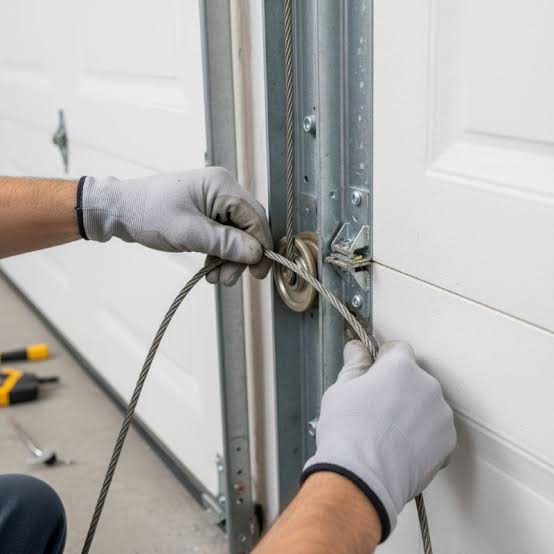
Step 4: Reposition the Cable
- Identify the correct path: Trace where the cable should run from the bottom bracket, over the pulley, and onto the drum
- Thread the cable: Carefully guide the cable back onto the pulley wheel
- Wind onto drum: Rotate the drum manually to wind the cable evenly
- Ensure proper seating: Verify the cable sits correctly in the drum’s groove
Use gentle pressure throughout this process. Forcing the cable can cause damage or injury.
Step 5: Restore Proper Tension
Once the cable is back on track:
- Reattach the cable to the bottom bracket
- Gradually restore tension according to manufacturer specifications
- Test the balance by lifting the door halfway—it should stay in place
- Make minor adjustments as needed
The door should move smoothly without binding or excessive effort.
Step 6: Test and Finalize
Reconnect your garage door opener and test the system:
- Open and close the door several times
- Listen for unusual noises
- Watch for smooth, even movement
- Check that both sides operate synchronously
If everything functions correctly, your repair is complete. If problems persist, consult a professional technician.
Common Mistakes to Avoid
Many DIY enthusiasts make these errors when attempting cable repairs:
Ignoring Spring Tension: Underestimating the force stored in garage door springs leads to dangerous situations. Always respect the tension and seek professional help when uncertain.
Using Incorrect Tools: Standard pliers won’t provide the grip needed for heavy-gauge cables. Invest in proper garage door repair tools.
Skipping Inspection: Simply putting the cable back without checking for underlying damage guarantees future problems.
Rushing the Process: Patience is essential. Hasty work often results in improper installation and repeated failures.
When to Call a Professional
While minor cable adjustments might be manageable for experienced DIYers, certain situations require professional expertise:
- Torsion spring systems (extremely dangerous)
- Severely damaged or broken cables
- Multiple components showing wear
- Previous unsuccessful repair attempts
- Lack of proper tools or confidence
Professional garage door technicians have specialized training and equipment to handle these complex systems safely. The average cost for professional cable repair ranges from $150 to $350, which may be worth the investment for peace of mind and guaranteed results.
Maintenance Tips to Prevent Future Issues
Prevention is always better than repair. Follow these maintenance practices to keep your garage door cables on track:
Monthly Checks
- Visually inspect cables for wear or displacement
- Lubricate moving parts with silicone-based lubricant
- Test door balance and operation
Annual Professional Service
- Schedule a comprehensive inspection
- Have tension adjusted by experts
- Replace worn components proactively
Environmental Considerations
- Keep tracks clean of debris and dirt
- Address moisture issues that cause rust
- Ensure proper alignment after temperature changes
FAQ Section
Q: Can I fix a garage door cable myself?
A: Minor cable adjustments on extension spring systems may be possible for experienced DIYers with proper tools and safety knowledge. However, torsion spring systems should always be handled by professionals due to extreme danger. If you’re uncertain about any aspect, call a qualified technician.
Q: How long does it take to get a garage door cable back on track?
A: For experienced individuals with the right tools, the process typically takes 30-60 minutes. Beginners should allow 2-3 hours to work carefully and safely. Remember, rushing increases risk significantly.
Q: What causes garage door cables to come off track?
A: Common causes include worn pulleys, loose hardware, improper installation, cable damage, or lack of regular maintenance. Temperature fluctuations and frequent use can also contribute to gradual misalignment over time.
Q: How much does professional garage door cable repair cost?
A: Professional repair typically costs between $150 and $350, depending on your location, the complexity of the issue, and whether additional parts need replacement. Emergency or after-hours service may cost more.
Q: Is it safe to use my garage door if the cable is slightly off track?
A: No. Even minor cable misalignment can worsen quickly and lead to complete failure. Continued use risks damaging other components and creates safety hazards. Address the issue immediately before operating the door again.
Q: How often should garage door cables be inspected?
A: Visual inspections should occur monthly, while thorough professional inspections are recommended annually. Increase frequency if you notice any operational issues or live in areas with extreme weather conditions.
Conclusion
Learning how to get garage door cable back on track empowers you to address common garage door issues confidently. However, always prioritize safety over savings. If any aspect of the repair makes you uncomfortable, don’t hesitate to call a professional.
Regular maintenance and prompt attention to warning signs will keep your garage door operating smoothly for years to come. Share this guide with friends and family who might benefit from this knowledge, and remember: a well-maintained garage door is a safe garage door.
Have you successfully repaired your garage door cable? Share your experience in the comments below, or spread this helpful guide on social media to help others tackle this common household challenge!
Leave a Reply