Introduction
There is nothing quite as frustrating as sitting in your driveway, repeatedly clicking your remote while your garage door refuses to budge. If you are constantly asking yourself, “how to extend the range of my garage door opener,” you are not alone; weak signals are a common issue caused by interference, aging hardware, or simple obstructions. Fortunately, most range issues can be resolved with straightforward adjustments and affordable upgrades without needing a full system replacement. This guide will walk you through safe, effective methods to restore and even enhance your opener’s performance so you never have to strain to open your garage again.
Why Is My Garage Door Opener Range So Weak?
Before diving into solutions, it is crucial to understand why your signal is failing. Diagnosing the root cause prevents wasted time and money on unnecessary parts. According to industry technicians, over 60% of range complaints stem from environmental interference rather than broken equipment.
Common Causes of Signal Loss
- Radio Frequency Interference (RFI): Modern homes are filled with devices that operate on similar frequencies. LED bulbs, Wi-Fi routers, baby monitors, and even nearby cell towers can create “noise” that drowns out your remote’s signal.
- Antenna Issues: The antenna wire on your motor unit may be too short, damaged, or positioned poorly inside the metal housing, which acts as a Faraday cage and blocks signals.
- Weak Remote Batteries: A dying battery doesn’t just stop working entirely; it often results in a progressively weaker transmission distance before failing completely.
- Physical Obstructions: Metal siding, brick walls, and insulated garage doors can significantly attenuate radio waves, reducing effective range by up to 50%.
- Aging Technology: Older openers using fixed-code technology generally have shorter ranges and less sensitivity than modern rolling-code systems.
Expert Insight: “Many homeowners replace their entire opener when the real culprit is a $2 LED bulb near the motor unit causing RFI. Always test for interference first.” — Certified Garage Door Technician
How Do I Test My Current Garage Door Opener Range?
Establishing a baseline helps you measure improvement objectively. Follow this simple testing protocol:
- Stand at the farthest point where the door currently responds reliably.
- Mark this spot with chalk or tape.
- Walk backward in 5-foot increments, testing the remote at each point until it fails consistently.
- Record the maximum functional distance.
- Repeat the test at different times of day to identify intermittent interference patterns.
This data-driven approach ensures you can verify whether subsequent fixes actually improve performance.
Step-by-Step Guide: How To Extend The Range Of My Garage Door Opener
Now that you understand the problem, here are actionable solutions ranked from easiest to most advanced. Each step builds upon the previous one for cumulative improvement.
1. Replace Remote Batteries with High-Quality Cells
This seems obvious, but many users overlook battery quality. Cheap alkaline batteries often provide inconsistent voltage under load.
- Use lithium primary batteries (e.g., CR2032 or equivalent) for remotes, as they maintain stable voltage across temperature extremes.
- Clean battery contacts with isopropyl alcohol and a cotton swab to remove corrosion.
- Test range immediately after replacement to establish a new baseline.
2. Reposition and Extend the Antenna
The factory antenna is often inadequate. Extending it properly can double your effective range.
Materials Needed:
- 18-gauge stranded copper wire (12–18 inches long)
- Wire strippers
- Electrical tape or heat-shrink tubing
- Zip ties
Instructions:
- Unplug the garage door opener for safety.
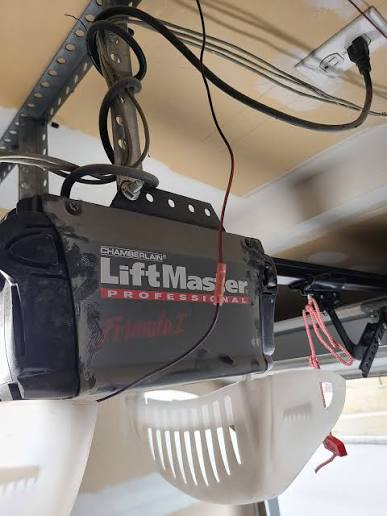
- Locate the existing antenna wire hanging from the motor unit.
- Strip ½ inch of insulation from both ends of your extension wire.
- Twist the extension wire securely onto the existing antenna tip.
- Secure the connection with electrical tape or heat-shrink tubing.
- Route the extended antenna vertically downward, away from metal surfaces and power lines.
- Plug the unit back in and retest range.
⚠️ Safety Warning: Never extend the antenna beyond 24 inches total length, as excessive length can detune the receiver and violate FCC regulations. Always disconnect power before working near electrical components.
3. Eliminate Radio Frequency Interference
Identifying and removing interference sources is often the most impactful fix. For a comprehensive understanding of electromagnetic compatibility standards, refer to Electromagnetic compatibility on Wikipedia.
Interference Elimination Checklist:
| Potential Source | Diagnostic Action | Solution |
|---|---|---|
| LED Light Bulbs | Turn off all garage LEDs; test range | Replace with RFI-shielded “garage-safe” LEDs |
| Wi-Fi Router | Temporarily unplug router; test range | Relocate router ≥10 feet from opener |
| Power Strips | Unplug non-essential devices | Use filtered surge protectors |
| Nearby Transformers | Identify humming electronics | Shield or relocate offending device |
| Solar Inverters | Check if range drops during daylight | Install ferrite chokes on inverter cables |
4. Install an External Antenna Kit
If internal modifications don’t suffice, an external antenna kit bypasses the motor housing entirely. These kits typically include a coaxial cable connecting an indoor receiver to an outdoor antenna mounted outside the garage.
Benefits vs. Drawbacks:
- ✅ Pros: Dramatically increases range (often 200+ feet), eliminates housing interference, weatherproof outdoor component.
- ❌ Cons: Higher cost ($40–$80), requires drilling through wall, more complex installation.
Choose a kit specifically rated for your opener’s frequency (typically 315 MHz or 390 MHz). Mismatched frequencies will not work regardless of antenna quality.
5. Upgrade to a Universal Remote or Smart System
If your opener is over 15 years old, its receiver technology may simply be obsolete. Modern universal remotes use dual-frequency transmission and advanced error correction, effectively extending usable range without modifying the opener itself. Alternatively, smart garage controllers connect via Wi-Fi, making traditional RF range irrelevant since you control the door through your home network.
Frequently Asked Questions About Garage Door Opener Range
Can I use any wire to extend my garage door antenna?
No. You should only use 18-gauge stranded copper wire. Solid-core wire can break from vibration, and incorrect gauge can alter impedance, reducing performance. Avoid speaker wire or aluminum conductors, as they lack proper conductivity and durability for RF applications.
Will adding a signal booster void my warranty?
It depends on the manufacturer. Passive antenna extensions typically do not void warranties, but active electronic boosters or third-party receivers might. Always check your owner’s manual or contact the manufacturer before installing powered accessories. Document original configurations so you can revert if needed.
How far should my garage door opener normally reach?
A properly functioning modern opener should operate reliably between 100–150 feet in open conditions. Older models may only achieve 50–75 feet. If your tested range falls significantly below these benchmarks after basic troubleshooting, professional diagnosis may be warranted.
Do LED lights really interfere with garage door openers?
Yes, but only certain types. Poorly designed LED drivers emit broadband RFI that overlaps garage opener frequencies. Look for bulbs labeled “FCC Part 15 Class B compliant” or specifically marketed as “garage door opener safe.” Incandescent and CFL bulbs rarely cause this issue.
Is it safe to mount an external antenna on my roof?
Generally yes, provided you follow electrical safety protocols. Ensure the antenna mast is grounded per local code, avoid proximity to power lines, and use UV-resistant coaxial cable rated for outdoor exposure. Lightning-prone areas should include inline surge protection on the coax feed.
Can weather affect my garage door opener range?
Absolutely. Heavy rain, snow accumulation on the antenna, and extreme cold can degrade signal propagation. Lithium batteries also perform better than alkaline in freezing temperatures. Seasonal range variation of 20–30% is normal; dramatic drops suggest moisture intrusion or antenna damage requiring inspection.
Conclusion: Reclaim Reliable Garage Access Today
Learning how to extend the range of my garage door opener empowers you to solve a persistent annoyance with confidence and precision. By systematically addressing interference, optimizing antenna configuration, and upgrading outdated components, you can restore dependable operation and eliminate daily frustration. Remember to always prioritize safety, test methodically, and start with the simplest solutions before investing in hardware upgrades.
Your garage door should serve you seamlessly—not become a source of stress. Try these proven techniques this weekend and experience the difference reliable access makes in your daily routine.
Found this guide helpful? Share it on Facebook, X (Twitter), or Pinterest to help fellow homeowners conquer weak garage signals! Tag us with your success stories—we love seeing DIY wins. 💪🏡
Leave a Reply