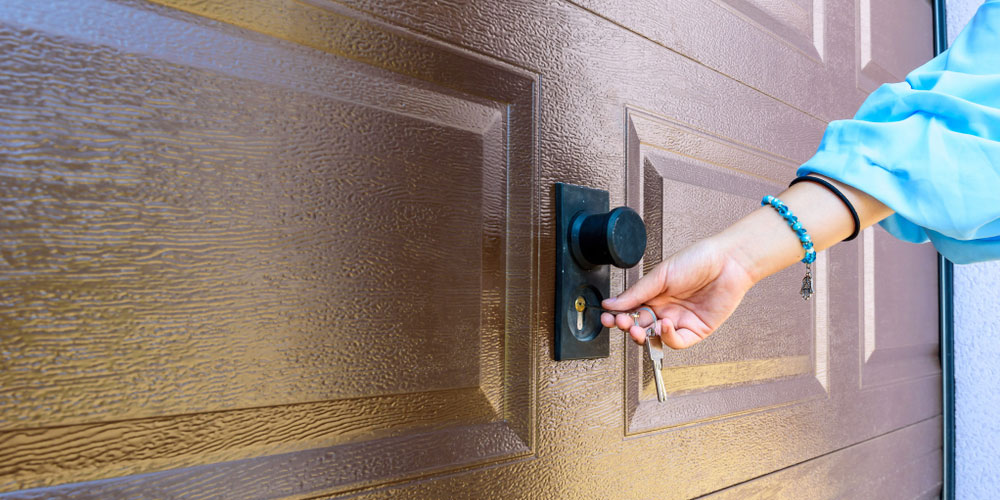
Introduction
Dealing with a jammed mechanism or realizing you’ve lost the only key to your garage can be incredibly stressful. Your garage protects not just your car, but often your most valuable tools and the entry to your home. If you are looking for a reliable way to secure your property, learning how to change the lock on a garage door is a vital skill that saves you money on locksmith fees and restores your peace of mind immediately.
Why Learning How To Change The Lock On A Garage Door Is Essential
Before we dive into the tools, it is important to understand why this task is critical for your home’s security. Many homeowners overlook the manual lock on their garage door, relying solely on the electronic opener. However, during power outages or system failures, the manual lock is your primary defense.
According to security studies, nearly 9% of burglars enter through the garage, often exploiting weak or outdated locking mechanisms. By taking the time to upgrade or replace a faulty lock, you are significantly hardening your home’s perimeter. It is not just about fixing a broken part; it is about ensuring that your sanctuary remains secure against intruders.
Understanding Garage Door Lock Types
Not all garage doors use the same locking mechanism. Before you buy a replacement, you need to identify which type you currently have. The most common types in the US are the T-Handle Lock and the Slide Lock.
| Lock Type | Description | Best For | Difficulty to Replace |
|---|---|---|---|
| T-Handle Lock | Features a handle that turns 90 degrees to engage a latch. Common on roll-up doors. | Standard sectional garage doors. | Moderate (requires removing interior handle). |
| Slide Lock | A manual bar that slides across the door track to lock it in place. | Older doors or side-entry doors. | Easy (surface mounted). |
| Side Lock | Installed on the side of the door track, engaging with the wall. | Custom or heavy-duty wooden doors. | Hard (requires precise alignment). |
Note: For this guide, we will focus on the most common scenario: replacing a standard T-Handle Lock, which is found on the majority of modern residential garage doors.
Essential Tools for the Job
To ensure a smooth process, gather these tools before you begin. Having everything within reach prevents frustration and ensures you don’t leave the door unsecured halfway through the job.
- Screwdrivers: Both Phillips head (#2) and Flathead.
- Pliers: Vise-grips or locking pliers are crucial if bolts are rusted.
- Tape Measure: To verify the backset and faceplate dimensions.
- New Lock Set: Ensure it matches your door thickness (usually 1-3/8″ to 2″).
- Silicone Spray Lubricant: For smooth operation after installation.
- Safety Glasses: To protect your eyes from falling debris or rust.
- Step Ladder: If your handle is mounted high.
Step-by-Step: How To Change The Lock On A Garage Door
Follow these detailed instructions carefully. If you encounter resistance, do not force it, as this can damage the door panel.
Step 1: Preparation and Safety
Ensure the garage door is closed and disconnected from the automatic opener if possible. This prevents the door from moving unexpectedly while you work on the locking rail. Put on your safety glasses.
Step 2: Remove the Old Lock Assembly
Most T-handle locks are secured by two long bolts that go through the door and connect the exterior handle to the interior thumb turn or handle.
- Locate the screws: On the inside of the garage, look at the back of the lock mechanism. You will typically see two screws or nuts holding the interior plate.
- Unscrew carefully: Use your screwdriver or socket wrench to remove these fasteners. Pro Tip: If the screws are rusted, spray them with a penetrating oil like WD-40 and wait 10 minutes before trying again.
- Remove the interior handle: Pull the interior piece away from the door.
- Remove the exterior handle: Go to the outside. The T-handle should now be loose. Pull it out. If the locking bar (the metal rod that goes down into the track) is attached, you may need to detach it from the handle or let it slide down into the track carefully.
Step 3: Measure and Select the Replacement
This is the most critical step to ensure the new lock fits.
- Measure the Backset: This is the distance from the edge of the door to the center of the lock hole. Standard sizes are usually 2-3/8 inches or 2-3/4 inches.
- Check the Faceplate: Measure the width and height of the faceplate (the metal square behind the handle) to ensure the new one covers the old paint marks.
Step 4: Install the New Lock Mechanism
- Insert the locking bar: If your new lock uses a vertical locking bar, insert it into the top or bottom track (depending on your setup) first.
- Mount the exterior handle: Push the spindle (the connecting rod) through the hole in the door. Align the faceplate so it sits straight.
- Attach the interior handle: From the inside, align the interior plate with the spindle.
- Secure the bolts: Insert the two long screws through the interior plate and thread them into the exterior handle. Tighten them firmly but do not overtighten, which can strip the threads or warp the door panel.
Step 5: Test and Lubricate
Before declaring the job done, test the functionality.
- Insert the key and turn it. The locking bar should move smoothly up or down.
- Engage the T-handle. It should turn 90 degrees with a satisfying “click.”
- Maintenance Tip: Spray a small amount of silicone-based lubricant into the keyway and the moving parts of the latch. Avoid grease, as it attracts dust and dirt, which can gum up the mechanism over time.
Expert Insights & Security Statistics
To provide a broader perspective on why this upgrade matters, we consulted industry standards on home security.
“A garage door is often the largest opening in a home, and if the manual lock is flimsy, it invites pry-bar attacks. Upgrading to a heavy-duty T-handle with a hardened steel deadbolt can deter 90% of opportunistic burglars.” — Mark Stevens, Certified Master Locksmith (CML)
Furthermore, understanding the mechanics of your security helps. For a deeper technical understanding of how locking mechanisms have evolved to prevent forced entry, you can refer to the historical context of the Lock and key on Wikipedia. This highlights why modern garage locks use complex pin-tumbler systems rather than simple warded locks.
Cost Analysis:
- DIY Cost: $15 – $35 (Price of the lock set).
- Professional Installation: $75 – $150 (Labor + parts).
- Time Saved: 30–45 minutes doing it yourself.
Troubleshooting Common Issues
Even with a perfect installation, you might face minor hiccups. Here is how to solve them:
- Key Won’t Turn: The lock cylinder might be misaligned. Loosen the mounting screws slightly, adjust the handle position, and retighten.
- Lock Feels “Grindy”: This usually indicates a lack of lubrication or debris in the track. Clean the vertical track where the locking bar slides and apply silicone spray.
- Handle is Loose: Check the set screws on the interior handle. Over time, vibration from the garage door opener can loosen these.
Frequently Asked Questions (FAQ)
1. Can I rekey my existing garage door lock instead of replacing it? Yes, if you have a standard pin-tumbler lock (like a Kwikset or Schlage), you can often rekey it to match your house key. However, if the mechanism is rusted or broken, replacement is the better option for security.
2. How do I know if I need a left-hand or right-hand lock? Stand outside facing the garage door. If the hinges are on the left, you generally need a left-hand lock. Most modern T-handle locks are universal or reversible, but always check the packaging.
3. Is it safe to use a smart lock on a garage door? Smart locks designed specifically for garage doors (like those controlling the opener motor) are safe and convenient. However, installing a smart manual deadbolt is rare. For manual security, a high-quality mechanical lock is still the industry standard.
4. What should I do if the lock freezes in winter? Do not force the key, as it can snap. Use a lock de-icer or gently heat the key with a lighter (carefully!) and insert it into the lock to melt the ice inside.
5. Can I install a slide lock if I currently have a T-handle? Yes, you can add a slide lock as a secondary security measure. This requires drilling holes into the door track and the door bottom, so measure carefully to ensure the door can still close properly.
Conclusion
Knowing how to change the lock on a garage door is an empowering skill that enhances your home’s security and saves you the cost of professional services. By following these steps—removing the old assembly, measuring accurately, and installing the new mechanism with care—you ensure your home remains protected year-round.
Leave a Reply