Have you ever stood in your driveway, remote in hand, watching your garage door struggle to rise or hearing that ominous grinding noise? It is a stressful moment that leaves many homeowners asking the critical question: how much weight can a garage door opener lift? Understanding the lifting capacity of your unit is not just about convenience; it is essential for safety, longevity, and preventing costly repairs down the road.
In this guide, we will break down the mechanics of garage door openers, explain how horsepower correlates with weight, and help you determine if your current system is up to the task.
Understanding Horsepower and Lifting Capacity
To understand how much weight an opener can handle, we first need to look at its engine: the motor. In the world of garage doors, power is measured in Horsepower (HP). However, HP is not a direct measurement of weight like pounds or kilograms. Instead, it represents the torque and speed at which the motor can operate.
Most residential garage door openers fall into three main categories:
- ½ HP Motors: The standard for most single-car garages.
- ¾ HP Motors: The preferred choice for double-car garages or heavier doors.
- 1 HP+ Motors: Designed for oversized, custom, or extremely heavy materials like solid wood.
The Role of Springs
It is crucial to note that the garage door opener does not lift the entire weight of the door on its own. The torsion springs (or extension springs) do the heavy lifting by counterbalancing the door’s weight. The opener’s job is merely to move the door along the tracks once the spring has neutralized most of the gravity.
If your springs are broken or improperly calibrated, even a 1 HP motor will struggle or fail. This is why regular maintenance of both the springs and the opener is vital. For more detailed technical specifications on mechanical systems, you can refer to general engineering principles on Wikipedia.
How Much Weight Can Different HP Models Lift?
While manufacturers rarely list a specific “maximum poundage” because variables like spring tension and track friction play a huge role, industry standards provide clear guidelines. Here is a breakdown of what you can generally expect from each motor size.
| Motor Power | Typical Door Weight Capacity | Best Use Case |
|---|---|---|
| ½ HP | Up to 350 lbs (159 kg) | Single aluminum or steel sectional doors. |
| ¾ HP | Up to 600 lbs (272 kg) | Double wooden doors, insulated steel doors. |
| 1 HP | 600+ lbs (272+ kg) | Custom solid wood, oversized carriage-style doors. |
Why ½ HP Might Not Be Enough
Many homeowners assume that a ½ HP opener is sufficient because it came with their house. However, modern garage doors are becoming heavier. Insulation, windows, and decorative hardware add significant weight. If you have a double-car garage with an insulated steel door, a ½ HP motor may be operating at its maximum limit, leading to premature wear.
Factors That Affect Lifting Performance
Knowing the motor’s rating is only part of the equation. Several external factors can reduce the effective lifting capacity of your garage door opener.
1. Door Material and Construction
A basic single-layer steel door is lightweight. In contrast, a triple-layer insulated door with wood veneer can weigh twice as much. Solid wood doors, often found in historic homes or luxury builds, are the heaviest and require the most robust opening systems.
2. Track Condition and Alignment
If your tracks are bent, dirty, or misaligned, the friction increases. This forces the motor to work harder to move the door, effectively reducing its lifting capacity. Regular cleaning and lubrication of the rollers and tracks can restore efficiency.
3. Climate and Temperature
Extreme cold can thicken the lubricant on your springs and hinges, increasing resistance. In colder climates, your opener may struggle more in winter than in summer, even if the door weight hasn’t changed.
4. Age of the Opener
Older openers lose efficiency over time. Gears wear down, and capacitors weaken. An old ¾ HP opener might not perform as well as a new ½ HP model with advanced DC motor technology.
Signs Your Opener Is Struggling with the Weight
How do you know if your current setup is inadequate? Watch for these red flags:
- Slow Operation: The door takes significantly longer to open or close than it used to.
- Straining Noises: You hear grinding, humming, or clicking sounds during operation.
- Reversing Unexpectedly: The door starts to go up but then reverses back down. This often indicates the safety sensors or force settings are detecting too much resistance.
- Motor Overheating: After a few cycles, the motor housing feels excessively hot to the touch.
- Failure to Close Completely: The door stops a few inches from the ground.
If you notice any of these issues, do not ignore them. Continuing to use an overloaded opener can lead to motor burnout or, worse, damage to the door panels.
How to Choose the Right Opener for Your Door
Selecting the correct opener involves more than just picking the highest horsepower available. Here is a step-by-step approach to ensuring compatibility.
Step 1: Weigh Your Door
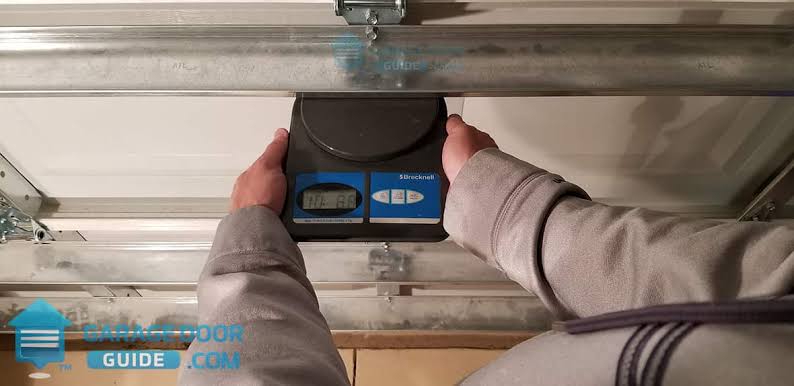
If you don’t know the weight of your door, you can estimate it based on dimensions and material, or use a bathroom scale to weigh a section if it’s a sectional door. Alternatively, consult the manufacturer’s specifications if you know the brand and model.
Step 2: Check Spring Balance
Disconnect the opener by pulling the release cord. Manually lift the door halfway. It should stay in place without falling or rising further. If it falls, your springs are weak. If it flies up, they are too tight. A balanced door is essential for any opener to function correctly.
Step 3: Consider Future Upgrades
If you plan to add insulation or replace a light door with a heavier wood one in the future, consider installing a ¾ HP or 1 HP opener now. It is cheaper to buy the right capacity upfront than to replace the motor later.
Step 4: Look for DC Motor Technology
Modern DC (Direct Current) motors offer variable speed control and soft-start/soft-stop features. They are quieter, more energy-efficient, and often provide more torque than traditional AC motors of the same HP rating.
FAQ Section
Q: Can I upgrade my garage door opener to lift more weight?
A: Yes, you can upgrade to a higher horsepower model. However, ensure that your garage door springs are also rated for the door’s weight. An upgraded opener cannot compensate for broken or weak springs.
Q: Does the type of drive (chain, belt, screw) affect lifting capacity?
A: The drive type primarily affects noise and maintenance, not lifting capacity. Chain drives are strong and durable, belt drives are quiet, and screw drives are low-maintenance. All three can handle heavy loads if paired with the correct motor HP.
Q: Why does my garage door reverse when trying to close?
A: This is usually a safety feature. The force setting may be too low, causing the opener to think it hit an obstacle. Adjust the force limits according to your manual, or check for obstructions in the tracks.
Q: Is a 1 HP opener necessary for a standard double-car garage?
A: For most standard insulated steel double doors, a ¾ HP opener is sufficient. A 1 HP opener is recommended only if the door is exceptionally heavy, such as solid wood or custom-designed with extensive glass.
Q: How often should I maintain my garage door opener?
A: Perform a basic inspection every six months. Lubricate moving parts, check spring tension, and test the auto-reverse safety feature monthly. Professional maintenance is recommended annually.
Conclusion
Understanding how much weight can a garage door opener lift is key to maintaining a safe and functional home. While a ½ HP motor works for lighter, single-car doors, most modern double-car garages benefit from the robustness of a ¾ HP or 1 HP unit. Remember, the opener is only as good as the springs that balance the door.
By matching your motor’s power to your door’s weight and keeping up with regular maintenance, you can avoid unexpected failures and extend the life of your system. If you found this guide helpful, please share it with friends or neighbors who might be struggling with their own garage doors. A little knowledge goes a long way in keeping our homes running smoothly!
Leave a Reply