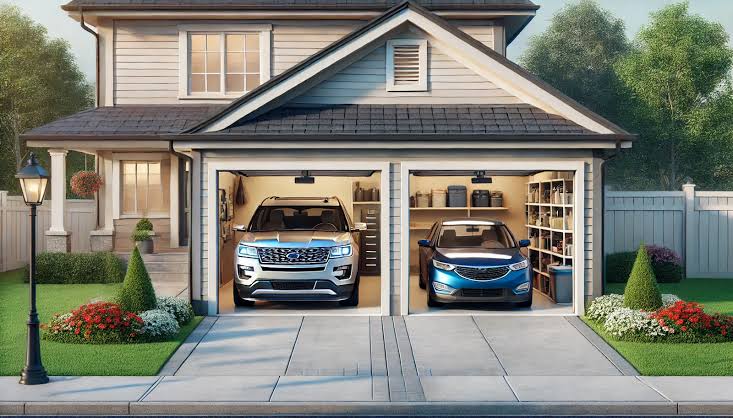
Dealing with a broken or outdated garage door is incredibly frustrating, especially when it compromises your home’s security and daily routine. If you are stressing over your budget, you are probably wondering exactly how much to replace a two car garage door without breaking the bank. Let’s break down the costs, materials, and expert tips so you can make a confident, stress-free decision.
How Much To Replace A Two Car Garage Door: The 2026 Cost Breakdown
When planning your home improvement budget, understanding the national averages is crucial. According to recent 2026 industry data, the national average cost to replace a standard two-car garage door ranges from $1,200 to $2,800.
Most homeowners spend around $1,800 for a standard, non-insulated steel door with professional installation included. However, your specific project can fall outside this range based on your choices.
On the low end, a basic single-layer steel door can cost as little as $800. On the high end, custom wood doors with smart openers and high R-value insulation can push the price past $5,000.
What Factors Influence Your Garage Door Replacement Cost?
Several variables dictate your final bill. Let’s explore the most significant factors so you know exactly where your money is going.
1. Material Choices
The material you choose impacts both the upfront cost and long-term maintenance. Here is a quick comparison of the most popular options:
| Material | Average Cost Range | Pros | Cons |
|---|---|---|---|
| Steel | $800 – $2,500 | Durable, low maintenance, dent-resistant options available. | Can rust if the finish is scratched; less authentic look. |
| Wood | $1,500 – $5,000+ | Beautiful, custom designs, boosts curb appeal massively. | High maintenance, requires regular sealing, expensive. |
| Aluminum/Glass | $1,500 – $3,500 | Modern aesthetic, lets natural light into the garage. | Prone to dents, lower insulation value. |
| Fiberglass | $1,000 – $2,200 | Excellent for coastal areas (resists salt corrosion). | Can crack in extremely cold climates, yellows over time. |
2. Insulation Levels
If your garage is attached to your house, insulation is non-negotiable. Insulation is measured by an R-value, which indicates how well the material resists heat flow.
- Uninsulated (R-value 0): Cheapest, but offers zero temperature control.
- Polystyrene Board (R-value 6 to 12): A budget-friendly insulated option.
- Polyurethane Foam (R-value 12 to 18+): Sprayed foam that fills all gaps. It is more expensive but offers superior structural strength and energy efficiency.
3. Labor and Hardware
Professional installation typically costs between $300 and $600. If you need to replace the tracks, rollers, or springs due to wear and tear, expect to add another $200 to $400 for parts and labor.
Step-by-Step: How to Measure and Prepare for Installation
Understanding the basic mechanics of a garage door can help you communicate better with your contractor. If you are taking measurements yourself to get an accurate quote, follow these precise steps.
Step 1: Measure the Opening Measure the width and height of the actual door opening. For a standard two-car setup, you should measure exactly 16 feet wide by 7 feet high. Always measure in three places (left, center, right) to ensure the opening is perfectly square.
Step 2: Check the Side and Headroom Clearance Measure the space between the left and right walls. You must have at least 3.75 inches of clearance on both sides to accommodate the vertical tracks. Next, measure from the top of the door opening to the ceiling. You need a minimum of 10 to 12 inches of headroom for a standard torsion spring system.
Step 3: Safely Remove the Old Door (For DIYers) Warning: Garage door springs are under extreme tension and can cause severe injury. If you are removing the old door yourself, use a 7/16-inch socket wrench to carefully remove the bottom bracket hinges. Always clamp the door sections tightly with locking pliers to the tracks before loosening any spring tension.
DIY vs. Professional Installation: Pros and Cons
Should you grab your tools or pick up the phone? Here is a quick text infographic to help you decide.
🛠️ DIY Installation
- Pros: You save $300–$600 on labor costs.
- Cons: High risk of severe injury from heavy doors and tension springs. It usually takes an amateur 6–10 hours to complete, and it often voids the manufacturer’s warranty.
👷 Professional Installation
- Pros: Guaranteed safety, includes a labor warranty, and the job is completed in just 3–4 hours. Pros also properly balance the door, ensuring it lasts longer.
- Cons: Higher upfront cost.
Expert Tips to Maximize Your Return on Investment
Replacing your garage door is not just a repair; it is a strategic investment. According to the 2026 Cost vs. Value Report, replacing your garage door yields an average 95% return on investment at resale.
To maximize this value, home improvement experts recommend the following:
- Match Your Home’s Architecture: Choose a door style and color that complements your home’s exterior. A modern home looks best with clean, aluminum-glass doors, while a traditional home benefits from carriage-house steel doors.
- Upgrade to a Smart Opener: Spending an extra $250 to $400 on a Wi-Fi-enabled smart opener allows you to control and monitor your door from your phone, a highly desired feature for modern homebuyers.
- Don’t Skip the Windows: Adding decorative window inserts to the top panel can increase the cost by only $150 to $250, but it drastically improves your home’s curb appeal by letting natural light into the space.
Frequently Asked Questions (FAQ)
Q1: What is the standard size for a two-car garage door?
A: The standard size for a two-car garage door is 16 feet wide by 7 feet high. However, many newer homes feature wider (18 feet) or taller (8 feet) doors to comfortably accommodate larger SUVs, trucks, and overhead storage racks.
Q2: How long does it take to replace a two-car garage door?
A: A professional team can typically remove the old door and install the new one in about 3 to 4 hours. If you are also replacing the tracks, weather sealing, and installing a new motorized opener, expect the entire process to take closer to 5 hours.
Q3: Is it cheaper to repair or replace a garage door?
A: As a general rule of thumb, if the repair costs more than 50% of the price of a new door, you should replace it. Additionally, if your current door is over 15 years old, replacing it is almost always the more cost-effective, safer, and more energy-efficient choice.
Q4: Does a new garage door add value to my home?
A: Absolutely. Because the garage door makes up to 30% of your home’s front facade, a new installation significantly boosts curb appeal. It offers one of the highest returns on investment in the entire home remodeling industry.
Q5: Should I upgrade to a smart garage door opener?
A: Yes, if your budget allows. Smart openers send alerts to your phone if the door is left open and allow you to grant temporary access to dog walkers or delivery drivers. This adds a massive layer of convenience and security to your daily life.
Conclusion
Replacing your two-car garage door is a significant home improvement project that drastically boosts your home’s security, energy efficiency, and overall curb appeal. By understanding the average costs, choosing the right materials for your climate, and hiring a professional for the heavy lifting, you will get a beautiful, functional result that lasts for decades.
Found this guide helpful? Share it on Facebook, Pinterest, or X to help your friends and family plan their next home upgrade!
Leave a Reply