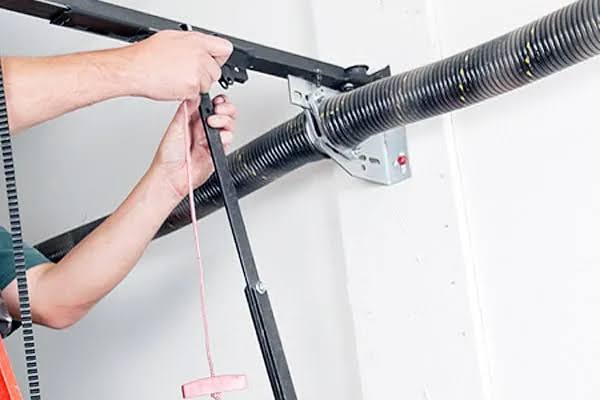
A broken garage door spring can completely halt your daily routine, leaving your car trapped and your home vulnerable. If you are currently stressed and wondering how much to get a garage door spring replaced, you are not alone in this frustrating situation. Let’s break down the exact costs, factors, and solutions so you can get your door working smoothly again without breaking the bank.
How Much to Get a Garage Door Spring Replaced?
The national average cost to replace a garage door spring in the US ranges from $200 to $350, including both parts and professional labor. However, the final price on your invoice can fluctuate based on the type of spring system your specific door utilizes.
To give you a clearer picture, here is a quick breakdown of what you can expect to pay in 2026:
| Spring Type | Average Parts Cost | Average Labor Cost | Total Estimated Cost |
|---|---|---|---|
| Torsion Spring (Standard) | $80 – $150 | $120 – $200 | $200 – $350 |
| Extension Spring | $40 – $80 | $110 – $170 | $150 – $250 |
| Torsion Spring (Heavy Duty/Wood) | $120 – $220 | $150 – $250 | $270 – $470 |
Note: If you choose to replace both springs at the same time (which is highly recommended), expect to add about 60% to the parts cost, but you will save significantly on labor.
Torsion vs. Extension Springs: Which One Do You Have?
Before you call a technician, it helps to know what kind of system you are dealing with. The overall mechanism of a garage door relies heavily on these springs to counterbalance the heavy weight of the panels.
- Torsion Springs: These are mounted horizontally on a metal shaft directly above the closed door. They work by twisting (torque) to lift the door. They are more durable, safer, and found on most modern homes.
- Extension Springs: These run parallel to the horizontal tracks on both sides of the door. They stretch and extend to provide the lifting force. They are generally cheaper but have a shorter lifespan.
5 Factors That Influence Your Final Bill
Why did your neighbor pay $200 while your quote is $380? Several variables dictate the final price of your garage door repair:
- Door Weight and Size: A standard single-car aluminum door requires lighter springs. A double-car wooden door requires heavy-duty springs with thicker wire gauges, which cost more.
- Spring Cycle Life: Standard springs are rated for 10,000 cycles (one cycle = one open and close). Premium springs rated for 20,000 or 100,000 cycles cost more upfront but last years longer.
- Geographic Location: Labor rates in major metropolitan areas like New York or San Francisco will naturally be higher than in rural Midwest towns.
- Additional Repairs: If the broken spring snapped the lifting cables or bent the roller brackets, the technician will charge for those extra parts.
- Emergency or Weekend Fees: Scheduling a repair on a Sunday or after 6:00 PM usually incurs a premium “trip charge” of $50 to $100.
Step-by-Step: How Professionals Replace the Spring
Disclaimer: Replacing a torsion spring is highly dangerous due to extreme tension. This step-by-step guide is for educational purposes so you understand the process. Always hire a certified professional.
Step 1: Secure the Area and Disconnect Power Unplug the automatic garage door opener to prevent accidental activation. Pull the red emergency release cord to disconnect the door from the opener carriage.
Step 2: Clamp the Door Close the door completely. Use heavy-duty locking C-clamps on the metal tracks just below the bottom rollers on both sides. This prevents the door from shooting up when the spring tension is released.
Step 3: Release the Tension The technician inserts two solid steel winding bars into the holes of the winding cone. Using a 7/16-inch wrench, they loosen the set screws. They carefully step the bars down, unwinding the spring in quarter-turn increments until all tension is zero.
Step 4: Swap the Hardware The old spring is slid off the torsion tube. The technician inspects the steel shaft and replaces the lifting cables if they show signs of fraying. The new spring is then slid onto the tube and secured with the center bracket.
Step 5: Wind the New Spring Using the steel winding bars again, the technician tightens the new spring. For a standard 7-foot tall door, this typically requires exactly 7 to 10 quarter-turns (1.75 to 2.5 full rotations) to achieve the proper tension.
Step 6: Test the Balance The C-clamps are removed. The technician manually lifts the door halfway (about 3 feet off the ground) and lets go. If the door stays perfectly in place without drifting up or down, the tension is calibrated correctly.
DIY vs. Hiring a Professional: Pros and Cons
Many homeowners consider fixing the door themselves to save money. Here is a quick comparison to help you decide.
Hiring a Professional
- Pros: Guaranteed safety; includes a 1-to-2-year warranty on parts and labor; takes less than 60 minutes; properly calibrated for your specific door weight.
- Cons: Higher upfront cost ($200+); requires scheduling an appointment.
DIY Replacement
- Pros: Lower upfront cost (only paying for the $80 part); you learn a new mechanical skill.
- Cons: Extreme risk of severe injury (torsion springs can cause broken bones if a winding bar slips); voids any existing manufacturer warranty; no warranty on your own labor; requires buying specialized steel winding bars.
Frequently Asked Questions (FAQ)
1. How long do garage door springs typically last? Most standard garage door springs last between 7 to 10 years. This is based on the industry standard of 10,000 cycles. If you use your garage door four times a day, it will last roughly 6.8 years.
2. Should I replace both springs if only one is broken? Yes, absolutely. If one spring has reached its physical limit and snapped, the second spring is right behind it. Replacing both ensures the door remains perfectly balanced and saves you from paying a second labor fee a few weeks later.
3. Is it safe to replace a garage door spring myself? For extension springs, a handy homeowner can do it safely by following strict safety protocols (like using a safety containment cable). However, for torsion springs, it is highly recommended to hire a professional. The tension stored in a torsion spring is powerful enough to cause severe, life-altering injuries if the winding bars slip.
4. Does homeowners insurance cover a broken garage door spring? Generally, no. Homeowners insurance considers broken springs to be a result of normal wear and tear, which is excluded from standard policies. However, if the broken spring caused secondary damage to your door panels or car, you might be able to file a claim for that specific damage.
Conclusion
Understanding how much to get a garage door spring replaced empowers you to budget correctly and avoid being overcharged by unscrupulous technicians. By knowing the difference between torsion and extension springs, and recognizing the factors that drive up the cost, you can make an informed decision that keeps your home secure and your wallet happy.
Always prioritize safety and hire a licensed, insured professional for torsion spring replacements.
Did you find this guide helpful? Please share this article on your Facebook, Pinterest, or X (Twitter) to help your friends and family navigate their own garage door repairs!
Leave a Reply