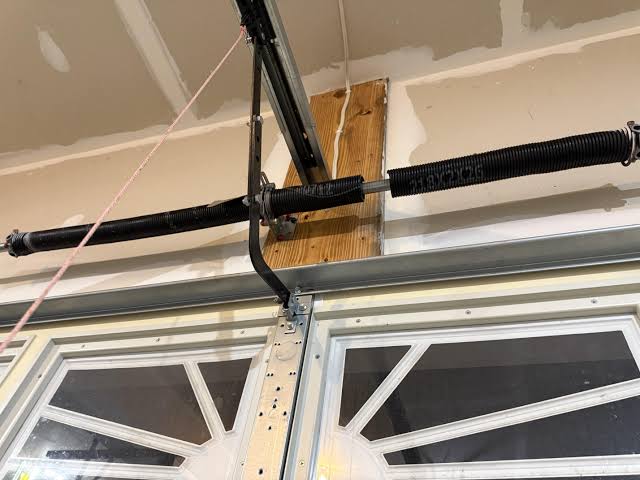
A broken garage door spring can halt your daily routine and leave your car trapped, but figuring out how much to fix a spring on garage door mechanisms doesn’t have to be stressful. We understand the frustration of a stuck vehicle, so we have broken down the exact costs, safety tips, and repair options to get you back on track quickly.
How Much To Fix A Spring On Garage Door: Average Costs in 2026
When your door refuses to open, your first thought is likely about the damage to your wallet. On average, homeowners spend between $150 and $350 for a professional spring replacement.
However, the final price depends heavily on the type of spring system your door uses. There are two main types: torsion springs and extension springs.
Here is a quick breakdown of what you can expect to pay in 2026:
| Spring Type | Average Parts Cost | Average Labor Cost | Total Estimated Cost |
|---|---|---|---|
| Extension Spring | $30 – $80 | $100 – $150 | $130 – $230 |
| Torsion Spring | $60 – $150 | $150 – $250 | $210 – $400 |
| Dual Torsion System | $120 – $250 | $200 – $300 | $320 – $550 |
Note: Prices may vary based on your geographic location and the specific weight of your door.
If you are dealing with a dual torsion system (common for heavy, double-car wooden doors), the cost will be on the higher end. This is because both springs must be replaced simultaneously to maintain balance.
What Factors Affect Garage Door Spring Repair Prices?
Why did your neighbor pay $150 while your quote is $350? Several variables influence the final bill. Understanding these can help you evaluate if a quote is fair.
1. Spring Cycle Rating Springs are rated by “cycles” (one cycle equals one full open and close). A standard spring lasts for 10,000 cycles. However, you can upgrade to high-cycle springs rated for 20,000 or even 30,000 cycles. These premium parts cost more upfront but last significantly longer.
2. Door Size and Weight Heavier doors require thicker, heavier-gauge steel springs. A single-car aluminum door uses much cheaper springs compared to a massive, insulated double-car wooden door.
3. Emergency or After-Hours Service If your spring snaps at 11:00 PM and you need immediate assistance, expect to pay an emergency premium. Most companies charge an extra $75 to $150 for weekend, holiday, or after-hours calls.
Torsion vs. Extension Springs: Which One Do You Have?
Before calling a technician, it helps to know what you are looking at. The mechanism relies on high-tension physics, similar to other garage door systems designed to counterbalance heavy loads.
Extension Springs are located on both sides of the door, running parallel to the horizontal tracks. They stretch and extend to lift the door. These are generally cheaper and found on older or lighter doors.
Torsion Springs are mounted on a metal shaft directly above the closed door. They twist (torque) to generate lifting power. They offer smoother operation and better balance, making them the modern standard for most homes.
Is It Safe to Fix a Garage Door Spring Yourself? (DIY vs. Pro)
Many homeowners ask if they can save money by doing it themselves. While replacing rollers or lubricating hinges is a great weekend DIY project, springs are a completely different story.
Garage door springs are under extreme tension—sometimes up to 300 pounds of force. If a winding bar slips or a cable snaps, the stored energy can cause severe injury or even be fatal.
Here is a quick comparison to help you decide:
| Feature | DIY Repair | Professional Repair |
|---|---|---|
| Cost | $50 – $150 (Parts only) | $150 – $400 (Parts + Labor) |
| Safety Risk | Extremely High | Very Low (Insured & Trained) |
| Time Required | 3 – 5 hours (for beginners) | 45 – 90 minutes |
| Warranty | None on labor | 1 – 3 years on parts and labor |
| Tools Needed | Specialized winding bars, vices | Professional-grade tools provided |
Expert Insight: According to the Door & Access Systems Manufacturers Association (DASMA), spring replacement is consistently ranked as the most dangerous DIY home repair due to the high kinetic energy involved.
Step-by-Step Guide: How Professionals Replace a Torsion Spring
While we strongly advise hiring a licensed technician, knowing the process helps you understand what you are paying for. Here is exactly how a certified pro handles a standard torsion spring replacement.
Step 1: Secure the Door and Disconnect Power The technician will unplug the automatic opener. They then pull the red emergency release cord. To prevent the door from sliding down, they secure the door to the tracks using two heavy-duty C-clamps, placed exactly 2 inches below the bottom roller brackets.
Step 2: Release the Tension Safely Using a 3/8-inch solid steel winding bar, the tech inserts it into the winding cone. They carefully loosen the set screws (using a 7/16-inch socket wrench) and slowly unwind the spring until all tension is completely zeroed out. Never use screwdrivers, as they can shatter under the pressure.
Step 3: Swap the Broken Spring Once the tension is gone, the center bracket is unbolted, and the shaft is slid out. The broken spring is removed, and the new spring is slid onto the shaft. The technician will apply 3 drops of synthetic garage door lubricant to the new spring’s winding cones.
Step 4: Wind the New Spring This requires precise math. For a standard 7-foot tall door, the technician will wind the spring exactly 30 times (or 7.5 full turns). They alternate between two winding bars to ensure the spring seats tightly against the center bracket.
Step 5: Test the Balance Finally, the clamps are removed, and the door is lifted manually to the halfway point. If it stays perfectly in place without drifting up or down, the tension is perfectly calibrated.
How to Maintain Your Springs to Extend Their Lifespan
You cannot stop a spring from eventually breaking, but you can maximize its lifespan with simple maintenance.
- Lubricate bi-annually: Every six months, apply a small amount of synthetic garage door lubricant or white lithium grease to the springs. Never use WD-40, as it is a degreaser and will dry out the metal.
- Check for rust: If you live in a humid or coastal area, inspect the springs for corrosion. Surface rust can be gently wiped away with a damp cloth.
- Keep the tracks clean: Dirty tracks force the motor and springs to work harder. Wipe them down with a damp rag twice a year.
Frequently Asked Questions
1. How long do garage door springs typically last?
The lifespan is measured in cycles, not years. A standard spring is rated for 10,000 cycles. If you open and close your door an average of 3 to 4 times a day, a standard spring will last roughly 7 to 10 years. High-cycle springs can last up to 15 years.
2. Can I replace just one spring if only one is broken?
If you have a dual torsion system and only one spring breaks, industry best practices dictate that you must replace both. The second spring is likely near the end of its lifespan. Replacing only one will cause an imbalance, putting excessive strain on your garage door opener and the new spring.
3. What are the warning signs of a failing spring?
Pay attention to your door’s behavior. Warning signs include a loud “bang” from the garage (the sound of the metal snapping), the door only opening a few inches before stopping, or a visible gap in the spring coil indicating it has physically broken in half.
4. Does homeowners insurance cover broken garage door springs?
Generally, no. Homeowners insurance considers broken springs to be a standard maintenance issue caused by normal wear and tear. However, if the spring broke due to a covered peril—like a lightning strike or a fallen tree damaging the door—your policy might cover the repairs.
5. Why is my garage door opener making a loud grinding noise?
If the springs are broken, the opener motor is trying to lift hundreds of pounds of dead weight. This extreme strain often causes the motor gears to strip or grind. Fixing the spring promptly will save you from having to replace the entire opener unit.
Conclusion
Knowing how much to fix a spring on garage door systems empowers you to budget correctly and avoid being overcharged by unscrupulous technicians. While the average cost ranges from $150 to $400, the investment in a professional repair guarantees your family’s safety and restores your daily convenience.
Remember, garage door springs are under immense tension and should always be handled by certified experts. By understanding the costs and the process, you can confidently manage this common household issue.
Leave a Reply