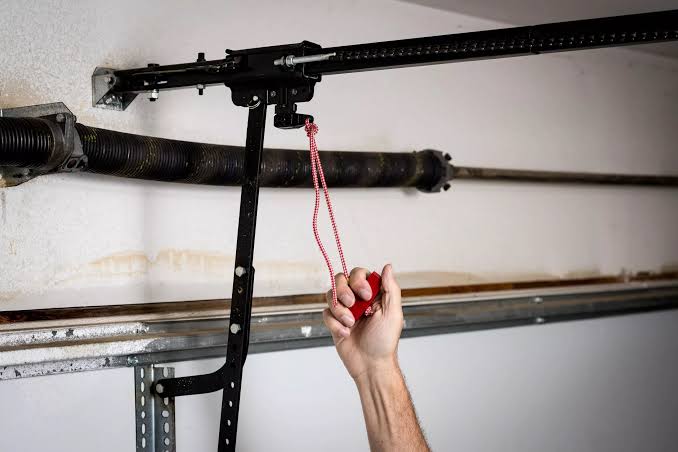
Getting stuck outside your home during a sudden blackout is incredibly frustrating, but learning how do you open an electric garage door without power is easier than you might think. By safely engaging the emergency manual release, you can quickly regain access to your home and protect your vehicle from the elements.
How Do You Open An Electric Garage Door Without Power
When the electricity goes out, your automatic garage door opener becomes completely useless. However, the door itself is not locked in place.
Every modern motorized garage door is equipped with a mechanical bypass system. This system allows you to detach the door from the motorized carriage and operate it manually.
According to mechanical principles documented on Wikipedia’s garage door entry, the heavy lifting is actually done by a counterbalance system, not the electric motor. The motor merely guides the door, while heavy-duty springs bear the actual weight.
Understanding this mechanism is crucial. It means that even without electricity, a properly balanced door should be relatively easy to lift by hand.
You just need to know where the release mechanism is and how to engage it safely. In the following sections, we will walk you through the exact steps to get your door open and secure.
Why Preparation Matters Before a Blackout
Power outages are unpredictable. According to the U.S. Energy Information Administration (EIA), the average American household experiences about two significant power interruptions every year.
In areas prone to severe weather, this number can be much higher. Waiting until you are trapped in the dark to figure out your garage door mechanics is a recipe for stress.
Taking ten minutes today to locate your manual release cord and test your door’s balance can save you hours of frustration later. Furthermore, familiarizing yourself with your specific door model ensures you won’t panic when the lights go out.
Tools You Will Need
You do not need a massive toolbox to open your garage door manually. However, having a few basic items on hand will make the process much safer and smoother.
- Heavy-Duty Flashlight: Essential for visibility if the blackout occurs at night.
- Sturdy Step Stool: The release cord may hang high up near the motor.
- Locking Pliers (Vise-Grips) or C-Clamps: Necessary to secure the door in the open position.
- Work Gloves: To protect your hands from grease and sharp metal edges.
Keep these items in a designated “emergency bin” in your garage or utility room. When the power drops, you will know exactly where to find them.
Step-by-Step Tutorial: Manual Garage Door Release
If you are currently staring at a closed door and need to get out, follow these precise steps.
Please read through all steps before taking action to ensure your safety.
Step 1: Ensure the Door is Fully Closed
Never attempt to pull the emergency release cord while the door is partially open. If the tension springs are broken or poorly balanced, the door could violently crash down, causing severe injury or property damage.
If your door is already partially open, proceed with extreme caution and keep your hands clear of the bottom panels.
Step 2: Unplug the Opener (If Power is Flickering)
If the power is not completely out but merely flickering, unplug the garage door motor from the ceiling outlet.
This prevents the motor from suddenly engaging while your hands are near the moving tracks. Safety must always be your primary focus when dealing with heavy machinery.
Step 3: Locate the Emergency Release Cord
Look up at the central rail that connects the motor to the door. You will see a trolley carriage that moves back and forth.
Hanging from this carriage is a red cord with a plastic handle. This is your emergency manual release. It is designed to be highly visible, even in low-light conditions.
Step 4: Pull the Cord to Disengage
Grab the red handle firmly. Pull it straight down and slightly toward the interior of the garage (away from the motor).
You should hear a distinct mechanical click. This sound confirms that the trolley has successfully disengaged from the motor’s drive chain or belt. Your door is now completely disconnected from the electric opener.
Step 5: Lift the Door Manually
Grasp the bottom handle of the garage door. Lift it using your legs, keeping your back straight.
A standard 16×7 foot residential garage door weighs roughly 120 to 150 pounds. However, if your torsion springs are properly calibrated, the door should feel like it only weighs about 10 to 15 pounds.
Lift it smoothly and steadily until it reaches the top of the tracks.
Step 6: Secure the Door in the Open Position
Once the door is fully open, it can easily slide back down if bumped or if the wind catches it.
Take your locking pliers or C-clamps and attach them directly to the metal tracks, just below the bottom rollers. This acts as a physical brake, ensuring the door stays open while you move your vehicle in or out.
Pros and Cons of Manual Garage Door Operation
Operating your door manually during an outage is a necessary skill, but it comes with distinct advantages and disadvantages.
Here is a quick breakdown to help you understand the realities of manual operation.
| Feature | Pros of Manual Operation | Cons of Manual Operation |
|---|---|---|
| Reliability | Works 100% of the time during any power grid failure. | Requires physical strength and mobility to execute. |
| Cost | Completely free; no need for expensive backup batteries. | Increases physical wear on the door tracks and rollers. |
| Security | Allows immediate access to your vehicle in emergencies. | You lose automatic locking features; must manually secure the door. |
| Safety | Eliminates the risk of power surges damaging the motor. | High risk of injury if the counterbalance springs are broken. |
Expert Insights: The Danger of Broken Springs
It is vital to understand that the electric motor is not what lifts your door. The heavy lifting is done by highly tensioned springs.
According to data from the Consumer Product Safety Commission (CPSC), garage doors cause thousands of emergency room visits annually, largely due to failing springs and improper manual handling.
“Homeowners often mistake a broken torsion spring for a dead motor,” explains Mike Reynolds, a certified door systems technician with over 15 years of field experience. “When the power goes out and you pull the release cord, if the door feels like it weighs 150 pounds, stop immediately. Do not try to force it open. The spring has snapped, and the door is dead weight. Forcing it can cause the door to derail or crush whatever is underneath it.”
If your door is excessively heavy to lift manually, leave it closed and call a professional technician once power is restored or via a mobile service.
Common Mistakes to Avoid
When dealing with a power outage, panic can lead to poor decision-making. Avoid these common errors to keep yourself and your property safe.
1. Leaving the Door Unsecured If you open the door manually and walk away to grab something from your car, a strong gust of wind can pull the heavy door back down. Always clamp the tracks before walking away.
2. Forgetting to Reconnect the Opener When the power returns, your remote control will not work until you re-engage the carriage. Many people assume their motor is broken, when in reality, they just forgot to pull the red cord back toward the motor.
3. Using WD-40 on the Tracks If your door is sticking during manual operation, do not spray standard WD-40 on the tracks. It attracts dust and creates a gritty paste. Instead, use a specialized white lithium grease or silicone spray on the rollers and hinges.
Installing an Exterior Emergency Release Kit
What happens if you are locked outside the garage during a blackout, and you do not have a secondary door to enter your home?
This is a common scenario for homes where the garage is the primary entry point. To solve this, you must install an Exterior Emergency Release Kit.
This kit involves drilling a small hole through the top section of your garage door. A specialized lock cylinder is installed, which connects to a steel cable routed to the interior red release cord.
When you insert the key into the exterior lock and turn it, it pulls the interior release cord, disengaging the motor from the outside. You can then lift the door manually from the driveway.
Note: Installation requires precise drilling. If you are not comfortable modifying your door, hire a licensed professional to install this vital safety feature.
Frequently Asked Questions (FAQ)
Q1: How do I reconnect the garage door opener after the power comes back?
A: To reconnect the opener, ensure the door is fully closed. Pull the red emergency release cord firmly toward the motor unit. You will hear a click as the carriage snaps back into the trolley. Run the motor using your wall button for one full cycle to ensure it is properly aligned.
Q2: Why is my garage door so heavy to lift manually?
A: A properly balanced garage door should be easy to lift with one hand. If it feels incredibly heavy, your torsion springs (the springs above the door) or extension springs (the springs on the sides) have likely broken or lost tension. Do not force it open. Call a professional for spring replacement.
Q3: Can I open my garage door from the outside without a key during an outage?
A: No. Unless you have previously installed an exterior emergency release lock kit, there is no way to bypass the motor from the outside without causing severe damage to the door panels. This is why an exterior release kit is highly recommended for homes without a pedestrian entry door.
Q4: Will a power surge damage my opener when the electricity returns?
A: Yes. When the grid restores power, it often sends a massive voltage spike that can fry the logic board of your garage door opener. To prevent this, always plug your opener into a heavy-duty, appliance-rated surge protector.
Q5: Is it safe to leave the garage door disconnected from the motor long-term?
A: It is not recommended. When disconnected, you lose the automatic locking mechanism provided by the motor’s carriage. If you must leave it disconnected for an extended period, you must use a manual sliding deadbolt lock installed directly on the door tracks to secure your home.
Conclusion
Learning how do you open an electric garage door without power transforms a stressful blackout into a minor inconvenience. By understanding your door’s mechanics, locating the red emergency release cord, and following the proper safety protocols, you maintain total control over your home’s access.
Remember, the secret to a safe manual lift lies in the counterbalance springs. Always respect the weight of the door, use track clamps to secure it, and never force a door that feels too heavy.
Did you find this guide helpful? Don’t let your friends and family get stuck in the dark! Share this article on your social media or send it to your neighborhood group chat so everyone can be prepared for the next power outage. Stay safe and keep your home accessible!
Leave a Reply