Have you ever been stuck outside your home during a power outage, desperately wondering how do you open a garage door with no power? You’re not alone—this frustrating scenario affects millions of homeowners every year, especially during storms or electrical failures. Don’t worry; we’ll walk you through proven, safe methods to regain access to your garage and vehicle quickly.
Understanding Your Garage Door System
Before attempting any manual override, it’s crucial to understand how your garage door operates. Most modern garage doors use an electric opener connected to a motor unit mounted on the ceiling. When electricity fails, the motor becomes inactive, but the door itself remains mechanically functional.
According to the International Door Association, over 70% of residential garages in the United States use automatic openers, making knowledge of manual operation essential for every homeowner. The good news? Every garage door system includes a built-in emergency release mechanism designed specifically for power outages.
Key Components You Should Know
- Trolley: The part that moves along the rail and connects to the door
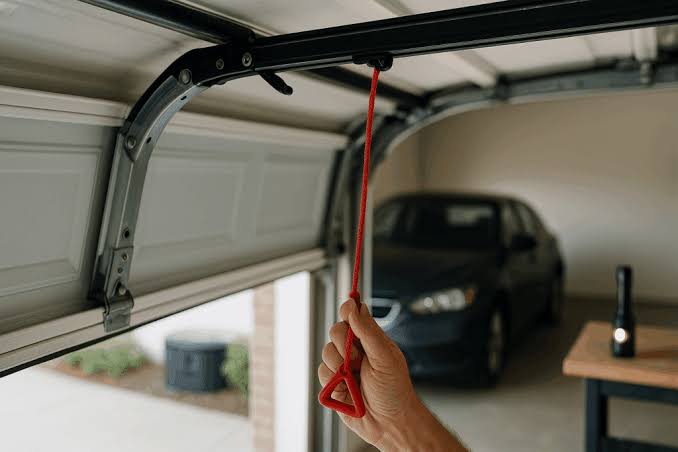
- Emergency Release Cord: Usually red, hanging from the trolley assembly
- Spring System: Counterbalances the door’s weight (torsion or extension springs)
- Locking Mechanism: Manual locks that may need disengaging
For more technical details about garage door mechanics, you can reference Wikipedia’s comprehensive guide on garage doors.
Method 1: Using the Emergency Release Cord
The emergency release cord is your primary solution when asking how do you open a garage door with no power. This method works for most standard garage door openers manufactured after 1993.
Step-by-Step Instructions:
- Locate the release cord: Look for a red rope or handle hanging from the trolley carriage on the opener rail. It’s typically positioned near the center of your garage ceiling.
- Pull the cord firmly: Grasp the handle and pull straight down with moderate force. You should hear a clicking sound as the trolley disengages from the opener mechanism.
- Lift the door manually: Once disconnected, grasp the door handle or bottom edge and lift slowly. Modern doors weigh between 130-400 pounds, but the spring system should make lifting manageable.
- Secure the door: If you need the door to stay open, use a C-clamp or locking pliers on the track below the bottom roller to prevent accidental closing.
Important Safety Note: Never attempt this method if the door feels unusually heavy or if springs appear damaged. Broken springs can cause serious injury.
Method 2: Manual Lock Override
Some older garage doors feature external key locks or internal slide bolts that operate independently of the electric opener.
How to Use Manual Locks:
- External Key Lock: Insert your garage door key into the lock cylinder (usually located on the outside handle) and turn clockwise to unlock
- Internal Slide Bolt: Locate the bolt mechanism on the inside of the door and slide it to the unlocked position
- Combination Locks: Enter your code on keypad models that have battery backup systems
This method is particularly useful if your emergency release cord is broken or inaccessible.
Method 3: Battery Backup Systems
Many newer garage door openers come equipped with battery backup units that provide temporary power during outages.
Checking Your Battery Backup:
| Feature | Standard Opener | Battery Backup Model |
|---|---|---|
| Operation during outage | No | Yes (24-48 hours) |
| Cost difference | Base price | +$100-$200 |
| Maintenance required | Minimal | Battery replacement every 3-5 years |
| Installation complexity | Standard | Slightly more complex |
If you have a battery backup system:
- Check the indicator light on your opener unit
- Press the wall button or remote as usual
- The door should operate normally for several cycles
Pro Tip: Test your battery backup quarterly by unplugging your opener briefly to ensure it functions when needed.
Method 4: Using a Portable Generator
For extended power outages, a portable generator can restore power to your garage door opener.
Safe Generator Usage:
- Choose the right generator: A 2,000-3,000 watt generator is sufficient for most garage door openers
- Use proper extension cords: Heavy-duty, outdoor-rated cords only
- Connect safely: Plug the generator into a transfer switch or directly into the opener’s power source
- Ventilation warning: Never operate generators indoors or in enclosed spaces due to carbon monoxide risk
According to the Consumer Product Safety Commission, improper generator use causes approximately 80 carbon monoxide poisonings annually. Always prioritize safety over convenience.
Method 5: Professional Assistance
When all else fails, or if you’re uncomfortable performing manual operations, contact a licensed garage door technician.
When to Call a Professional:
- Springs appear broken or damaged
- Door feels excessively heavy or unbalanced
- Emergency release cord is missing or broken
- You suspect structural damage to tracks or rollers
- The door won’t move even after disengaging the opener
Professional service typically costs $75-$150 for emergency calls, but this investment prevents potential injuries and further damage to your garage door system.
Common Mistakes to Avoid
When figuring out how do you open a garage door with no power, avoid these dangerous errors:
- Forcing the door: If it doesn’t lift smoothly, stop immediately
- Ignoring spring tension: Damaged springs store enormous energy and can cause severe injuries
- Climbing on the door: Never stand on or hang from the garage door
- Disabling safety features: Don’t bypass sensors or other safety mechanisms
- Working alone: Have someone assist you, especially for heavier doors
FAQ Section
Q: Can I open my garage door from the outside without power?
A: Yes, if your garage door has an external emergency release kit installed. Some models feature a keyed lock on the outside that allows you to disengage the opener mechanism. Alternatively, you can access the emergency release cord through a small gap at the top of the door using a coat hanger or similar tool, though this requires caution.
Q: How much does a garage door weigh?
A: Single-car garage doors typically weigh 130-150 pounds, while double-car doors range from 200-400 pounds. However, the counterbalance spring system reduces the effective lifting weight to approximately 10-20 pounds, making manual operation feasible for most adults.
Q: Will my garage door close automatically when power returns?
A: No, your garage door will remain in its current position when power is restored. You’ll need to reconnect the trolley to the opener by pulling the release cord toward the motor unit, then operate the door using your remote or wall button to reset the system.
Q: How often should I test my emergency release mechanism?
A: Test your emergency release cord every six months to ensure it functions properly. Pull the cord gently to verify it disengages smoothly, then reconnect it by pulling toward the motor. Regular testing prevents surprises during actual emergencies.
Q: Can I install a battery backup on my existing garage door opener?
A: Yes, most major manufacturers offer retrofit battery backup kits compatible with their opener models. These kits typically cost $100-$200 and can be installed by homeowners with basic DIY skills or by professional technicians. Check your opener’s manual for compatibility information.
Q: What should I do if my garage door won’t open manually?
A: If the door won’t lift after disengaging the opener, check for obstructions in the tracks, inspect the springs for damage, and ensure all locking mechanisms are released. If problems persist, contact a professional technician immediately. Never force a stuck door, as this can cause serious damage or injury.
Conclusion
Knowing how do you open a garage door with no power is an essential skill that can save you time, money, and stress during unexpected outages. Whether you use the emergency release cord, manual locks, battery backup systems, or portable generators, always prioritize safety and follow proper procedures.
Remember to test your emergency mechanisms regularly, maintain your garage door system, and don’t hesitate to call professionals when needed. Share this guide with friends and family on social media—it might just help someone during their next power emergency!
Stay prepared, stay safe, and keep your garage accessible no matter what!
Leave a Reply