Replacing a broken garage door spring is one of the most common yet intimidating home repairs. The sheer tension involved makes safety paramount, but identifying the correct replacement part is equally critical to avoid costly mistakes or dangerous malfunctions. If you are staring at a snapped coil and wondering, “How do I know what garage door spring to buy?” you are not alone—this guide will walk you through the exact measurements and specifications you need to get it right the first time.
Why Identifying the Correct Spring Matters
Garage doors are heavy, often weighing between 150 and 400 pounds. The springs are not just accessories; they are counterbalance systems designed to lift that weight effortlessly. Installing the wrong spring can lead to premature failure, damage to your garage door opener, or even severe injury due to sudden release of tension.
According to industry standards, a properly balanced garage door should stay in place when lifted halfway manually. If your door slams shut or flies up, your springs are likely mismatched or worn out. Understanding the specifics of your current setup is the only way to ensure safe and efficient operation.
Step 1: Determine Your Spring Type
Before you can measure anything, you must identify which type of spring system your garage door uses. There are two primary types: torsion springs and extension springs.
Torsion Springs
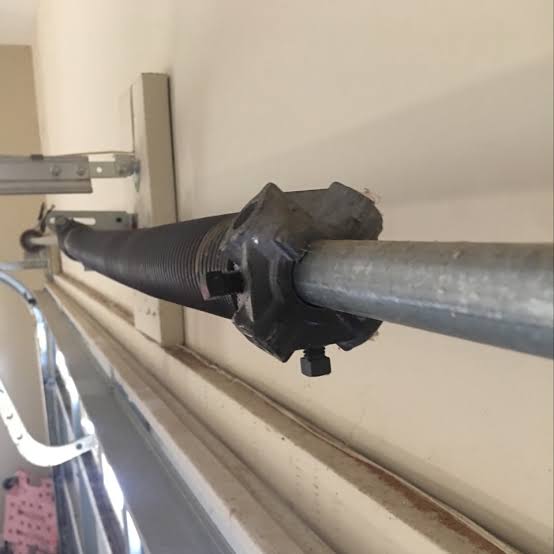
These are mounted horizontally above the closed garage door on a metal shaft. They twist (torque) to store energy. Torsion systems are more common in modern homes because they offer smoother operation and longer lifespans.
- Location: Above the door opening.
- Appearance: One or two large coils wrapped around a steel bar.
Extension Springs
These run parallel to the horizontal tracks on both sides of the door. They stretch to provide lifting force.
- Location: Alongside the upper horizontal tracks.
- Appearance: Long, stretched coils with pulleys and cables at the ends.
Expert Tip: If you have a single-car garage with an older door, you likely have extension springs. Newer double-car garages almost exclusively use torsion springs. For a deeper technical understanding of mechanical counterbalance systems, you can refer to the general principles of Hooke’s Law on Wikipedia, which governs how these springs store and release energy.
Step 2: Measure Your Spring Accurately
Once you know the type, precise measurement is key. Never rely on visual estimation. Use a tape measure and follow these steps carefully. Ensure the garage door is fully closed and the springs are relaxed (no tension) before measuring if possible, or exercise extreme caution if they are under tension.
For Torsion Springs
- Wire Size: This is the thickness of the metal wire itself, not the entire coil. Use a caliper for accuracy. Common sizes include 0.218″, 0.225″, 0.250″, etc. Note: Even a slight difference in wire size changes the spring’s power significantly.
- Inside Diameter (ID): Measure the inside width of the coil. Standard sizes are usually 1.75″, 2.0″, or 2.25″.
- Length: Measure the length of the spring itself, excluding the cones at the ends. Common lengths range from 20″ to 36″.
- Wind Direction: Stand facing the spring. If the coils go up and to the right, it is Right-Wound. If they go up and to the left, it is Left-Wound. Most systems use one of each.
For Extension Springs
- Length: Measure the length of the spring excluding the hooks or loops at the ends. Common lengths are 24″, 26″, 28″, etc.
- Outer Diameter: Measure the width of the coil.
- Wire Size: Similar to torsion springs, measure the thickness of the wire.
- Color Code: Many extension springs have paint marks on the ends indicating their weight capacity. Note these colors as a cross-reference.
Torsion vs. Extension Springs: A Quick Comparison
| Feature | Torsion Springs | Extension Springs |
|---|---|---|
| Lifespan | 15,000–20,000 cycles | 10,000 cycles |
| Safety | Safer (contained on shaft) | Higher risk (can snap violently) |
| Noise | Quieter operation | Noisier during movement |
| Cost | Higher initial cost | Lower initial cost |
| Balance | More precise balancing | Less precise |
Step 3: Calculate the Required Weight Capacity
Knowing the physical dimensions is only half the battle. You must also match the spring’s lifting capacity to your door’s weight.
How to Weigh Your Garage Door
- Disconnect the garage door opener by pulling the emergency release cord.
- Lift the door manually until it is about halfway open.
- Let go. If it stays in place, it is well-balanced. If it falls, it is too heavy for the current springs.
- For an exact weight, use a bathroom scale placed under the bottom edge of the door while lifting it slightly off the ground. Alternatively, check the manufacturer’s label on the back of the door sections.
Matching Cycles to Usage
Springs are rated by “cycles” (one open + one close = one cycle).
- Standard Residential: 10,000 cycles (~7–10 years).
- High-Cycle: 25,000+ cycles (~15–20 years).
If you use your garage door frequently (e.g., for a home business), investing in high-cycle springs is worth the extra cost.
Common Mistakes to Avoid
- Guessing the Wire Size: A 0.250″ wire looks similar to a 0.262″ wire, but the difference in tension is massive. Always use a caliper.
- Ignoring the Wind Direction: Installing a left-wound spring where a right-wound one belongs will prevent the door from closing properly and can damage the cables.
- Buying Only One Spring: If one torsion spring breaks, the other is near failure too. Always replace torsion springs in pairs to ensure balanced lifting and prevent immediate future breakdowns.
FAQ Section
Q: Can I replace just one torsion spring?
A: No. It is highly recommended to replace both torsion springs at the same time. Since they were installed simultaneously and have undergone the same wear, the second spring is likely to fail soon after the first. Replacing both ensures balanced operation and saves you from another service call in a few months.
Q: How long do garage door springs last?
A: On average, standard residential springs last between 7 to 10 years, or roughly 10,000 cycles. High-cycle springs can last up to 20 years. Climate plays a role too; humid or salty air can accelerate corrosion and reduce lifespan.
Q: Is it dangerous to replace garage door springs myself?
A: Yes, it can be extremely dangerous. Torsion springs are under high tension and can cause serious injury or death if handled incorrectly. If you are not comfortable using winding bars and following strict safety protocols, hire a professional. Extension springs are slightly less dangerous but still require caution.
Q: What tools do I need to measure my springs?
A: You primarily need a sturdy tape measure and a digital caliper for measuring wire thickness. A ladder may be necessary to reach torsion springs safely. Never use makeshift tools like screwdrivers to wind torsion springs; always use proper steel winding bars.
Q: My spring broke loudly. Is there anything else I should check?
A: Yes. When a spring breaks, the sudden shock can damage other components. Inspect your cables for fraying, check the rollers for cracks, and ensure the pulleys (for extension springs) are still aligned. It is a good opportunity to lubricate moving parts and tighten any loose hardware.
Conclusion
Understanding how do I know what garage door spring to buy comes down to three things: identifying the type, measuring precisely, and matching the weight capacity. By following the steps outlined above, you can confidently purchase the correct replacement parts and restore your garage door’s functionality.
Remember, safety is paramount. If at any point you feel unsure about handling high-tension components, do not hesitate to call a licensed technician. A correctly installed spring ensures smooth, quiet, and safe operation for years to come.
Found this guide helpful? Share it with your neighbors or on social media to help others tackle their garage door repairs with confidence!
Leave a Reply