Introduction
Have you ever found yourself staring at your garage and wondering, “How do I know how much my garage door weighs?” You are not alone. Whether you are upgrading your garage door opener, replacing broken springs, or ensuring your home’s structural safety, knowing the exact weight of your door is a crucial first step. Let’s break down exactly how to find this number safely and accurately, so you can tackle your home improvement project with total confidence.
How Do I Know How Much My Garage Door Weighs? The 3 Best Methods
If you need to determine your garage door’s weight, you do not need to guess. There are three reliable, proven methods to get an accurate number. Choosing the right one depends on the tools you have and the information available to you.
- Check the Manufacturer’s Label: Most reputable garage door manufacturers place a data sticker on the inside of the top panel or on the motor unit. This label often lists the model number, dimensions, and exact weight.
- Calculate by Material and Size: If the label is faded or missing, you can easily calculate the weight using a simple mathematical formula based on your door’s square footage and material type.
- Consult a Professional: If you are uncomfortable measuring or calculating, a licensed garage door technician can assess the door and provide the exact weight, often as part of a routine maintenance visit.
Pro Tip: Always prioritize safety. Garage doors are heavy, and their spring systems are under extreme tension. Never attempt to lift a detached door without proper support.
Average Garage Door Weights by Material
Not all garage doors are created equal. The material your door is made from is the single biggest factor in its overall weight. Below is a comprehensive comparison to help you estimate your door’s weight based on its construction.
| Material | Weight per Square Foot | Average Weight (Single 8×7 ft) | Average Weight (Double 16×7 ft) | Pros & Cons |
|---|---|---|---|---|
| Steel | 1.5 – 2.0 lbs | 90 – 110 lbs | 180 – 220 lbs | Pros: Durable, low maintenance. Cons: Can dent, prone to rust if unsealed. |
| Aluminum | 1.0 – 1.5 lbs | 60 – 80 lbs | 120 – 160 lbs | Pros: Lightweight, rust-resistant. Cons: Dents easily, less insulation. |
| Wood | 2.5 – 3.5 lbs | 140 – 170 lbs | 280 – 350 lbs | Pros: Beautiful, classic aesthetic. Cons: High maintenance, heavy, warps. |
| Fiberglass | 1.2 – 1.8 lbs | 70 – 90 lbs | 140 – 180 lbs | Pros: Resists salt air, lightweight. Cons: Can become brittle in cold climates. |
Note: Insulated doors will weigh 15% to 30% more than their non-insulated counterparts due to the added polyurethane or polystyrene core.
Step-by-Step Guide to Calculating Your Garage Door Weight
If you cannot find a manufacturer’s label, you can calculate the weight yourself. Follow this precise, step-by-step tutorial to get an accurate estimate.
Step 1: Measure the Dimensions
Use a standard tape measure to find the exact width and height of your garage door in feet. For example, a standard double-car garage door is typically 16 feet wide and 7 feet high.
Step 2: Calculate the Square Footage
Multiply the width by the height.
Example: 16 ft (width) × 7 ft (height) = 112 square feet.
Step 3: Identify the Material
Tap the door lightly. A hollow, metallic sound indicates aluminum or thin steel. A solid, dense thud suggests wood or insulated steel.
Step 4: Apply the Weight Formula
Multiply your total square footage by the average weight per square foot for your material.
Example Calculation: If you have an insulated steel door (approx. 1.8 lbs/sq ft):
112 sq ft × 1.8 lbs = 201.6 lbs.
Step 5: Add Hardware Weight (Optional but Recommended)
For a highly accurate figure, add approximately 15 to 20 lbs to account for hinges, rollers, handles, and windows. In our example, the final estimated weight would be roughly 220 lbs.
Why Does Garage Door Weight Matter for Your Home?
Understanding your garage door’s weight is not just a trivia fact; it is a critical safety and performance metric. The weight directly dictates the type of hardware your system requires.
According to the International Door Association (IDA), mismatched spring tension accounts for over 60% of premature garage door system failures. If your springs are calibrated for a 150 lb door but your actual door weighs 250 lbs, the opener will strain, and the springs will wear out dangerously fast.
Furthermore, your garage door opener motor must be rated to handle the load. A standard 1/2 HP opener can typically lift up to 300 lbs, making it suitable for most single-car doors. However, heavy wooden double doors often require a robust 3/4 HP or 1 HP belt-drive opener to operate smoothly and quietly.
Signs Your Garage Door Opener Is Struggling with the Weight
If you suspect your current setup is mismatched with your door’s weight, watch for these common red flags:
- Loud Grinding Noises: The motor is working overtime to lift the heavy load.
- Slow Operation: The door takes noticeably longer to open or close than it used to.
- Reversing Mid-Cycle: The safety sensors or force limits trigger, causing the door to reverse before hitting the floor.
- Visible Sagging: The top section of the door bows downward when partially open, indicating inadequate spring support.
If you notice any of these signs, stop using the door immediately and consult a professional. Continuing to force an underpowered system can lead to catastrophic spring failure.
Frequently Asked Questions (FAQ)
1. How do I know how much my garage door weighs without taking it down?
You do not need to remove the door. Simply measure its width and height in feet, identify the primary material (steel, wood, aluminum, or fiberglass), and multiply the total square footage by the material’s average weight per square foot.
2. Does adding windows to a garage door change its weight?
Yes, but the effect is minimal. While glass is heavier than a thin steel panel, window installations usually involve cutting out a section of the door. The net weight change is typically an increase of only 5 to 10 lbs per window, which rarely requires a spring adjustment.
3. Can I upgrade my garage door without changing the springs?
It is highly discouraged. If your new door is even 20–30 lbs heavier or lighter than the old one, the existing torsion or extension springs will not be calibrated correctly. This mismatch causes premature wear and poses a severe safety hazard. Always re-spring the system when replacing a door.
4. How much does a 2-car garage door weigh?
A standard non-insulated 2-car garage door (16×7 feet) made of steel weighs between 180 and 220 lbs. If it is heavily insulated or made of solid wood, the weight can easily reach 300 to 350 lbs.
5. Is it dangerous to measure the weight of a garage door myself?
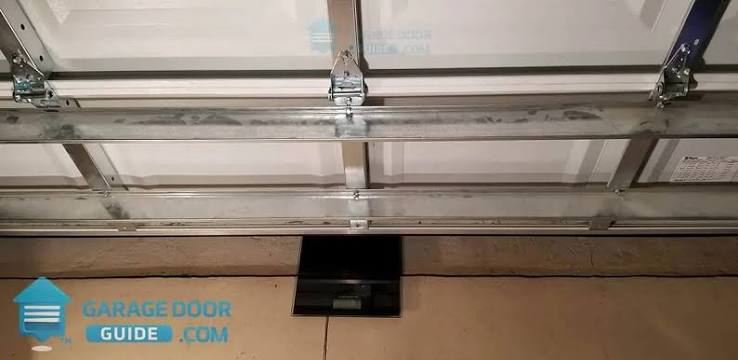
Manually lifting a detached garage door to weigh it on a scale is extremely dangerous due to the high tension of the springs. Always rely on mathematical calculation or manufacturer specifications rather than physical weighing.
Conclusion
Knowing how to answer the question, “How do I know how much my garage door weighs?” empowers you to make smarter, safer decisions about your home. By measuring your door’s dimensions, identifying its material, and using a simple calculation, you can ensure your garage door opener and springs are perfectly matched to the load. This proactive approach prevents costly repairs, extends the lifespan of your hardware, and keeps your family safe.
Did you find this guide helpful? Share this article on Facebook, X (Twitter), or Pinterest to help your friends and neighbors tackle their DIY garage projects safely and confidently!
Leave a Reply