Introduction
Stuck in your driveway? It is incredibly frustrating when your vehicle is trapped, but please know that you are not alone in this situation. If you are asking, “How do I get my garage door opener to work?“, this comprehensive, easy-to-follow guide will help you diagnose and resolve the issue safely and efficiently. Let us get your garage back on track.
How Do I Get My Garage Door Opener To Work? (The Basics)
Before diving into complex repairs, it is essential to understand the basic mechanics of your system. A standard garage door opener relies on a motor, a drive mechanism (chain, belt, or screw), a remote control, a wall-mounted console, and safety sensors.
When any of these components lose power, become misaligned, or suffer from minor wear and tear, the entire system halts. The good news is that the majority of these issues are not catastrophic. In fact, routine troubleshooting can resolve up to 80% of common opener failures without requiring a costly service call.
Common Reasons Your Garage Door Opener Fails
Understanding the root cause is half the battle. According to the International Door Association (IDA), over 70% of homeowners use their garage door as the primary entrance to their home, making opener reliability absolutely crucial.
Based on industry data and repair statistics, here are the most frequent culprits:
- Power Interruptions: A tripped circuit breaker or a unplugged motor unit.
- Sensor Misalignment: The Consumer Reports indicates that misaligned photo-eye sensors account for nearly 30% of all garage door opener failures.
- Dead Remote Batteries: A simple 3-volt battery depletion is the most common and easily overlooked issue.
- Locked Wall Console: Accidentally pressing the “lock” feature on the wall button disables remote access.
- Broken Torsion Springs: While not part of the opener itself, a broken spring makes the door too heavy for the motor to lift, triggering an automatic safety shutoff.
For a deeper technical understanding of how these motors and drive systems operate, you can refer to the general mechanics detailed on Wikipedia’s Garage Door Opener page.
Step-by-Step Troubleshooting Guide
Follow these concrete, sequential steps to systematically eliminate potential problems. Always prioritize safety and work methodically.
Step 1: Verify the Power Source
Do not assume the outlet is working.
- Check if the motor unit is firmly plugged into the ceiling outlet.
- Locate your home’s main electrical panel and ensure the 15-amp or 20-amp circuit breaker labeled “Garage” is in the ON position.
- Plug a small lamp into the same outlet to confirm it is receiving power.
Step 2: Inspect the Photo-Eye Sensors
These safety devices prevent the door from closing on objects or people.
- Locate the photo-eye sensors positioned exactly 6 inches above the floor on both sides of the door track.
- Check the indicator lights. A steady green light on the receiving sensor and a steady amber light on the sending sensor indicate proper alignment.
- If the light is blinking or off, wipe the lenses with a clean, dry microfiber cloth.
- Gently adjust the bracket until both lights glow steadily. Tighten the wing nuts securely.
Step 3: Test the Remote and Wall Console
- Replace the remote’s battery with a fresh CR2032 3-volt lithium battery. Ensure the positive (+) side faces up.
- Check the wall console for a “Lock” or “Vacation” button. If it is activated, press and hold it for 3 seconds to deactivate the lock mode.
Step 4: Reprogram the Opener (Clear and Reset)
If the remote still fails, the memory may be corrupted.
- Locate the “Learn” or “Smart” button on the back or side of the motor unit (usually yellow, red, purple, or green).
- Press and hold this button for exactly 6 seconds until the indicator light turns off. This clears all previously paired remotes.
- Within 30 seconds, press and hold the button on your handheld remote for 3 seconds.
- The motor unit’s light will blink or click, confirming the new code is successfully saved.
Step 5: Check the Manual Release Mechanism
If the motor hums but the door does not move, the carriage may be disengaged.
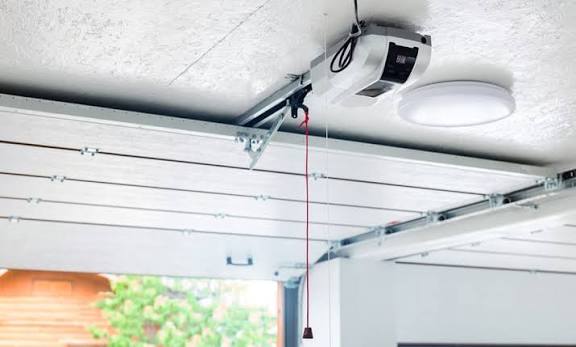
- Find the red emergency release cord hanging from the trolley.
- Pull the cord down firmly at a 45-degree angle toward the door. You should hear a distinct click.
- Attempt to operate the door using the wall button. If it works, pull the release handle toward the motor unit to re-engage the trolley.
DIY Maintenance vs. Professional Repair: A Comparison
Knowing when to stop and call a professional is a hallmark of smart home ownership. Use this table to evaluate your situation.
| Feature | DIY Troubleshooting | Professional Repair |
|---|---|---|
| Best For | Battery replacement, sensor alignment, reprogramming. | Broken springs, snapped cables, motor gear replacement. |
| Cost | $0 – $15 (for batteries or cleaning supplies). | $150 – $350+ (depending on parts and labor). |
| Time Required | 15 – 30 minutes. | 1 – 2 hours (scheduling may take days). |
| Safety Risk | Very Low (if power is disconnected). | High (professionals have specialized winding bars and clamps). |
| Warranty | Does not void existing manufacturer warranties. | Often includes a 1-year warranty on parts and labor. |
Expert Safety Tips Before You Begin
- Always disconnect power at the breaker before inspecting the motor unit’s internal components.
- Never attempt to repair or adjust torsion springs yourself. These springs are under extreme tension (often over 200 pounds of force) and can cause severe injury or death if they snap.
- Keep children and pets at least 10 feet away from the garage door while testing its movement.
Frequently Asked Questions (FAQ)
Q1: Why is my garage door opener clicking but not moving?
A: A rapid clicking sound usually indicates that the motor’s logic board is receiving the signal, but the motor itself cannot engage. This is frequently caused by a stripped plastic drive gear inside the motor unit or a severely bound door track. If the manual release operates smoothly, the internal gear likely needs replacement.
Q2: How do I reset my garage door opener to factory settings?
A: To perform a hard reset, unplug the motor unit from the wall outlet. Wait for exactly 60 seconds to allow the internal capacitors to discharge completely. Plug it back in, then press and hold the “Learn” button for 6 seconds to clear the memory. You will need to reprogram all remotes and keypads afterward.
Q3: What should I do if the remote works but the wall button does not?
A: This points to a wiring issue between the wall console and the motor unit. Inspect the thin, two-strand wire for any staples that may have pierced the insulation, or check for loose connections at the back of the wall button. Ensure the wires are securely attached to the red and white terminals.
Q4: How often should I maintain my garage door opener?
A: Industry experts recommend a bi-annual maintenance schedule (every 6 months). This includes lubricating the chain or screw drive with a specialized garage door lubricant (not standard WD-40), tightening hardware bolts, and verifying the auto-reverse safety feature by placing a 1.5-inch wooden block on the floor in the door’s path.
Q5: Is it safe to fix a garage door opener myself?
A: Yes, for basic troubleshooting like replacing batteries, realigning sensors, and reprogramming remotes. However, any repair involving the door’s springs, cables, or the internal electrical components of the motor should be left to a certified technician to ensure your safety and maintain compliance with local building codes.
Conclusion
Learning how do I get my garage door opener to work does not have to be a stressful experience. By systematically checking the power supply, aligning the safety sensors, replacing remote batteries, and reprogramming the unit, you can resolve the vast majority of common issues in under 30 minutes. Regular maintenance not only extends the lifespan of your opener but also ensures the safety of your family and vehicles.
Did this guide help you get your garage door running smoothly again? Share this article on Facebook, Twitter, or Pinterest to help a friend or family member who might be stuck in their driveway today!
Leave a Reply