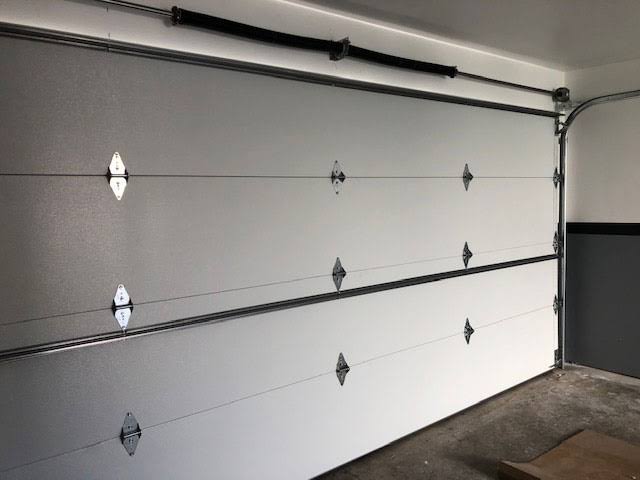
Introduction
If you are noticing wild temperature swings in your garage or unusually high energy bills, you might be asking yourself: how can I tell if my garage door is insulated? You are not alone; many homeowners overlook this massive barrier between their living space and the outdoors. Fortunately, figuring this out is quick, easy, and requires no special tools. Let’s walk through the simple steps to identify your door’s insulation status and help you make smarter, energy-efficient choices for your home.
Why Knowing Your Garage Door’s Insulation Matters
Your garage door is typically the largest moving object in your home, accounting for up to 30% of your home’s exterior wall surface. If it lacks proper insulation, it acts as a thermal bridge, letting cold air in during winter and hot air in during summer.
According to the U.S. Department of Energy (DOE), proper insulation in transitional spaces like garages can reduce overall heating and cooling costs by 10% to 20%. Beyond energy savings, an insulated garage door reduces outside noise, improves durability, and prevents condensation that can lead to rust or mold. Knowing what you have is the first step toward optimizing your home’s comfort.
How Can I Tell If My Garage Door Is Insulated? (5 Proven Methods)
To answer the core question, here are five reliable, step-by-step methods to determine if your garage door has insulation.
1. Check the Edge or Cross-Section
The most definitive way to check is to look at the door’s edge. Open your garage door halfway and look at the top edge of a panel, or peek through the gap between two closed panels.
- Insulated: You will see a distinct layer of foam (usually yellow, white, or light gray) sandwiched between two sheets of steel or aluminum.
- Non-Insulated: You will see a hollow cavity, internal metal struts, or a single thin layer of material with no foam core.
2. Look for the R-Value Sticker or Stamp
Manufacturers often label their products. Check the inside of the garage door, particularly near the top panel or on the end caps. You might find a sticker, a stamped label, or a printed manual tag displaying an R-value. The R-value measures thermal resistance; if you see a number (e.g., R-12 or R-16), your door is absolutely insulated.
3. The Tap Test: Listen to the Sound
This is a quick, non-invasive trick. Knock firmly on the center of a garage door panel with your knuckles.
- A hollow, loud, echoing “clang” indicates a single-layer, non-insulated metal door.
- A dull, solid “thud” suggests there is dense foam absorbing the sound, meaning the door is insulated.
4. Measure the Door’s Thickness
Grab a simple tape measure. Measure the thickness of the door from the outside skin to the inside skin.
- Non-insulated doors are typically thin, measuring about 1 ⅜ inches (35 mm).
- Insulated doors are noticeably thicker, usually ranging from 1 ¾ inches (44 mm) to 2 inches (50 mm) or more, depending on the foam density.
5. Review the Manufacturer’s Manual or Model Number
If visual checks are inconclusive, locate the manufacturer’s label (usually on the inside of the top panel or on the motor unit). Search the model number online. The manufacturer’s specification sheet will explicitly state whether the door is single-layer (non-insulated), double-layer (polystyrene insulated), or triple-layer (polyurethane insulated).
Polyurethane vs. Polystyrene: What’s Inside Your Door?
If you discover your door is insulated, it likely contains one of two materials. Understanding the difference helps you gauge its true efficiency.
| Feature | Polystyrene (Expanded Foam) | Polyurethane (Injected Foam) |
|---|---|---|
| Installation | Pre-cut boards inserted into panels. | Liquid foam injected, expanding to fill all gaps. |
| R-Value per Inch | Lower (approx. R-3.5 to R-4 per inch). | Higher (approx. R-6 to R-7 per inch). |
| Weight & Strength | Adds minimal weight; moderate structural boost. | Adds weight; significantly bonds steel skins for high durability. |
| Cost | More budget-friendly. | Premium pricing, but better long-term ROI. |
| Best For | Moderate climates, basic noise reduction. | Extreme climates, attached garages, maximum energy savings. |
Text Infographic: The higher the R-value, the greater the insulating power. A polyurethane door can achieve an R-16 rating at 2 inches thick, while polystyrene might need to be much thicker to match it.
Step-by-Step: How to Test Your Garage Door’s Thermal Efficiency
If you want concrete proof of how well your door performs, you can conduct a simple DIY thermal efficiency test.
What you need:
- A digital infrared thermometer (costs around $20–$40).
- A standard digital room thermometer.
The Process:
- Wait for a temperature differential: Choose a day when the outdoor temperature is at least 10°F (5°C) hotter or colder than your desired indoor temperature.
- Close the garage: Ensure the garage door has been fully closed for at least 3 hours to allow temperatures to stabilize.
- Measure ambient air: Place the digital room thermometer in the center of the garage, away from direct sunlight or drafts. Note the temperature (e.g., 70°F / 21°C).
- Measure the door surface: Point the infrared thermometer directly at the center of the interior garage door panel. Note the surface temperature.
- Analyze the gap: If the door surface temperature is within 3°F to 5°F (1.5°C to 2.5°C) of the ambient garage air, your insulation is performing excellently. If the difference is greater than 10°F (5.5°C), the door is leaking thermal energy and may lack adequate insulation.
Frequently Asked Questions (FAQ)
Q1: What is a good R-value for an insulated garage door?
A: For most homes, an R-value between R-12 and R-16 is considered ideal. If your garage is attached to your home or you live in an extreme climate (very hot or very cold), aim for R-16 to R-18 for maximum thermal resistance and energy savings.
Q2: Can I add insulation to an existing non-insulated garage door?
A: Yes, you can. DIY garage door insulation kits (typically made of reflective foil-backed polystyrene or polyethylene foam) are widely available. While they won’t match the R-value of a factory-built polyurethane door, they can still improve thermal performance by R-4 to R-8 and significantly reduce noise.
Q3: Does an insulated garage door really make a difference in temperature?
A: Absolutely. An insulated door stabilizes the garage environment. In summer, it prevents the garage from turning into an oven, protecting stored items and vehicles. In winter, it keeps freezing air out, making the space more comfortable for workshops or laundry rooms.
Q4: How much does it cost to replace a garage door with an insulated one?
A: The cost varies based on size, material, and R-value. On average, a new insulated steel garage door costs between $1,200 and $3,500, including professional installation. While the upfront cost is higher than non-insulated models, the energy savings and increased home resale value often offset the expense over time.
Conclusion
Knowing how can I tell if my garage door is insulated is a simple yet powerful piece of home maintenance knowledge. By checking the panel edges, listening to the tap test, measuring thickness, or reviewing the R-value, you can quickly assess your door’s thermal performance. Upgrading or adding insulation not only slashes energy bills but also creates a quieter, more durable, and comfortable space.
If you found this guide helpful, don’t keep it to yourself! Share this article on Facebook, Twitter, or Pinterest to help your friends and neighbors save money and stay comfortable this season. Have questions? Drop them in the comments below!
(Note: For deeper technical details on thermal resistance metrics, you can explore the comprehensive scientific breakdown of R-value (insulation) on Wikipedia.)
Leave a Reply