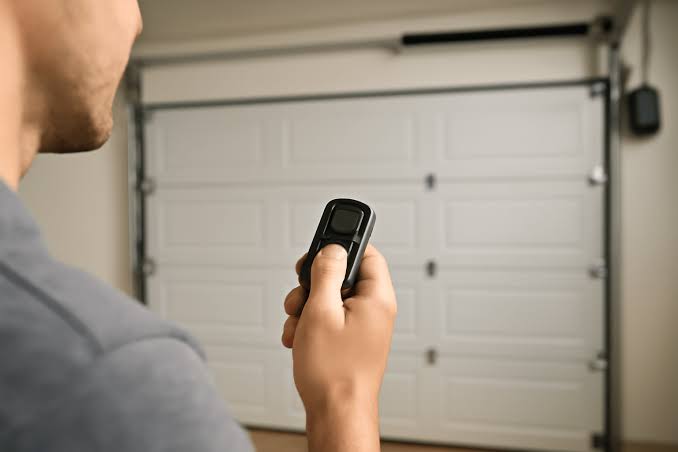
Garage Door Remote Only Works When Light Is Off: Causes & Fixes
Have you ever pressed your garage door remote, only for nothing to happen — until you turn off the light nearby? If your garage door remote only works when light is off, you’re not alone. This frustrating issue affects thousands of homeowners across the United States every year, and it almost always comes down to one sneaky culprit: electromagnetic interference. The good news? In most cases, you can fix it yourself in under 30 minutes without calling a technician. Let’s walk through exactly what’s happening and how to solve it for good.
Why Does My Garage Door Remote Only Work When the Light Is Off?
The short answer is radio frequency (RF) interference. Your garage door opener communicates with its remote using radio signals, typically operating at frequencies like 315 MHz or 390 MHz. When certain types of light bulbs — especially compact fluorescent lamps (CFLs) and some poorly shielded LED bulbs — are turned on, they emit electromagnetic noise that can drown out or distort these signals.
Think of it like trying to have a conversation at a loud concert. Your remote is “talking,” but the light bulb is creating so much static that the garage door opener simply can’t “hear” it. Once you flip the switch off, the interference disappears, and the signal gets through clearly.
According to the Federal Communications Commission (FCC), electronic devices must meet specific emission standards. However, cheaper or older bulbs may exceed acceptable RF noise levels, causing real-world problems like this one. For more background on how electromagnetic interference works, you can visit Wikipedia’s page on Electromagnetic Interference.
Which Types of Light Bulbs Cause Garage Door Remote Interference?
Not all bulbs are created equal when it comes to RF emissions. Here’s a quick comparison to help you identify the likely offender:
| Bulb Type | Interference Risk | Why It Happens |
|---|---|---|
| CFL (Compact Fluorescent) | 🔴 High | Internal ballast generates significant RF noise |
| Cheap/Unbranded LED | 🟡 Medium | Poorly designed drivers emit electromagnetic interference |
| Quality Branded LED (FCC-certified) | 🟢 Low | Proper shielding minimizes RF emissions |
| Incandescent | 🟢 Very Low | No electronic driver; minimal interference |
| Halogen | 🟢 Very Low | Similar to incandescent; no switching electronics |
Key takeaway: If you recently switched from incandescent bulbs to CFLs or budget LEDs in or near your garage, that change is almost certainly the root cause of your problem.
How to Diagnose the Problem: A Step-by-Step Guide
Before replacing parts or calling a professional, follow these diagnostic steps to confirm the source of interference.
Step 1: Identify All Lights Near the Opener
Start by noting every light fixture within 15–20 feet of your garage door opener motor unit. This includes:
- The opener’s built-in light
- Ceiling-mounted garage lights
- Outdoor security lights near the garage
- Motion-sensor floodlights
Step 2: Perform the On/Off Test
- Turn all nearby lights OFF.
- Stand about 10 feet from the garage door and press the remote.
- Note whether the door responds.
- Turn one light ON at a time, testing the remote after each.
- When the remote stops working, you’ve found the interfering bulb.
Step 3: Check the Distance Factor
Try operating the remote from different distances:
- Within 5 feet of the opener
- 10–15 feet away
- From outside the garage (driveway)
If the remote works up close but fails at a distance when the light is on, interference is confirmed. The light’s RF noise is weakening the effective range of your remote’s signal.
Step 4: Inspect the Opener’s Antenna
Most garage door openers have a thin wire antenna hanging from the motor unit. Make sure it is:
- Fully extended (not coiled or tucked away)
- Hanging straight down
- Not touching any metal surfaces
A damaged or improperly positioned antenna can make the system far more susceptible to interference.
5 Proven Solutions to Fix Garage Door Remote Interference
Once you’ve confirmed that a light bulb is causing the issue, here are five reliable fixes ranked from easiest to most involved.
Fix #1: Replace the Bulb With an FCC-Certified LED
This is the simplest and most effective solution. Look for LED bulbs that explicitly state “FCC compliant” or “low RF interference” on the packaging. Brands like Philips, GE, and Cree tend to produce well-shielded bulbs.
Pro Tip: Choose bulbs labeled specifically as “garage door opener compatible.” Many manufacturers now market these directly to homeowners experiencing this exact issue.
Fix #2: Install a Ferrite Core on the Power Cable
A ferrite core (also called a ferrite bead or choke) is a small magnetic clamp that suppresses high-frequency electromagnetic noise traveling along cables. You can purchase one online or at a hardware store for under $10.
How to install:
- Open the ferrite core clamp.
- Wrap the power cord of the offending light fixture through the core 2–3 times.
- Snap the core shut.
- Test the remote again.
Fix #3: Reposition the Opener’s Antenna
Sometimes, simply adjusting the antenna can dramatically improve signal reception:
- Extend the antenna fully if it’s been pushed up or bent.
- Try angling it horizontally instead of vertically.
- Keep it at least 6 inches away from metal surfaces and other wiring.
Fix #4: Add a Signal Repeater or Range Extender
If interference persists despite changing bulbs, consider installing a garage door remote signal repeater. These devices receive the remote’s signal and re-broadcast it at a stronger level, effectively overpowering the interference.
Pros vs. Cons of Signal Repeaters:
- ✅ Extends range significantly
- ✅ Works with most major opener brands
- ❌ Adds $40–$80 to your costs
- ❌ Requires basic wiring knowledge for installation
Fix #5: Upgrade to a Rolling Code or Smart Opener System
Modern garage door openers use rolling code technology and operate on less congested frequencies. Some newer models even connect via Wi-Fi or Bluetooth, bypassing traditional RF entirely. If your opener is more than 10–15 years old, an upgrade may solve not just this issue but also improve overall security.
Can LED Lights Interfere With Garage Door Openers?
Yes — but not all LEDs. The interference comes from the electronic driver circuit inside the LED bulb, which converts AC power to DC. Cheaper drivers switch at frequencies that overlap with garage door opener bands. Always choose LEDs with proper EMI (Electromagnetic Interference) shielding.
FAQ Section
Q1: Why does my garage door remote work sometimes but not others?
Inconsistent remote performance is often caused by intermittent RF interference from lights, nearby electronics, or even weather conditions affecting signal propagation. Start by checking for new CFL or LED bulbs installed near the opener.
Q2: Can a neighbor’s garage door opener interfere with mine?
It’s possible but uncommon with modern rolling-code systems. Older fixed-code openers are more vulnerable to cross-talk. If you suspect this, reprogram your remote to a new frequency or code following your opener’s manual.
Q3: How far should my garage door remote work?
Most remotes are designed to operate reliably within 50–100 feet in open space. Indoors or with obstructions, expect a range of 20–50 feet. If your range has suddenly decreased, interference or a dying remote battery is likely to blame.
Q4: Will changing the batteries in my remote fix the interference issue?
Fresh batteries ensure your remote transmits at full power, which can help overcome mild interference. However, if the problem only occurs when a specific light is on, the root cause is the bulb — not weak batteries. That said, replacing batteries annually is always good practice.
Q5: Is it safe to use incandescent bulbs in my garage door opener?
Yes, incandescent bulbs produce virtually zero RF interference. However, keep in mind that many newer garage door openers specify LED-only compatibility due to heat concerns with incandescents. Always check your opener’s manual before installing any bulb type.
Q6: Could my smart home devices be causing the interference?
Absolutely. Wi-Fi routers, baby monitors, wireless cameras, and smart plugs can all emit RF noise. If changing the bulb doesn’t resolve the issue, try temporarily unplugging nearby smart devices to see if performance improves.
Conclusion
If your garage door remote only works when light is off, the problem is almost certainly electromagnetic interference from a CFL or low-quality LED bulb. By identifying the offending light source and replacing it with a properly shielded, FCC-certified LED, you can restore full remote functionality quickly and affordably. Additional steps like adding ferrite cores, repositioning antennas, or upgrading your opener system provide extra layers of reliability.
Don’t let a simple light bulb compromise the convenience and security of your garage. Take 15 minutes today to run the diagnostic test outlined above — you might save yourself a costly service call.
Found this guide helpful? Share it with friends, family, or neighbors who might be struggling with the same issue! Post it on Facebook, tweet it, or send it in a group chat. Helping someone fix their garage door remote takes just one click.
Leave a Reply