Introduction
There is nothing quite as frustrating as pulling into your driveway after a long day, pressing the remote, and watching your garage door rise smoothly—only for it to refuse to come back down. You are left standing there, car idling, wondering if you need to call an expensive technician or if this is something you can handle yourself. If your garage door opener will go up but not down, you are likely dealing with a safety feature activation or a simple mechanical adjustment rather than a catastrophic motor failure.
In this guide, we will walk you through the most common causes of this specific issue. We will provide clear, step-by-step instructions to help you diagnose and fix the problem safely. By the end of this article, you will have the knowledge to restore your garage door’s functionality without breaking the bank.
Why Does My Garage Door Reverse Immediately After Touching the Floor?
One of the most frequent reasons a garage door goes up but refuses to stay down is an issue with the close limit switch or the force settings. Modern garage door openers are equipped with sophisticated sensors designed to prevent damage to your vehicle, the door itself, or anyone standing in the way.
Understanding the Safety Mechanism
When you press the “down” button, the motor engages. However, if the opener detects resistance that exceeds its programmed threshold, it interprets this as an obstruction. For safety, it immediately reverses direction and goes back up. This is a feature, not a bug, but it can become annoying if calibrated incorrectly.
According to industry standards, the force required to close a garage door should be minimal. If the door hits the floor and bounces back, the down-limit switch might be set too low, causing the door to push against the ground with excessive force. Alternatively, the weather stripping at the bottom of the door may have thickened due to cold weather, creating unexpected resistance.
Quick Check:
- Look at the bottom rubber seal. Is it cracked or overly compressed?
- Listen for a grinding noise when the door touches the floor.
- Check if the door reverses before it even touches the ground.
If the door reverses before touching the ground, the issue is likely not the limit switch but rather the safety eyes (sensors), which we will discuss next.
Are the Safety Sensors Misaligned or Blocked?
If your garage door starts to close but then immediately shoots back up without ever touching the floor, the culprit is almost certainly the photo-eye sensors. These are small devices located near the bottom of the garage door tracks on both sides. They emit an invisible beam of light; if that beam is broken, the door assumes something is in the way and stops closing.
Step-by-Step Sensor Troubleshooting
Fixing sensor issues is often the easiest repair you can perform. Follow these precise steps:
- Check the Indicator Lights: Look at the sensors. One usually has a green LED (power), and the other has an amber or red LED (alignment). If the amber/red light is blinking or off, the sensors are misaligned.
- Clean the Lenses: Use a soft, dry microfiber cloth to wipe away any dust, spider webs, or dirt. Even a thin layer of grime can block the infrared beam.
- Verify Alignment: Stand behind the door and look at both sensors. They should be pointing directly at each other. If one is tilted slightly up, down, or sideways, loosen the wing nut on the bracket, adjust the sensor until the lights turn solid, and tighten the nut.
- Check for Sunlight Interference: In the late afternoon, direct sunlight can sometimes overwhelm the sensor’s receiver. If this happens only at certain times of day, consider installing a shade or adjusting the angle slightly.
Pro Tip: If you cannot get the lights to turn solid, check the wiring running from the sensors to the motor unit. Rodents often chew through these low-voltage wires, causing intermittent failures.
For more detailed technical specifications on how photo-electric sensors work, you can refer to the general principles of optical sensors on Wikipedia.
Could the Remote Control Batteries Be the Issue?
It sounds simplistic, but power issues are a leading cause of erratic garage door behavior. While weak batteries usually result in the door not responding at all, they can sometimes send incomplete signals. The opener might receive the “down” command but fail to process it correctly, defaulting to a safe state or ignoring it entirely while still accepting the stronger “up” signal.
Testing Your Remote
- Replace the Batteries: Use fresh, high-quality alkaline batteries. Avoid mixing old and new batteries.
- Test the Wall Button: Try closing the door using the wired wall button inside the garage. If the wall button works perfectly but the remote does not, the issue is isolated to the remote or its programming.
- Reprogram the Remote: Sometimes, the digital code sync gets corrupted. Consult your owner’s manual to erase and re-pair the remote with the opener unit.
Is the Travel Limit Setting Incorrect?
Every garage door opener has two limit screws or digital settings: one for “Up” and one for “Down.” These tell the motor exactly when to stop moving. If the down limit is set incorrectly, the door may think it has hit an obstacle when it hasn’t, or it may try to push into the floor.
How to Adjust the Limits
Note: Procedures vary by brand (Chamberlain, LiftMaster, Genie, etc.). Always consult your specific manual.
- Locate the Adjustment Screels: On older models, these are plastic screws on the side of the motor unit labeled “Up” and “Down.” On newer smart models, you may need to use a smartphone app or buttons on the back panel.
- Adjust in Small Increments: Turn the “Down” limit screw in small increments (usually clockwise to increase travel, counter-clockwise to decrease).
- Test Frequently: After each small adjustment, test the door. The goal is for the door to close completely and seal against the weather stripping without pushing hard against the concrete.
| Symptom | Likely Cause | Solution |
|---|---|---|
| Door reverses before hitting floor | Sensor misalignment | Clean and realign photo-eyes |
| Door hits floor then reverses | Down limit set too low | Adjust down limit screw slightly |
| Door struggles to close | Force setting too low | Increase close force slightly |
| Remote doesn’t close door | Weak battery or sync issue | Replace batteries or reprogram |
When Should You Call a Professional?
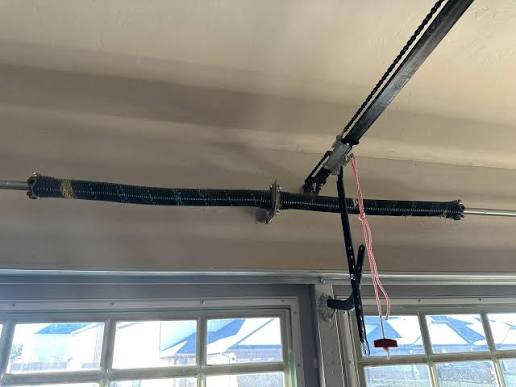
While many issues related to a garage door opener will go up but not down can be fixed with DIY methods, some situations require professional intervention. Garage doors are under high tension, and the springs are dangerous if handled incorrectly.
Call a technician if:
- The cables look frayed or loose.
- The springs are broken or appear stretched out.
- The motor makes a humming noise but the door doesn’t move at all.
- You have adjusted the limits and force settings multiple times with no improvement.
Attempting to repair broken springs or cables without proper tools and training can result in severe injury. It is always better to prioritize safety over savings in these specific scenarios.
FAQ Section
1. Why does my garage door go up fine but stop halfway when coming down?
This is typically a force setting issue. The opener detects resistance (perhaps from sticky rollers or lack of lubrication) and stops to prevent damage. Try lubricating the rollers and hinges with a silicone-based lubricant, then increase the close force setting slightly.
2. Can cold weather affect my garage door’s ability to close?
Yes. Cold temperatures can cause metal tracks to contract and weather stripping to harden, increasing friction. This added resistance can trigger the safety reversal mechanism. Lubricating moving parts and adjusting the force settings seasonally can help.
3. What does it mean if the sensor light is blinking?
A blinking sensor light usually indicates misalignment. The two sensors are not “seeing” each other. Adjust the brackets until both lights remain solidly lit. If it continues to blink after alignment, check for damaged wires.
4. How often should I maintain my garage door opener?
Experts recommend a basic inspection and lubrication every six months. Check the sensors monthly to ensure they are clean and aligned. This preventative maintenance can prevent most “up but not down” issues.
5. Is it safe to bypass the sensors to close the door?
Most openers have a “hold-down” feature on the wall button that bypasses sensors for emergency closing. However, this should only be used if you can visually confirm the path is clear. Never disable sensors permanently, as they are critical for preventing injury to children and pets.
Conclusion
Dealing with a garage door opener will go up but not down scenario is stressful, but it is rarely a disaster. In most cases, the issue stems from misaligned safety sensors, incorrect limit settings, or simple maintenance oversights like dirty lenses or weak remote batteries. By following the troubleshooting steps outlined above, you can often resolve the problem in under 30 minutes.
Remember, regular maintenance is key to preventing these issues. Keep your tracks clean, your sensors aligned, and your moving parts lubricated. If you found this guide helpful, please share it on social media to help friends and family avoid the hassle of a stuck garage door. Stay safe, and keep your home secure!
Leave a Reply