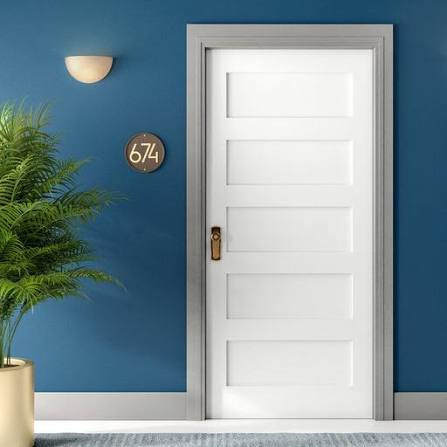
Are you worried about fire spreading from your garage to your living space? You are not alone. Many homeowners overlook this critical safety gap until it is too late. Installing a fire rated house to garage single prehung interior door is one of the most effective ways to protect your family and property. This simple upgrade can buy you precious minutes in an emergency, potentially saving lives.
Why Do You Need a Fire Rated Door Between House and Garage?
Your garage is often filled with flammable materials like gasoline, oil, paint, and propane tanks. If a fire starts there, it can spread to your home rapidly. A standard interior door offers little resistance to heat and flames.
According to the National Fire Protection Association (NFPA), home fires cause thousands of deaths and injuries each year. A proper fire-rated door acts as a barrier, slowing down the spread of smoke and fire. This gives you time to escape and firefighters time to respond.
The Science Behind Fire Ratings
Fire ratings are measured in minutes—typically 20, 45, 60, or 90 minutes. This rating indicates how long the door can withstand exposure to fire before failing. For a house-to-garage connection, most building codes require at least a 20-minute fire rating. However, many experts recommend a 45-minute or 60-minute door for added safety.
The door’s core is made of special materials like mineral wool, gypsum, or steel, which resist heat better than standard wood hollow cores. The edges are sealed with intumescent strips that expand when heated, closing gaps and blocking smoke.
What Are the Building Code Requirements?
Understanding local building codes is crucial before purchasing your door. In the United States, the International Residential Code (IRC) sets the baseline standards.
IRC Section R302.5.1
The IRC mandates that any door connecting a garage to a dwelling unit must be:
- Solid wood or solid/honeycomb-core steel doors no less than 1-3/8 inches thick.
- Or have a 20-minute fire rating.
- Self-closing and self-latching.
This means a standard hollow-core door is not compliant. Even if it looks sturdy, it will fail quickly in a fire. Always check with your local building department, as some areas have stricter requirements than the IRC.
Expert Tip: “Don’t just look at the door slab. The entire assembly—including the frame, hinges, and hardware—must be fire-rated to maintain the integrity of the barrier.” – International Code Council Guidelines
For more detailed information on fire safety standards, you can refer to Wikipedia’s article on Fire Doors.
Single Prehung vs. Slab Door: Which Is Better?
When shopping, you will encounter two main types: slab doors and prehung doors. Here is a quick comparison to help you decide.
| Feature | Slab Door | Single Prehung Door |
|---|---|---|
| Definition | Just the door panel, no frame or hinges. | Door panel mounted in a frame with hinges and strike plate. |
| Installation Difficulty | High. Requires precise chiseling for hinges and lockset. | Low to Medium. Frame is already assembled. |
| Time Required | 4–6 hours for beginners. | 1–2 hours for beginners. |
| Fit Accuracy | Depends entirely on carpentry skills. | Factory-aligned for consistent gaps. |
| Cost | Lower upfront cost. | Higher upfront cost but saves labor. |
| Best For | Professional contractors or experienced DIYers. | Homeowners and DIY enthusiasts. |
For most homeowners, a single prehung interior door is the smarter choice. It ensures that the door hangs correctly within the frame, maintaining the necessary clearance for the self-closing mechanism to work properly.
How to Choose the Right Fire Rated Door
Not all fire doors are created equal. Here are the key factors to consider when making your purchase.
1. Verify the Label
Every genuine fire-rated door has a metal or paper label attached to the top edge or hinge side. This label includes:
- The manufacturer’s name.
- The fire rating duration (e.g., 20-Minute).
- The inspection agency mark (e.g., UL, WH, FM).
If the door does not have this label, it is not a certified fire door. Do not buy it for this application.
2. Material Matters
- Steel: Offers excellent durability and fire resistance. Often used in commercial settings but increasingly popular in homes for its sleek look.
- Solid Wood: Provides a traditional aesthetic. Must be thick enough (1-3/8” minimum) to meet code.
- Composite: A mix of materials that offers good insulation and fire resistance. Often more affordable than solid wood.
3. Self-Closing Mechanism
A fire door is useless if it is left open. The code requires the door to be self-closing. You have two options:
- Spring Hinges: These replace standard hinges and automatically pull the door shut. They are easy to install on prehung units.
- Door Closer: A hydraulic device mounted on the top of the door. More adjustable but harder to install.
For a single prehung door, spring hinges are usually included or easily added. Ensure they are rated for the weight of your fire door.
Step-by-Step Installation Guide
Installing a fire rated house to garage single prehung interior door is manageable for a DIYer with basic tools. Follow these steps carefully.
Tools You Will Need:
- Tape measure
- Level (4-foot)
- Drill and driver bits
- Shims (wood or composite)
- Screws (3-inch for framing)
- Caulk gun and fire-rated sealant
- Utility knife
Step 1: Prepare the Opening
Remove the old door and frame. Clean the rough opening of any debris. Check that the floor is level. If it is not, you may need to adjust the threshold later.
Step 2: Test Fit the Prehung Unit
Place the new prehung door into the opening. Do not secure it yet. Use your level to check if the jamb is plumb (vertical) on both sides. Check the header (top) for levelness.
Step 3: Shim and Secure
Insert shims between the jamb and the wall studs at the hinge locations and the strike plate location.
- Place shims behind the hinge plates to ensure the door swings freely without binding.
- Drive 3-inch screws through the jamb, shims, and into the studs.
- Important: Do not overtighten, as this can bow the jamb and prevent the door from latching.
Step 4: Install the Self-Closing Hinges
If your prehung unit did not come with spring hinges, replace the middle hinge with a self-closing spring hinge. Follow the manufacturer’s tension adjustment instructions. Test the door: it should close completely and latch every time.
Step 5: Seal the Gaps
Fire and smoke can seep through tiny cracks. Apply fire-rated caulk around the perimeter of the frame where it meets the wall. This step is often overlooked but is critical for passing inspection and ensuring safety.
Step 6: Final Adjustments
Check the gap between the door and the frame. It should be consistent (about 1/8 inch). If the door drags, adjust the hinges. If it doesn’t latch, adjust the strike plate.
Common Mistakes to Avoid
Even with a prehung door, errors can compromise safety. Watch out for these pitfalls:
- Trimming the Door Too Much: Never cut more than 1/4 inch off the bottom or sides of a fire door unless the manufacturer explicitly allows it. Cutting into the core can void the fire rating.
- Using Standard Hardware: Ensure all hinges, locks, and closers are heavy-duty. Standard residential hardware may melt or fail under high heat.
- Ignoring the Threshold: The gap under the door should be minimal. Consider installing a drop-down seal or a tight-fitting threshold to block smoke.
FAQ Section
Q1: Can I paint my fire rated door?
A: Yes, you can paint a fire rated door. Use standard latex or oil-based paint. Avoid thick textures or excessive layers that could interfere with the intumescent seals. Do not paint over the fire rating label.
Q2: Does a fire rated door need to be solid core?
A: Not necessarily. While solid core doors are common, some honeycomb-core steel or composite doors also carry fire ratings. The key is the certification label, not just the material. However, for wood doors, solid core is typically required to achieve the 20-minute rating.
Q3: Can I use a glass panel in a fire rated door?
A: Yes, but only if the glass is fire-rated wire glass or ceramic fire glass, and it is installed in a fire-rated frame. The size of the glass is limited by code (usually no more than 100 square inches for residential applications). Always verify the entire assembly is rated.
Q4: How often should I inspect my fire door?
A: Inspect it monthly. Check that it closes fully, latches securely, and that the seals are intact. Look for damage to the door surface or frame. If you notice warping or broken seals, replace the door immediately.
Q5: Is a 20-minute rating enough?
A: For most residential garages, yes, a 20-minute rating meets the IRC code. However, if your garage stores large amounts of flammable chemicals or if you want extra peace of mind, upgrading to a 45-minute or 60-minute door is a wise investment.
Q6: Can I install a smart lock on a fire rated door?
A: Yes, as long as the lock does not require drilling large holes that compromise the door’s structural integrity. Choose a smart lock designed for standard door thicknesses (1-3/8” to 1-3/4”). Ensure it does not interfere with the self-closing mechanism.
Conclusion
Installing a fire rated house to garage single prehung interior door is a straightforward project with profound benefits. It enhances your home’s safety, ensures code compliance, and provides peace of mind. By choosing a prehung unit, you simplify the installation process while ensuring a professional fit.
Remember, safety is not just about meeting the minimum code—it’s about protecting what matters most. Take the time to select a high-quality door, install it correctly, and maintain it regularly.
Did you find this guide helpful? Share it with your friends and family on social media to help them keep their homes safe too! Your share could save a life.
Leave a Reply