Introduction
If your garage door has started making loud grinding or squeaking noises every time it opens and closes, you’re not alone — and you’re probably wondering: do you lubricate the chain on a garage door opener? The short answer is yes, but how and when you do it matters more than most homeowners realize. Proper chain lubrication can extend the life of your opener by years, reduce annoying noise, and prevent costly repairs down the road. In this comprehensive guide, we’ll walk you through everything you need to know — from choosing the right lubricant to a simple step-by-step process anyone can follow.
Why Garage Door Chain Lubrication Matters
Your garage door opener’s chain drive system works similarly to a bicycle chain. It transfers power from the motor to move the heavy garage door up and down along its tracks. Over time, friction, dust, humidity, and temperature changes cause the metal links to wear down. Without proper lubrication, you risk:
- Excessive noise that disturbs your household and neighbors
- Accelerated wear on the chain, sprocket, and rail
- Motor strain, which can lead to premature failure
- Uneven operation, causing the door to jerk or stall mid-cycle
According to industry data, approximately 30% of all garage door opener service calls are related to issues that could have been prevented with routine maintenance, including lubrication. That’s a significant number when you consider that a basic lubrication job takes less than 15 minutes.
What Type of Lubricant Should You Use on a Garage Door Chain?
Not all lubricants are created equal, and using the wrong product can actually damage your opener. Here’s a comparison of the most common options:
| Lubricant Type | Pros | Cons | Recommended? |
|---|---|---|---|
| White Lithium Grease | Long-lasting, weather-resistant, adheres well to metal | Can attract dust if over-applied | ✅ Yes |
| Silicone-Based Spray | Clean application, doesn’t attract dirt, dries quickly | May need more frequent reapplication | ✅ Yes |
| WD-40 (Standard) | Readily available, good for cleaning | Not a true lubricant; evaporates quickly | ❌ No |
| Motor Oil / Household Oil | Cheap and accessible | Attracts grime, drips, creates mess | ❌ No |
| Teflon-Based Lubricant | Excellent friction reduction, clean finish | More expensive | ✅ Yes |
Expert Tip: Most garage door manufacturers, including LiftMaster and Chamberlain, recommend using either white lithium grease or a silicone-based spray specifically formulated for garage door components. Avoid standard WD-40 as a long-term lubricant — it’s designed primarily as a solvent and water displacer, not a lasting lubricant. For more background on how mechanical lubrication works in general, you can refer to Wikipedia’s article on Lubrication.
How Often Should You Lubricate Your Garage Door Chain?
The frequency depends on several factors, but here’s a reliable guideline:
- Every 6 months under normal conditions
- Every 3–4 months if you live in a humid, coastal, or dusty environment
- Immediately if you notice increased noise, jerky movement, or visible rust
Seasonal changes also play a role. Many professionals recommend lubricating your chain at the start of spring and fall, aligning with broader home maintenance routines. This ensures the chain is protected before extreme heat or cold sets in.
Step-by-Step Guide: How to Lubricate Your Garage Door Opener Chain
Follow these steps carefully for safe and effective results. The entire process should take about 10–15 minutes.
Step 1: Gather Your Supplies
Before you begin, make sure you have:
- White lithium grease or silicone-based garage door lubricant
- A clean rag or microfiber cloth
- A stepladder (if needed to reach the opener unit)
- Safety glasses (recommended)
- Gloves (optional but helpful)
Step 2: Disconnect the Opener
For safety, unplug the garage door opener from the electrical outlet or turn off the circuit breaker that powers it. This prevents accidental activation while you work near moving parts.
Step 3: Inspect the Chain
Visually examine the chain for:
- Rust spots or corrosion
- Loose or stretched links
- Excessive dirt or debris buildup
- Signs of misalignment on the rail
If the chain appears severely worn or damaged, lubrication alone won’t fix the problem — you may need a professional replacement.
Step 4: Clean the Chain
Use a dry rag to wipe away loose dirt, dust, and old lubricant residue. If there’s stubborn grime, lightly dampen the cloth with a mild degreaser, then dry the chain thoroughly before applying new lubricant.
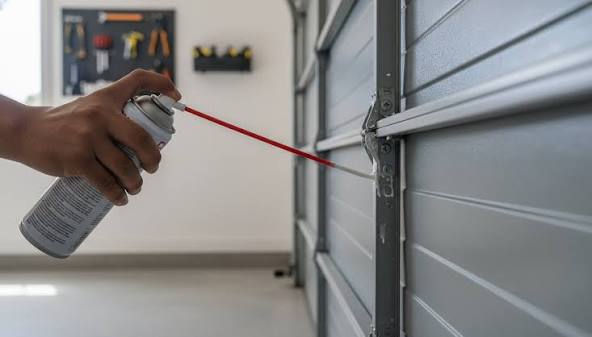
Step 5: Apply the Lubricant
Hold the spray nozzle or grease tube approximately 6–8 inches from the chain. Apply a thin, even coat along the entire length of the chain, focusing on:
- The top section of the chain (where it contacts the drive sprocket)
- Each link joint where metal meets metal
- The area where the chain connects to the trolley
⚠️ Important: Less is more. Over-lubricating attracts dust and creates a gummy buildup that can actually increase friction. A light coating is all you need.
Step 6: Operate the Door Manually
After applying the lubricant, reconnect power and run the garage door through 2–3 complete open-and-close cycles. This distributes the lubricant evenly across all moving contact points.
Step 7: Wipe Away Excess
Use a clean rag to remove any dripping or excess lubricant from the chain, rail, and surrounding areas. This keeps your garage clean and prevents the lubricant from attracting unnecessary debris.
Other Garage Door Parts You Should Lubricate Too
While the chain gets most of the attention, a truly effective maintenance routine includes these additional components:
- Rollers: Apply lubricant to the roller stems (not nylon rollers — only metal ones)
- Hinges: Spray each hinge point where sections of the door connect
- Springs: Lightly coat torsion or extension springs (exercise extreme caution — springs are under high tension)
- Tracks: Wipe clean but generally do not lubricate the inside of the tracks, as this can cause rollers to slip
Common Mistakes Homeowners Make
Avoid these pitfalls to get the best results:
- Using WD-40 as a permanent lubricant — It cleans well but doesn’t provide lasting protection.
- Over-applying lubricant — Creates a sticky mess that traps dirt.
- Lubricating plastic or nylon parts — Certain chemicals can degrade non-metal components.
- Skipping inspection — Always check for damage before lubricating; you might mask a serious issue.
- Neglecting regular schedules — Waiting until the noise becomes unbearable means damage may already be occurring.
FAQ Section
Q1: Do you lubricate the chain on a garage door opener with WD-40?
No, standard WD-40 is not recommended as a long-term lubricant for your garage door chain. While it can help clean and displace moisture, it evaporates quickly and does not provide the durable film needed to reduce ongoing friction. Instead, use white lithium grease or a silicone-based lubricant designed for garage doors.
Q2: Can I use motor oil on my garage door chain?
It’s strongly discouraged. Motor oil is too thick, tends to drip, and attracts dust and debris. Over time, this creates a gritty paste that increases wear rather than reducing it. Stick with purpose-made garage door lubricants.
Q3: How do I know if my garage door chain needs lubrication?
Key signs include unusual squeaking or grinding noises, jerky or uneven door movement, visible rust on the chain, and increased strain on the motor (you may notice the opener working harder or taking longer to operate).
Q4: Is it dangerous to lubricate the chain myself?
Generally, no — as long as you disconnect the power first and avoid touching the springs. Garage door springs store a tremendous amount of energy and should only be serviced by trained professionals. The chain itself is safe to handle with basic precautions.
Q5: What happens if I never lubricate my garage door chain?
Without lubrication, metal-on-metal friction will gradually wear down the chain, sprocket, and rail. This leads to louder operation, reduced efficiency, higher electricity consumption, and eventually component failure that may require an expensive full replacement of the opener system.
Q6: Does a belt-drive opener need lubrication too?
Belt-drive openers use a rubber or fiberglass-reinforced belt instead of a metal chain. These belts generally do not require lubrication. However, other parts like hinges, rollers, and springs still benefit from periodic lubrication.
Conclusion
So, do you lubricate the chain on a garage door opener? Absolutely — and doing so regularly is one of the simplest, most cost-effective ways to protect your investment. A well-lubricated chain runs quieter, lasts longer, and puts less stress on your opener’s motor. With just 10–15 minutes of effort twice a year, you can avoid hundreds of dollars in repair costs and enjoy smooth, reliable garage door operation for years to come.
Don’t wait until the screeching starts. Grab a can of white lithium grease or silicone spray today and give your garage door opener the care it deserves.
Found this guide helpful? Share it on Facebook, X (Twitter), or Pinterest to help fellow homeowners keep their garage doors running smoothly! 🔧🏠
Leave a Reply