Introduction
Is your garage door refusing to budge, or perhaps making a terrifying grinding noise every time you try to close it? You are not alone; millions of American homeowners face this exact frustration, often fearing an expensive repair bill. However, before you call a technician, understanding Craftsman 1/2 HP garage door opener chain drive troubleshooting can save you hundreds of dollars and get your home secure again in under an hour.
This guide is designed to walk you through the most common issues with empathy and clarity. We know how stressful a malfunctioning garage door can be, especially when you are late for work or trying to secure your home at night. Let’s dive into practical, safe, and effective solutions that leverage the durability of your Craftsman unit.
Why Is My Craftsman Opener Making Noise But Not Moving?
One of the most frequent complaints among users of the Craftsman 1/2 HP model is the “humming but not moving” phenomenon. This usually indicates that the motor is receiving power, but the mechanical transfer of energy to the door is blocked or disconnected.
Check the Emergency Release Cord
Before diving into complex electrical diagnostics, check the physical connection. The red emergency release cord (often with a red handle) disengages the trolley from the opener carriage. If this was pulled accidentally—perhaps by a child or while manually operating the door—the motor will run, but the door will stay put.
- Step 1: Locate the red cord hanging from the rail.
- Step 2: Ensure the trolley is locked back into the carriage. You should hear a distinct click.
- Step 3: Try operating the door via the wall button.
Inspect the Chain Tension
A loose chain is a primary culprit for noise and failure to lift. Over time, vibration causes the chain to stretch slightly. If it is too loose, it may slip off the sprocket or fail to engage the trolley properly.
- Ideal Slack: The chain should have approximately 1/4 to 1/2 inch of slack above the base of the rail when the door is closed.
- Adjustment: Use the adjustment nut located near the motor head. Turn it clockwise to tighten. Caution: Do not overtighten, as this puts excessive strain on the motor and bearings.
Pro Tip: If the chain is jumping teeth on the sprocket, inspect the sprocket for worn-down teeth. A damaged sprocket requires replacement, not just adjustment.
How Do I Adjust the Travel Limits and Force Settings?
If your door reverses before hitting the floor, or stops halfway up, the issue is likely related to the travel limits or force settings. The Craftsman 1/2 HP series uses electronic limit switches that can drift over time due to temperature changes or regular wear.
Setting the Down Limit
The down limit determines how far the door closes. If set incorrectly, the door may reverse prematurely, thinking it has hit an obstacle.
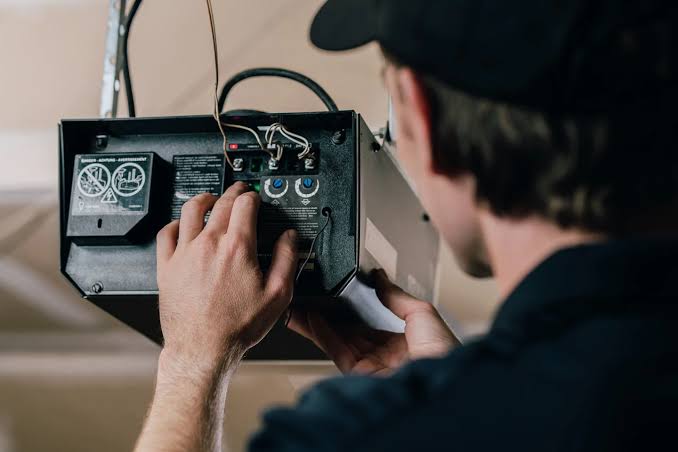
- Locate the adjustment screws on the side of the motor unit. They are usually labeled “Up” and “Down” with arrows.
- Use a flathead screwdriver to turn the Down arrow screw.
- Turn it in small increments (quarter turns).
- Test the door. It should close completely and seal against the weather stripping without forcing itself into the ground.
Calibrating the Force Sensitivity
The force setting dictates how much power the motor uses to move the door. If the force is too low, the door won’t open fully. If it’s too high, it becomes a safety hazard.
| Setting | Symptom | Adjustment Action |
|---|---|---|
| Too Low | Door stops mid-travel; reverses immediately upon touching the floor. | Increase force by turning the knob/screw toward the “+” or higher number. |
| Too High | Door slams shut; does not reverse when obstructed (Safety Risk!). | Decrease force by turning toward the “-” or lower number. |
Note: Always test the safety reversal system after adjusting force. Place a 2×4 piece of wood on the floor under the center of the door. When closing, the door must reverse upon contact.
What Causes the Chain to Derail or Jump Off?
A derailed chain is a dramatic failure that leaves your garage door stuck. While less common than tension issues, it happens frequently in older units or those subjected to extreme weather fluctuations.
Misaligned Rail
The rail supporting the chain must be perfectly straight and aligned with the motor head. If the mounting brackets on the ceiling have loosened, the rail can sag, causing the chain to jump off the sprocket.
- Inspection: Look at the rail from the side. Is it parallel to the floor?
- Fix: Tighten all ceiling mounting brackets. If the rail is bent, it may need straightening or replacement.
Worn Sprocket or Gear
Inside the motor housing, a plastic gear (often called the drive gear) transfers power from the motor to the chain sprocket. In many Craftsman models, this gear is made of nylon to reduce noise. However, it is a wear item.
If you hear a grinding sound coming from inside the motor box rather than the rail, the internal gear is likely stripped.
- Diagnosis: Remove the motor cover (ensure power is disconnected). Inspect the white nylon gear. If teeth are missing or shredded, it needs replacement.
- Resource: For detailed technical diagrams of internal components, you can refer to general mechanical principles outlined on Wikipedia’s page on Garage Door Openers, which provides excellent context on how these drive systems function mechanically.
Why Won’t My Remote Control Work?
Sometimes the opener is fine, but the communication link is broken. This is a classic “user error” or simple battery issue, but it can mimic a motor failure.
Step-by-Step Remote Troubleshooting
- Check the Batteries: Replace the CR2032 or similar battery in your remote. Even if the light blinks, the signal strength may be too weak to reach the receiver.
- Reprogram the Remote: Interference from neighbors or new electronics can disrupt frequencies.
- Press the “Learn” button on the motor unit (usually yellow, purple, or red).
- Within 30 seconds, press and hold the button on your remote.
- Wait for the motor light to blink or click, confirming the code is accepted.
- Inspect the Antenna: Ensure the hanging wire antenna on the motor unit is not tucked behind the metal casing or wrapped around the rail. It needs to hang freely to receive signals.
Safety First: Critical Precautions Before You Start
Working with garage doors involves high-tension springs and heavy moving parts. Never attempt to adjust or repair the torsion springs yourself. These springs store enough energy to cause severe injury or death if they snap.
- Disconnect Power: Always unplug the unit or turn off the circuit breaker before working on internal components.
- Secure the Door: If you are working on the opener, clamp the door tracks or use locking pliers to prevent the door from falling.
- Keep Clear: Never stand under a moving garage door.
FAQ Section
Q1: How often should I lubricate my Craftsman chain drive?
A: You should lubricate the chain, rollers, and hinges every 6 months. Use a silicone-based lubricant or a dedicated garage door lube. Avoid WD-40 as it attracts dust and dries out quickly, leading to more friction.
Q2: My door opens but won’t close. What is wrong?
A: This is almost always a safety sensor issue. Check the photo-eye sensors near the floor on both sides of the door. Ensure they are aligned (both lights should be solid, not blinking) and clean any dirt or spiderwebs off the lenses. Sunlight directly hitting the sensor can also cause interference.
Q3: Can I replace just the chain if it is stretched?
A: Yes, chains can be replaced individually. However, if the chain is stretched significantly, it is highly likely that the sprocket and internal gears are also worn. It is often more cost-effective to replace the chain and sprocket kit together to ensure smooth operation.
Q4: Why does my Craftsman opener beep repeatedly?
A: A beeping sound usually indicates a battery backup alert (if equipped) or a logic board error. If you have a battery backup unit, the battery may need replacement. If not, consult your manual for specific error codes, as different beep patterns signify different issues.
Q5: Is a 1/2 HP motor strong enough for a double-car garage door?
A: Yes, a 1/2 HP motor is standard for most double-car sectional doors made of steel or aluminum. However, if your door is made of heavy solid wood or has significant insulation, you might experience faster wear. In such cases, upgrading to a 3/4 HP model is recommended for longevity.
Conclusion
Troubleshooting your Craftsman 1/2 HP garage door opener chain drive doesn’t have to be a nightmare. By systematically checking the chain tension, limit settings, and safety sensors, you can resolve most common issues without professional help. Regular maintenance, such as lubrication and visual inspections, will extend the life of your opener and ensure your home remains secure.
Remember, safety is paramount. If you encounter issues with high-tension springs or complex electrical faults, do not hesitate to call a certified technician.
Did this guide help you fix your garage door? Share this article with your neighbors on Facebook or Twitter to help them save money on repairs too! Let’s keep our communities running smoothly, one garage door at a time.
Leave a Reply