Introduction
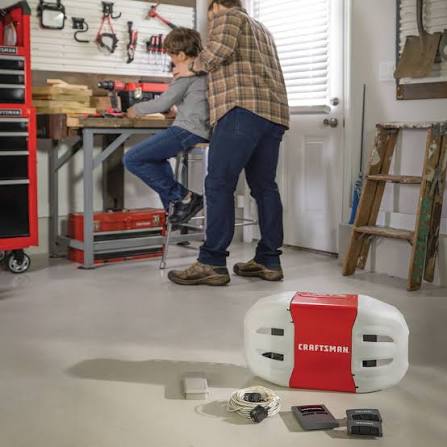
Is your old garage door opener sounding like a jet engine taking off every time you leave for work? You are not alone. Many homeowners struggle with noisy, unreliable motors that disrupt their peace and compromise home security. Finding a replacement that balances power, silence, and smart features can be overwhelming. This guide dives deep into the Craftsman 1 2 Hp Belt Drive Garage Door Opener 54920, a model designed to solve these exact problems with premium performance and modern convenience.
Why Choose a Belt Drive System?
When shopping for a new garage door opener, the drive mechanism is the most critical decision you will make. The Craftsman 54920 utilizes a belt drive system, which differs significantly from traditional chain drives.
The Silence Factor
Chain drives use metal-on-metal contact, which creates significant vibration and noise. In contrast, the belt drive uses a reinforced steel-reinforced rubber belt. This material absorbs vibration, resulting in operation that is up to 75% quieter than chain models. For homes where the garage is attached to living spaces or bedrooms, this reduction in decibels is not just a luxury; it is a necessity for maintaining a peaceful environment.
Durability and Maintenance
While chains are durable, they require regular lubrication to prevent rust and squeaking. The belt drive system on the Craftsman 54920 is virtually maintenance-free. The rubber belt does not rust and does not require oiling. This means you install it once and enjoy years of smooth operation without getting your hands dirty.
Key Features of the Craftsman 54920 Model
The model number 54920 represents a specific configuration within the Craftsman lineup, often associated with their mid-to-high-tier residential units. Here is what makes this specific unit stand out in the crowded US market.
1/2 Horsepower Motor Capability
A 1/2 HP motor is the standard for most single-car and double-car garage doors made of wood, steel, or aluminum. It provides sufficient torque to lift heavy insulated doors without straining the motor. Unlike weaker 1/3 HP models, the 1/2 HP engine ensures consistent performance even in extreme weather conditions, such as cold winters where door tracks may contract slightly.
Smart Home Integration
Modern homeowners expect connectivity. The Craftsman 54920 is typically compatible with the myQ smart garage control ecosystem. This allows you to:
- Open and close your garage door from anywhere using your smartphone.
- Receive alerts when the door is left open.
- Grant temporary access to delivery drivers or guests.
This integration transforms your garage from a simple storage space into a secure entry point for your smart home network.
Battery Backup System
Power outages do not follow a schedule. One of the most valuable features of this model is the integrated battery backup. In the event of a power failure, the opener can still operate for several cycles. This ensures you are never locked out of your home or trapped inside during an emergency. According to industry standards, a reliable backup system should provide at least 24 hours of standby power and multiple operational cycles, a benchmark this unit meets.
Installation Guide: Step-by-Step
Installing a garage door opener can seem daunting, but with the right preparation, it is a manageable DIY project. Always prioritize safety. If you are unsure about any step, consult a professional.
Tools Required:
- Ladder
- Wrench set and socket set
- Drill with bits
- Level
- Helper (highly recommended)
Step 1: Prepare the Garage Door
Before installing the opener, ensure your garage door is balanced. Disconnect the existing opener if present. Manually lift the door halfway. If it stays in place, it is balanced. If it falls or rises, the springs need adjustment by a professional. Never attempt to adjust torsion springs yourself.
Step 2: Assemble the Rail
Lay out the rail components on the floor. Attach the belt to the trolley and thread it through the pulley system according to the manual. Ensure the belt is tensioned correctly—not too tight, not too loose. A properly tensioned belt should have slight give but not sag excessively.
Step 3: Mount the Header Bracket
Locate the center of the garage door header. Use a level to mark the position for the header bracket. Secure it firmly into the structural framing above the door, not just the drywall. Use lag screws for maximum hold.
Step 4: Install the Motor Unit
With the help of a friend, lift the motor unit and attach it to the assembled rail. Hang the entire assembly on the header bracket. Then, secure the rear of the motor to the ceiling joists using the provided hanging brackets. Ensure the unit is level to prevent uneven wear on the belt.
Step 5: Connect the Safety Sensors
Install the safety eyes on either side of the garage door, no higher than 6 inches from the floor. These sensors must face each other directly. If the beam is interrupted, the door must stop and reverse. Test this by placing an object in the door’s path while closing.
Step 6: Program the Limits and Force
Plug in the unit. Follow the instructions to set the “up” and “down” limits. Adjust the force settings so the door reverses if it encounters an obstacle. This is crucial for compliance with US safety standards.
Comparison: Belt Drive vs. Chain Drive
To help you understand why the Craftsman 1 2 Hp Belt Drive Garage Door Opener 54920 is a superior choice for many, consider this comparison.
| Feature | Belt Drive (Craftsman 54920) | Chain Drive |
|---|---|---|
| Noise Level | Very Quiet (Ideal for attached garages) | Loud (Metal-on-metal contact) |
| Maintenance | Low (No lubrication needed) | High (Regular oiling required) |
| Durability | High (Resistant to rust) | High (But prone to rust) |
| Cost | Moderate to High | Low to Moderate |
| Smoothness | Very Smooth Operation | Can be jerky over time |
As shown, while chain drives are cheaper upfront, the long-term benefits of a belt drive in terms of comfort and maintenance often justify the investment. For more technical details on garage door mechanisms, you can refer to general engineering principles on Wikipedia.
Common Issues and Troubleshooting
Even high-quality machines can encounter issues. Here are common problems with the Craftsman 54920 and how to fix them.
Door Reverses Before Closing This is usually caused by misaligned safety sensors. Check if the LED lights on both sensors are solid. If one is blinking, realign them until they face each other perfectly. Clean the lenses with a soft cloth.
Motor Runs but Door Does Not Move Check the emergency release cord. If it was pulled, the trolley is disconnected from the door. Re-engage the trolley by pulling the release handle toward the motor unit. Also, inspect the belt for signs of slipping or damage.
Remote Control Not Working Replace the batteries in the remote first. If that fails, reprogram the remote to the opener. Ensure you are within range and that there is no significant radio frequency interference from nearby devices.
FAQ Section
Q1: Is the Craftsman 54920 compatible with all garage doors?
A: The Craftsman 1/2 HP motor is suitable for most standard residential garage doors weighing up to 350-400 lbs. This includes single and double-car doors made of steel, wood, or aluminum. However, extremely heavy custom doors may require a 3/4 HP model.
Q2: How long does the battery backup last?
A: The battery backup is designed to keep the opener functional for approximately 24 hours in standby mode. In terms of actual usage, it can typically open and close the door 20-30 times during a power outage, depending on the weight of the door.
Q3: Can I install this opener myself?
A: Yes, many homeowners successfully install this model themselves. It requires basic mechanical skills and tools. However, if your garage door springs are broken or unbalanced, you must hire a professional before installing the opener.
Q4: Does this model work with Alexa or Google Assistant?
A: Yes, when paired with the myQ smart garage control hub (sold separately or included in some bundles), the Craftsman 54920 integrates with Amazon Alexa and Google Assistant. You can use voice commands to check the status of your door or close it remotely.
Q5: What is the warranty period for this opener?
A: Craftsman typically offers a limited lifetime warranty on the motor and a 1-year warranty on parts and accessories for their belt drive models. Always register your product online to activate the full warranty coverage.
Conclusion
Upgrading your garage door opener is an investment in your home’s comfort, security, and value. The Craftsman 1 2 Hp Belt Drive Garage Door Opener 54920 stands out as a reliable, quiet, and smart solution for modern American households. Its belt drive system ensures peaceful operation, while the 1/2 HP motor provides the power needed for daily use. With smart home integration and battery backup, it offers peace of mind that few competitors can match.
If you are tired of noise and unreliability, this model is worth considering. Share this review with friends or family who are also looking to upgrade their garage setup. Have you used this model? Let us know your experience in the comments below!
Leave a Reply