Introduction
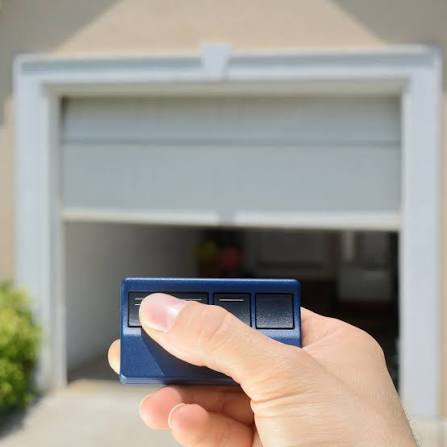
There is nothing quite as frustrating as pressing the remote button, watching your garage door rise smoothly, and then seeing it refuse to come back down. You are left standing there, car idling, wondering if you need to call an expensive technician or if you can handle it yourself. If your Chamberlain garage door opener opens but will not close, you are not alone; this is one of the most common issues homeowners face with automatic openers.
The good news is that in the vast majority of cases, this problem is not caused by a broken motor or a costly mechanical failure. Instead, it is usually triggered by safety features doing exactly what they were designed to do: protecting you and your property. In this guide, we will walk you through the logical steps to diagnose and fix the issue, saving you time and money.
Why Safety Sensors Are the Primary Culprit
Before you start unscrewing panels or checking springs, you must understand the role of the photo-eye sensors. Modern garage door openers, including all Chamberlain models manufactured after 1993, are required by federal law to have reversing mechanisms. These systems prevent the door from crushing objects, pets, or people.
If your door goes up but immediately reverses when trying to go down, or simply refuses to move downward at all, the safety sensors are likely misaligned or obstructed. This is the number one reason for the “opens but will not close” symptom.
How to Check and Align Your Sensors
The sensors are located near the bottom of the garage door tracks, about six inches off the ground. One sensor sends an invisible beam of light, and the other receives it. If the beam is broken, the door will not close.
- Check the LED Lights: Look at the small lights on each sensor. Typically, one will have a steady green light (power), and the other will have a steady amber or yellow light (beam received). If the receiving sensor’s light is blinking or off, the beam is blocked.
- Clean the Lenses: Use a soft, dry cloth to wipe away dust, spiderwebs, or dirt. Even a thin layer of grime can disrupt the infrared signal.
- Verify Alignment: The sensors must face each other perfectly. If one has been bumped by a ladder or a bicycle, the beam will miss the receiver. Loosen the wing nut slightly, adjust the bracket until both lights are steady, and tighten it back.
Pro Tip: If you live in an area with intense direct sunlight hitting the garage entrance during the day, the sun’s infrared rays can sometimes overwhelm the sensor. Try closing the door at night. If it works, you may need to install a shade or hood over the sensors.
Inspecting the Travel Limit Settings
If your sensors are aligned and clean, but the door still reverses before hitting the floor, the issue likely lies with the travel limit settings. These settings tell the motor how far to move the door up and down. Over time, vibrations can cause these settings to drift.
Chamberlain openers typically use either screw-drive adjustments or digital button controls, depending on the model age.
Adjusting Mechanical Limit Screws
For older models with white plastic screws on the side of the motor unit:
- Locate the two screws labeled “Up” and “Down.”
- The “Down” screw controls how far the door travels toward the floor.
- Turn the “Down” screw in small increments (quarter turns) to increase the travel distance.
- Test the door after each adjustment. Be careful not to set it too far, or the door will strain against the floor, potentially damaging the motor.
Adjusting Digital Limits
For newer MyQ-enabled models:
- Press and hold the “Settings” or “Program” button until the LED flashes.
- Follow the specific prompts in your manual to reset the down limit.
- Ensure the door closes completely and seals against the weather stripping without excessive force.
The Role of Force Settings in Door Closure
Another critical factor is the force setting. This determines how much power the motor uses to move the door. If the force is set too low, the motor may perceive normal friction as an obstruction and reverse the door for safety. Conversely, if it is set too high, it can be dangerous.
If your door starts to close but stops halfway and reverses, try increasing the down force slightly. However, exercise caution. After adjusting, perform the safety reversal test: place a 2×4 piece of wood flat on the floor under the center of the door. Close the door. It should stop and reverse upon touching the wood. If it does not reverse, the force is too high and poses a safety risk.
| Setting | Symptom if Too Low | Symptom if Too High |
|---|---|---|
| Down Force | Door reverses before hitting floor | Door crushes objects; fails safety test |
| Up Force | Door won’t open fully | Motor strains; gear wear accelerates |
| Sensor Beam | N/A (Beam must be clear) | N/A (Beam must be clear) |
Checking for Physical Obstructions and Track Issues
Sometimes the problem is not electronic but physical. A garage door is a heavy mechanical system that relies on smooth movement. If the rollers are stuck, the tracks are bent, or the springs are broken, the motor will detect resistance and refuse to close.
Inspect the metal tracks on both sides of the door. Look for dents, gaps, or loose bolts. Even a minor bend can cause the rollers to jump or bind. Additionally, check the hinges and rollers for rust or lack of lubrication. Applying a silicone-based lubricant to the rollers and hinges can often resolve minor friction issues that trigger the safety reversal.
For a deeper understanding of garage door mechanics and safety standards, you can refer to the general guidelines provided by Wikipedia’s entry on Garage Doors, which outlines the historical evolution of safety features in residential openers.
When to Replace the Logic Board or Motor
If you have checked the sensors, adjusted the limits and force, cleared obstructions, and lubricated the tracks, but the door still opens and refuses to close, the issue may be internal. The logic board (the brain of the opener) could be faulty.
Signs of a failing logic board include:
- Inconsistent behavior (works sometimes, fails others).
- No response from wall controls or remotes.
- Burning smell from the motor unit.
- Error codes flashing on the LED display (consult your manual for specific code meanings).
In these cases, replacing the logic board is often more cost-effective than buying a new opener, provided the motor itself is still healthy. However, if your opener is more than 10–15 years old, it may be time to consider a full replacement for better energy efficiency and modern security features.
FAQ Section
Q1: Why does my Chamberlain garage door close when I hold the wall button but not with the remote?
A: This usually indicates an issue with the safety sensors. When you hold the wall button, you bypass the safety sensors (on most models). If the door closes while holding the button but not with the remote, your sensors are misaligned, blocked, or dirty. Check the LED lights on the sensors first.
Q2: Can cold weather affect my garage door’s ability to close?
A: Yes. Extreme cold can cause metal tracks to contract and lubricants to thicken, increasing friction. This added resistance can trick the motor into thinking there is an obstruction. Lubricating your moving parts with a cold-weather appropriate silicone spray can help mitigate this issue.
Q3: What does it mean if the LED light on my Chamberlain opener is blinking?
A: A blinking LED typically indicates an error code. The number of blinks corresponds to a specific issue. For example, 5 blinks might indicate a motor overload, while 1 blink could mean a wire break. Refer to your owner’s manual to decode the specific blink pattern for your model.
Q4: Is it safe to disconnect the safety sensors to force the door to close?
A: No. It is extremely dangerous and illegal in many jurisdictions to bypass safety sensors. They are designed to prevent serious injury or death. If the sensors are causing issues, you should fix or replace them, not disable them.
Q5: How often should I maintain my garage door opener?
A: Experts recommend a bi-annual maintenance check. Twice a year, inspect the cables, springs, and rollers for wear, lubricate moving parts, and test the safety reversal feature. Regular maintenance can extend the life of your opener by several years.
Conclusion
Dealing with a Chamberlain garage door opener that opens but will not close is stressful, but it is rarely a catastrophic failure. By systematically checking your safety sensors, adjusting travel limits, and ensuring the tracks are clear, you can resolve the issue in most cases without professional help. Remember, safety is paramount—never bypass the reversing mechanisms.
If you found this guide helpful, please share it with your neighbors or on social media. You never know who else might be standing in their driveway, frustrated with a stubborn garage door!
Leave a Reply