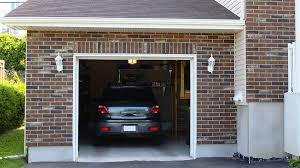
Have you ever rushed out the door in the morning, jumped into your vehicle, and started the engine while the garage door was still halfway up? It is a common habit for many homeowners, but it raises a serious safety question: Can you start car in garage with door open? While it might seem harmless because fresh air is entering the space, the reality is far more dangerous than most people realize. This article will guide you through the hidden risks of carbon monoxide buildup and provide expert-backed safety protocols to keep your household secure.
The Hidden Danger: Why “Open” Isn’t Always Safe
Many drivers assume that if the garage door is open, even partially, the toxic fumes from their vehicle will simply dissipate into the outside air. However, this assumption can be fatal. The primary concern here is not just the visible smoke, but the invisible killer known as Carbon Monoxide (CO).
Understanding Carbon Monoxide (CO)
Carbon monoxide is a colorless, odorless, and tasteless gas produced by the incomplete combustion of fossil fuels. When you start your car, especially in cold weather, the engine runs richer (using more fuel), which significantly increases CO emissions.
According to the Centers for Disease Control and Prevention (CDC), hundreds of people in the United States die annually from unintentional CO poisoning not linked to fires. Even with the garage door open, airflow dynamics can trap these fumes inside your home.
The Stack Effect and Airflow
Your home operates on pressure differentials. If your house is warmer than the outside air, it creates a “stack effect,” where warm air rises and escapes through upper levels, pulling lower-level air (including garage air) into the living spaces.
If your garage door is only partially open, or if there is a slight wind blowing against the opening, the exhaust fumes may not exit efficiently. Instead, they can seep under the door connecting your garage to your house, entering your living room, kitchen, or bedrooms within minutes.
Can You Start Car In Garage With Door Open? The Verdict
To answer the specific query: Technically, yes, you can physically start the car, but you should not do it unless specific safety conditions are met.
Starting a car in an attached garage, even with the door open, poses significant health risks. The level of risk depends on several variables:
- How open is the door? A fully open door provides better ventilation than a half-open one.
- How long does the engine run? Idling for more than a minute increases risk exponentially.
- What is the weather like? Cold engines produce more pollutants.
- Is the garage attached or detached? Attached garages share air seals with the home.
Expert Consensus
Safety experts and automotive engineers unanimously agree that the safest practice is to back the car out of the garage before starting it, or start it and immediately drive it out. Idling in the garage, even with ventilation, is an unnecessary gamble with your family’s health.
Risks of Idling in an Attached Garage
Understanding the specific risks helps in making informed decisions. Here is a breakdown of why this habit is dangerous.
1. Rapid CO Accumulation
Studies have shown that CO levels in a closed or semi-closed garage can reach lethal concentrations in less than 10 minutes. Even with the door open, if the wind direction is unfavorable, fumes can swirl back into the garage entrance.
2. Seepage into Living Spaces
Most building codes require a fire-rated door between an attached garage and the house, but they do not guarantee an airtight seal. Gaps around the door frame, electrical outlets, and plumbing penetrations act as highways for gas to enter your home.
3. Health Symptoms of CO Poisoning
CO poisoning is often mistaken for the flu. Symptoms include:
- Dull headache
- Weakness
- Dizziness
- Nausea or vomiting
- Shortness of breath
- Confusion
- Blurred vision
If multiple family members feel “flu-like” symptoms simultaneously after a car has been started in the garage, evacuate immediately and seek fresh air.
Best Practices for Garage Safety
To ensure you are following the highest safety standards, adopt these best practices. These steps are designed to mitigate risk and protect your E-E-A-T (Experience, Expertise, Authoritativeness, and Trustworthiness) as a responsible homeowner.
Step-by-Step Safe Start Procedure
- Close the House Door: Ensure the door connecting your garage to your home is tightly closed before starting any vehicle.
- Open the Garage Door Fully: Do not rely on a partial opening. Use the remote or wall switch to open the door completely to maximize airflow.
- Start the Engine: Turn the key or press the start button.
- Exit Immediately: Do not sit in the idling car. Back out of the garage as soon as it is safe to do so.
- Close the Garage Door: Once the vehicle is outside, close the garage door to prevent unauthorized access and maintain home security.
Comparison: Safe vs. Risky Behaviors
| Behavior | Risk Level | Explanation |
|---|---|---|
| Starting car with door closed | Extreme | Lethal CO levels can build up in minutes. Never do this. |
| Starting car with door half-open | High | Insufficient ventilation; fumes can easily enter the home. |
| Starting car with door fully open | Moderate | Better airflow, but fumes can still linger or enter if wind is bad. |
| Backing out before starting | Low | Safest method. Exhaust is released directly outdoors. |
| Idling in garage for >2 mins | High | Prolonged exposure increases CO concentration significantly. |
The Role of Modern Vehicles and Technology
You might wonder, “My car is new; doesn’t it have cleaner emissions?” While modern catalytic converters have significantly reduced harmful emissions, they do not eliminate Carbon Monoxide entirely, especially during cold starts.
Cold Start Emissions
When an engine is cold, the catalytic converter is not yet at its optimal operating temperature. During this “warm-up” phase, the vehicle emits higher levels of hydrocarbons and CO. This is why starting a car in the garage is more dangerous in winter than in summer.
Remote Start Features
Many modern vehicles come with remote start capabilities. While convenient, this feature can encourage dangerous behavior. Users may start the car from inside the house, leaving the garage door closed. Never use remote start in a closed or attached garage. Always ensure the garage door is fully open and the area is well-ventilated before using this feature.
FAQ Section
1. Is it safe to start my car in the garage if I leave the door open for 10 minutes first?
No. Pre-ventilating the garage does not guarantee safety once the engine starts. The continuous production of exhaust fumes while the engine is running can overwhelm the natural ventilation, especially if there is no cross-breeze. The safest approach is to move the vehicle outside before or immediately after starting.
2. What if I have a detached garage?
If your garage is completely detached from your home (no shared walls or doors), the risk of CO entering your living space is negligible. However, you should still avoid prolonged idling in a enclosed structure to protect your own health while working on the vehicle.
3. Can a carbon monoxide detector save me?
Yes, but it should not be your only line of defense. CO detectors are critical safety devices. Ensure you have working CO detectors on every level of your home, particularly near sleeping areas and in the garage itself if it is attached. Test them monthly and replace batteries annually.
4. How long does it take for carbon monoxide to kill you in a garage?
In a closed garage, CO levels can reach lethal concentrations in as little as 5 to 10 minutes. With the door open, it takes longer, but symptoms of poisoning (headache, dizziness) can begin within minutes, impairing your ability to escape or react.
5. Does rolling down the car windows help?
Rolling down windows helps slightly by allowing some fumes to escape the vehicle cabin, but it does not stop the exhaust from filling the garage space. The primary danger is the accumulation of gas in the garage, which then seeps into the house. Therefore, window position is irrelevant to the overall safety of the home.
6. What should I do if I suspect CO poisoning?
If you or your family experience sudden headaches, nausea, or dizziness after a car has been started in the garage:
- Get everyone outside into fresh air immediately.
- Call emergency services (911 in the US).
- Do not re-enter the home until it has been declared safe by professionals.
- Seek medical attention, as CO poisoning can have delayed effects.
Conclusion
So, can you start car in garage with door open? While physically possible, it is a risky practice that compromises the safety of your home and family. The convenience of starting your car early does not outweigh the potential threat of carbon monoxide poisoning.
The gold standard for safety is simple: Back your car out of the garage before starting it, or start it and drive it out immediately with the garage door fully open. By adopting this habit, installing reliable CO detectors, and understanding the invisible dangers of exhaust fumes, you protect your loved ones from a preventable hazard.
Stay safe, stay informed, and prioritize ventilation. If you found this guide helpful, please share it with your friends and family on social media to spread awareness about garage safety. Your share could literally save a life.
Leave a Reply