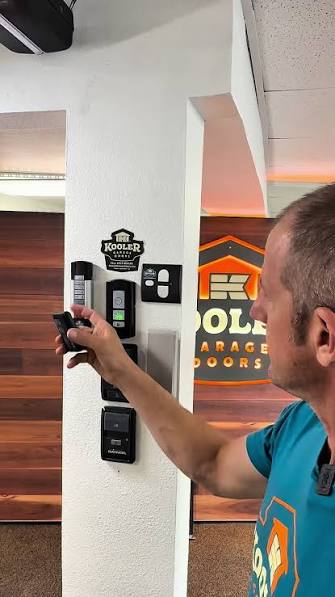
Have you ever noticed your garage door acting strangely, opening when it shouldn’t, or failing to respond to your remote? Many homeowners ask, can you change the frequency of a garage door opener to fix interference or boost security? The short answer is complex: while you cannot manually “tune” the radio frequency like an old car radio, there are specific ways to address signal issues and enhance your home’s safety.
In this guide, we will break down exactly how garage door frequencies work, why they are generally fixed, and what actionable steps you can take if you are experiencing signal problems or security concerns.
Understanding How Garage Door Frequencies Work
To understand whether you can change the frequency, we first need to look at how these devices communicate. Garage door openers operate on specific radio frequencies regulated by the Federal Communications Commission (FCC) in the United States.
The Standard Frequencies
Most residential garage door openers in the US operate on one of two primary bands:
- 315 MHz: Common in older models and many standard units.
- 390 MHz: Often used in newer models to reduce interference from other household devices.
Some modern systems also use 868 MHz or even Wi-Fi-based protocols for smart home integration. These frequencies are hardwired into the transmitter (your remote) and the receiver (the motor unit in your garage). Unlike a walkie-talkie where you can switch channels, garage door components are paired digitally or via dip switches to recognize each other’s unique code, not just their frequency.
Why Are Frequencies Fixed?
Manufacturers lock these frequencies to ensure compliance with federal regulations and to maintain reliability. If users could freely change frequencies, it would lead to widespread signal chaos, interfering with emergency services, medical devices, and other critical communication systems. Therefore, the hardware itself is designed to transmit and receive only on its designated band.
Can You Physically Change the Frequency?
For the vast majority of homeowners, the answer is no. You cannot simply adjust a dial or install a software update to shift your opener from 315 MHz to 390 MHz. The radio crystals inside the remote and the motor unit are physical components tuned to a specific frequency.
However, there is a common misconception about “changing” frequencies that stems from older technology. Let’s clarify the difference between frequency and coding.
Frequency vs. Security Codes
- Frequency: The radio wave band (e.g., 315 MHz). This is fixed.
- Security Code: The digital signature that tells the opener, “It’s me, open the door.” This can be changed.
Older openers used DIP Switches (tiny physical switches inside the remote and motor) to set a code. Newer openers use Rolling Codes (also known as hopping codes), which change the security algorithm every time you press the button. While you cannot change the frequency, you can and should reprogram the security code to prevent unauthorized access.
Dealing with Interference: Is It a Frequency Issue?
If your garage door is opening randomly or not responding, you might suspect frequency interference. Before assuming you need a new system, consider these common culprits.
Common Sources of Interference
- LED Light Bulbs: Certain cheap LED bulbs emit electromagnetic noise that can jam garage door signals. Try switching back to incandescent bulbs temporarily to test.
- Neighbors’ Openers: In dense housing areas, two openers on the same frequency with similar codes might cross-talk.
- Wireless Devices: Baby monitors, wireless doorbells, and ham radios operating near 315–390 MHz can cause disruptions.
How to Fix Interference Without Changing Frequency
Since you cannot change the frequency, try these proven steps:
- Reprogram Your Remote: Clear all existing codes and re-pair your remotes. This assigns a new rolling code, reducing the chance of cross-talk.
- Check Antenna Orientation: Ensure the hanging wire antenna on your motor unit is vertical and not tucked behind metal objects.
- Replace Light Bulbs: Use FCC-compliant LED bulbs specifically labeled as “garage door compatible.”
Enhancing Security: Alternatives to Changing Frequency
If your concern is security—such as fear of “code grabbing” thieves—you don’t need to change the frequency. Modern security measures are far more effective.
Upgrade to Rolling Code Technology
If you have an opener manufactured before 1993, it likely uses a fixed code. These are highly vulnerable to theft. Upgrading to a unit with Security+ 2.0 or similar rolling code technology ensures that the code changes with every use, making it nearly impossible for thieves to replicate.
Install a Smart Garage Hub
Smart hubs like MyQ or Tailwind allow you to control your garage door via smartphone. They use encrypted Wi-Fi connections rather than relying solely on radio frequency signals. This adds a layer of digital security and allows you to monitor activity in real-time.
| Feature | Fixed Code (Old) | Rolling Code (New) | Smart Wi-Fi Opener |
|---|---|---|---|
| Security Level | Low | High | Very High |
| Interference Risk | High | Medium | Low |
| Remote Access | No | No | Yes |
| Frequency Changeable? | No | No | No (Uses Wi-Fi) |
Step-by-Step: How to Reprogram Your Opener
While you cannot change the frequency, reprogramming your opener is the best way to resolve interference and security issues. Here is a general guide (always check your manual for model-specific instructions):
- Locate the Learn Button: Find the “Learn” or “Program” button on your motor unit. It is usually colored yellow, purple, or red.
- Clear Old Codes: Press and hold the Learn button for 6–10 seconds until the indicator light blinks or turns off. This erases all previously paired remotes.
- Pair Your Remote: Press the Learn button once briefly. Within 30 seconds, press and hold the button on your remote until the motor unit lights blink or click.
- Test the System: Press the remote button again to ensure the door operates smoothly. Repeat for additional remotes.
This process effectively gives your system a new “identity” without altering the underlying radio frequency.
When to Replace Your Garage Door Opener
If you are still experiencing issues after reprogramming, it may be time for a replacement. Consider upgrading if:
- Your opener is more than 15 years old.
- It uses fixed-code DIP switches.
- You experience frequent interference despite troubleshooting.
- You want smart home integration.
Newer models operate on less congested frequencies and offer better encryption. For more technical details on radio frequency allocations, you can refer to the FCC guidelines on unlicensed devices or general radio spectrum information on Wikipedia.
FAQ Section
1. Can I use a universal remote if I can’t change the frequency?
Yes, universal remotes are designed to work with specific frequency bands (usually 315 MHz or 390 MHz). You must buy a universal remote that matches your opener’s frequency. Check your motor unit’s label to confirm the band before purchasing.
2. Why does my garage door open when my neighbor uses theirs?
This is rare with modern rolling code systems but can happen with older fixed-code units if the DIP switch settings are identical. Reprogramming both openers to new random codes will solve this issue.
3. Do smart garage door openers use a different frequency?
Smart openers still use radio frequency (RF) for the handheld remote, but they also use Wi-Fi (2.4 GHz) for app control. The Wi-Fi component does not replace the RF remote but adds an alternative control method.
4. Can I extend the range of my garage door opener?
You cannot change the frequency to extend range, but you can install a signal repeater or ensure your remote’s battery is fresh. Also, check that the motor unit’s antenna is hanging freely and not obstructed by metal storage items.
5. Is it legal to modify my garage door opener’s frequency?
Modifying the hardware to transmit on unauthorized frequencies is illegal under FCC regulations in the US. It can interfere with critical services and result in heavy fines. Always use certified devices within their designated bands.
6. What is the most secure garage door opener frequency?
Security is not determined by the frequency (315 vs. 390 MHz) but by the encryption protocol. Look for openers with AES-128 bit encryption and rolling code technology, regardless of the frequency band.
Conclusion
So, can you change the frequency of a garage door opener? Technically, no—the hardware is locked to specific bands like 315 MHz or 390 MHz to comply with federal regulations. However, you can change the security code, eliminate interference, and upgrade to smarter, more secure systems.
By understanding the difference between frequency and coding, you can take practical steps to secure your home. Whether it’s reprogramming your remote, replacing incompatible LED bulbs, or upgrading to a smart opener, you have plenty of options to ensure your garage remains safe and functional.
If you found this guide helpful, please share it with your neighbors or on social media to help others secure their homes!
Leave a Reply