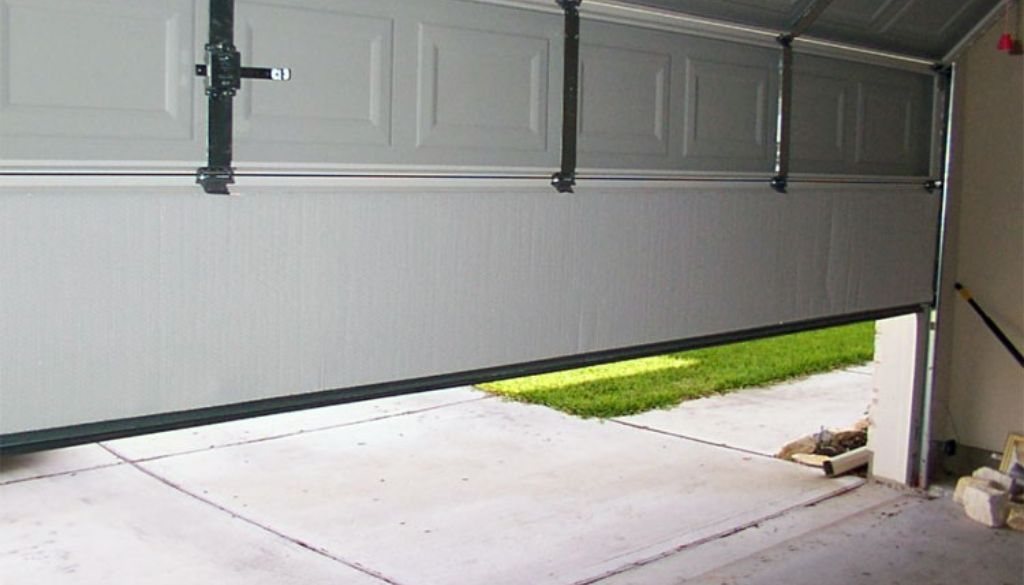
There is nothing more frustrating—or downright scary—than hearing your garage rumble open in the middle of the night. If you find yourself asking, “Why Does My Garage Door Keeps Opening By Itself?“, you are absolutely not alone. Fortunately, this common security issue is usually a quick and easy fix!
Top Causes: Why Does My Garage Door Keeps Opening By Itself?
Think of your automatic opener like a loyal guard dog. Most of the time, it does its job perfectly. But occasionally, it gets confused by a strange noise or trips over its own paws. Before you call an expensive repair service, let’s break down the most common culprits behind a rogue door.
1. Faulty or Dirty Safety Sensors
Every modern system is equipped with photo-eye sensors located near the floor. These emit an invisible infrared beam across the doorway. If dirt, spiderwebs, or physical misalignment blocks this beam, the door’s safety mechanism triggers. It might reverse while closing or, in rare electrical glitches, pop back open unexpectedly.
2. Radio Frequency Interference
Your remote communicates with the motor unit using specific radio waves. However, nearby electronics, military radar, or even your neighbor’s wireless devices can cause radio frequency interference. Because a standard garage door opener operates on shared frequencies, rogue signals from a passing car or a nearby baby monitor can trick the motor into activating.
3. Stuck Transmitter Buttons
Sometimes the problem is entirely physical. Check your car visor! A heavy object like a flashlight or a toll pass might be pressing against the remote. Similarly, the wall-mounted button inside your house might have a stuck contact, sending a continuous “open” signal to the main unit.
4. Damaged Logic Board
The logic board is the “brain” of your entire system. Power surges from local lightning storms or aging capacitors can fry its microchips. When the brain is damaged, it sends erratic electrical impulses to the motor, leading to phantom openings and closures.
Expert Insight: According to Mike Reynolds, a certified overhead door technician with over 15 years of experience, “Homeowners often panic and assume they are being hacked. In reality, over 80% of phantom-opening issues are simply caused by dirty sensor lenses or a stuck wall button.”
Quick Troubleshooting: Signs vs. Solutions
To help you diagnose the issue quickly, we have compiled a comparison table of the most common symptoms. Use this guide to pinpoint the exact problem before reaching for your toolbox.
| Symptom You Experience | Probable Cause | Quick DIY Fix |
|---|---|---|
| Door opens and closes repeatedly | Sensor obstruction or misalignment | Clean lenses and realign the LED lights. |
| Door opens when neighbor leaves | Radio frequency interference | Change the DIP switches or frequency on the motor. |
| Door opens randomly at night | Stuck remote or wall button | Check car remotes and unplug the wall console. |
| Door reverses halfway down | Limit switch misadjustment | Adjust the travel limits on the motor unit. |
Step-by-Step Tutorial: How to Align and Clean Your Sensors
If you suspect your photo-eyes are the issue, follow this precise, step-by-step tutorial to get them working perfectly again.
Step 1: Inspect the Photo-Eyes Look at the two small plastic boxes located exactly 6 inches above the garage floor on both sides of the door track. Ensure there are no cobwebs, leaves, or trash blocking their view of each other.
Step 2: Clean the Lenses Use a dry, lint-free microfiber cloth. If there is stubborn grime, lightly dampen the cloth with exactly 2 to 3 drops of isopropyl alcohol (concentration 70% or higher). Never use harsh household glass cleaners, as they can leave a cloudy residue that blocks infrared beams. Wipe the lenses using a gentle circular motion for about 5 to 10 seconds each.
Step 3: Check the LED Indicators Both sensors should have a solid light. Usually, the sending unit has an amber light, and the receiving unit has a green light. If the green light is blinking or completely off, your sensors are physically misaligned and need adjustment.
Step 4: Realign the Brackets Carefully bend the metal mounting bracket by hand. Keep your eyes on the LED light until it turns solid green. Once aligned, tighten the wing nut with a pair of pliers—but apply no more than 2 to 3 pounds of torque to avoid warping the delicate metal bracket.
Step 5: Test the System Wait exactly 10 seconds after making adjustments to let the logic board reset. Then, press the main wall button. If the door closes smoothly without reversing, you have successfully fixed the issue!
Advanced Fixes: Checking the Wiring and Logic Board
If the sensors are perfectly clean and aligned, the problem might be deeper in your electrical system. Do not worry; these advanced fixes are still manageable for a beginner.
Check the Wall Console Wiring
Sometimes, the low-voltage wires connecting your indoor wall button to the motor unit get frayed or chewed by pests. Unplug the main opener, disconnect the wall button wires at the motor, and test the remote. If the door stops opening by itself, you have found the culprit: a short circuit in the wall wiring. You can easily replace this thin bell wire at any local hardware store.
Inspect the Logic Board for Damage
Remove the plastic cover of the motor housing and look closely at the green circuit board. Are there any black scorch marks, melted plastic, or bulging cylindrical capacitors? If you notice physical damage, the board must be replaced. Replacing a logic board typically costs between $85 and $150, which is significantly cheaper than buying a brand-new opener system.
Preventative Maintenance Tips to Stop Future Malfunctions
Routine care is the secret to a long-lasting, secure system. By following these simple habits, you can ensure you never have to ask why your door opens randomly again.
- Lubricate Moving Parts: Use a lithium-based grease on the metal tracks, rollers, and hinges every 6 months. Avoid using standard WD-40, as it attracts dust and grime, which can eventually jam the moving parts and confuse the motor’s force-sensors.
- Clear the Tracks: Sweep out leaves, dirt, and debris from the bottom weather seal and the metal tracks. Even a small pebble can confuse the motor’s auto-reverse mechanism, causing it to act erratically.
- Test the Auto-Reverse Feature: Place a 2-inch block of wood (or a standard roll of paper towels) on the floor under the door. Press the close button. The moment the door touches the wood, it should immediately reverse. If it does not, adjust the “Down Limit” screw on the motor unit by turning it counterclockwise exactly 3 full rotations.
Frequently Asked Questions (FAQ)
Q1: Can a neighbor’s remote accidentally open my garage door?
Yes, but it is incredibly rare with modern systems. Older openers used fixed DIP switches, meaning if your neighbor had the exact same switch configuration, their remote could trigger your door. However, modern openers use rolling-code technology that generates a brand-new security code every time you press the button, making accidental or malicious openings virtually impossible.
Q2: Is it dangerous if my garage door opens by itself?
Absolutely. An open garage exposes your home to intruders, wild animals, and harsh weather conditions. Furthermore, if the door is malfunctioning, it could suddenly reverse and fall, posing a severe safety hazard to children or pets playing nearby. Addressing this issue immediately is crucial for your family’s security.
Q3: How often should I replace my garage door remote batteries?
You should replace the batteries in your handheld remotes and car visor clips every 12 to 18 months. Weak batteries can send erratic, low-voltage signals to the motor unit, which can confuse the logic board and cause the door to open or close randomly.
Q4: Can a smart home device or Wi-Fi router cause interference?
Yes. While most smart hubs are shielded properly, a malfunctioning router, a nearby baby monitor, or even high-powered LED light bulbs installed inside the garage can emit radio frequency interference. If you suspect interference, try unplugging nearby electronics one by one to isolate the disruptive signal.
Q5: Why does my garage door only open by itself at night?
Nighttime temperature drops can cause metal components to contract, slightly shifting the alignment of your safety sensors. Additionally, atmospheric conditions at night can sometimes allow distant radio signals to travel further, occasionally triggering older, non-rolling-code openers.
Conclusion: Secure Your Home Today
Dealing with a rogue door is stressful, but as you can see, finding out why does my garage door keeps opening by itself usually comes down to simple maintenance. From cleaning dirty sensor lenses to checking for radio frequency interference, a little troubleshooting goes a long way in protecting your property.
Leave a Reply