If you’re dealing with What To Do When Garage Door Won’t Open, it can be frustrating—especially when you’re stuck inside or trying to leave for work. This is a common household issue that can happen suddenly and for several different reasons.
The good news is that most garage door problems are fixable without needing immediate professional repair. You just need to identify the cause step by step.
Why Your Garage Door Won’t Open
Before jumping into solutions, it helps to understand what might be wrong. Garage doors rely on a combination of electrical systems, springs, and mechanical parts.
Read too: Tc1 Tricode Garage Door Opener Remote W/ Clip Chamberlain: Complete Guide
Common causes include:
- Power failure or unplugged opener
- Dead remote batteries
- Broken torsion springs
- Misaligned safety sensors
- Locked manual latch engaged
According to home repair statistics, over 40% of garage door issues are caused by simple power or remote-related problems—not major mechanical failure.
What To Do When Garage Door Won’t Open (Step-by-Step Fix)
Let’s go through the most effective troubleshooting process.
Step 1: Check the Power Supply
- Make sure the opener is plugged in
- Check your home’s circuit breaker
- Test another electrical device in the same outlet
If there is no power, your garage door opener won’t respond at all.
Step 2: Inspect the Remote Control
- Replace the remote battery
- Stand within 10–15 feet of the door
- Try using the wall switch instead
If the wall switch works but the remote doesn’t, the issue is likely the remote.
Step 3: Check the Manual Lock
Some garage doors have a manual locking handle.
- Look for a sliding latch on the inside
- Make sure it is in the “unlocked” position
This is one of the most overlooked causes.
Step 4: Inspect the Safety Sensors
Modern garage doors use infrared safety sensors.
- Look near the bottom of both sides of the door
- Ensure nothing is blocking them
- Clean dust or spider webs
If sensors are misaligned, the door will refuse to close or open properly.
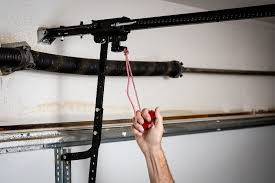
Step 5: Test the Emergency Release Cord
- Pull the red emergency cord downward
- This disconnects the door from the motor
- Try lifting the door manually
If the door is very heavy, the springs may be damaged.
How Broken Springs Affect Garage Door Operation
One of the most serious issues is a broken torsion spring.
Garage door springs are under high tension and help lift heavy doors weighing 130–300 lbs.
Signs of broken springs:
- Door feels extremely heavy
- Loud snap sound earlier
- Door opens a few inches then stops
⚠️ Experts strongly recommend not attempting DIY spring repairs due to high injury risk.
Power Failure vs Mechanical Failure
| Type | Symptoms | Solution |
|---|---|---|
| Power Issue | No response at all | Check outlet/breaker |
| Remote Issue | Wall button works | Replace battery |
| Mechanical Issue | Heavy or stuck door | Inspect springs/cables |
| Sensor Issue | Door reverses or won’t move | Clean/realign sensors |
When to Call a Professional
While many issues are simple, some require expert help.
Call a technician if:
- Springs are broken
- Cables are snapped
- Door is off track
- Motor is making grinding noise
According to industry safety reports, garage door systems cause thousands of injuries annually, mostly from spring-related accidents.
How to Prevent Garage Door Problems
Preventive maintenance can save time and money.
Simple maintenance tips:
- Lubricate moving parts every 6 months
- Test safety sensors monthly
- Replace remote batteries yearly
- Inspect springs visually for wear
- Keep tracks clean and aligned
Regular maintenance can extend garage door lifespan by up to 30%, according to home improvement studies.
Emergency Manual Operation
If your garage door won’t open during a power outage:
- Pull the emergency release cord
- Lift the door slowly with both hands
- Secure it with a prop if needed
Be careful—garage doors can be heavy and unstable when disconnected.
Common Mistakes Homeowners Make
Avoid these errors when troubleshooting:
- Forcing the door open
- Ignoring grinding noises
- Repeatedly pressing remote without checking power
- Attempting spring replacement without tools
These actions can worsen damage or cause injury.
FAQ: What To Do When Garage Door Won’t Open
1. Why is my garage door completely unresponsive?
Most likely due to power loss, dead remote batteries, or a tripped breaker.
2. Can I open my garage door manually?
Yes, use the emergency release cord, but ensure the door is not damaged or stuck.
3. Why does my garage door open a little then stop?
This often indicates broken springs or obstruction in the tracks.
4. How do I reset my garage door opener?
Unplug the unit for 30 seconds, then reconnect and test again.
5. Are garage door repairs dangerous?
Yes, especially spring repairs. Springs are under extreme tension and should be handled by professionals.
6. How long do garage door openers last?
On average, 10–15 years, depending on maintenance and usage.
Conclusion
Understanding What To Do When Garage Door Won’t Open helps you quickly identify whether the issue is simple or serious. In many cases, the problem is related to power, remote batteries, or sensors and can be fixed in minutes.
However, mechanical issues like broken springs or cables require professional attention for safety.
If this guide helped you, share it with others who might be facing the same garage door problem—it could save them time, stress, and repair costs.
Leave a Reply