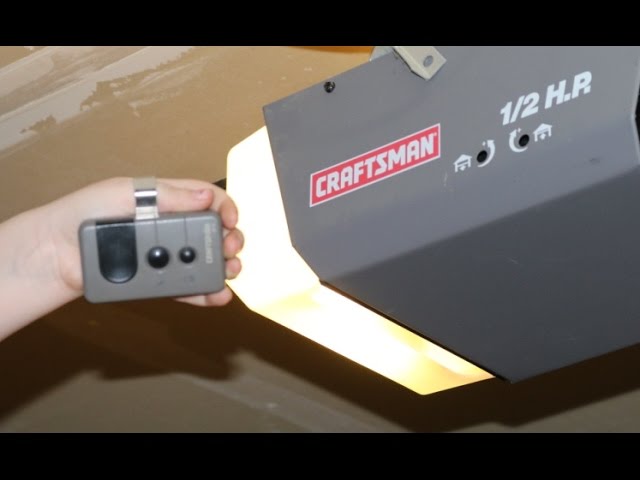
Introduction
Is your garage door refusing to open, or did you just move into a new home with an older Craftsman system but no instructions? It is incredibly frustrating to be locked out of your own garage, especially when you cannot find the Sears Craftsman 1/2 HP Garage Door Opener Manual. You are not alone; millions of American homeowners rely on these durable units, yet misplaced manuals are a common headache.
This guide serves as your comprehensive digital replacement for that lost paper booklet. We will walk you through identifying your specific model, programming remotes, and troubleshooting common issues, ensuring you can regain control of your garage door quickly and safely.
Identifying Your Specific Craftsman Model
Before diving into repairs or programming, it is crucial to identify the exact model number of your opener. “Craftsman 1/2 HP” is a broad category that covers decades of production. The steps for a unit made in 1995 differ significantly from one made in 2015.
Where to Find the Model Number
Look for a label or sticker on the motor head unit (the main box attached to the ceiling). It is usually located on the back or side panel. You are looking for a sequence like:
- 139.536XX
- 139.539XX
- 41AXXXX
If the label is faded, check the original purchase receipt or look for a model number stamped on the metal casing near the light lens.
Why Model Identification Matters
Different models use different frequencies (315 MHz vs. 390 MHz) and security codes (rolling code vs. fixed code). Using the wrong programming method will result in failure. According to industry standards, identifying the manufacturer’s specific protocol is the first step in any technical repair Source: Wikipedia – Garage Door Opener.
How to Program a New Remote Control
One of the most common reasons users search for a Sears Craftsman 1/2 HP Garage Door Opener Manual is to pair a new remote. The process varies slightly by era, but here are the two most common methods.
Method 1: The “Learn Button” Method (Newer Models)
Most Craftsman openers manufactured after 1993 use a “Smart” or “Learn” button.
- Locate the Learn Button: Look on the back panel of the motor head. It is usually yellow, red, purple, or green.
- Clear Old Codes (Optional): If you want to erase all previous remotes, press and hold the Learn button until the indicator light goes out (about 6–10 seconds).
- Enter Programming Mode: Press and release the Learn button. The indicator light will turn on or blink.
- Press the Remote: Within 30 seconds, press and hold the button on your new remote that you wish to use. Hold it until the motor unit’s lights blink or you hear a click.
- Test: Press the remote button again to ensure the door operates.
Method 2: Dip Switches (Older Models)
If your opener has a row of tiny switches (dip switches) inside the remote and on the motor head, you have an older fixed-code system.
- Open the Remote: Remove the battery cover to reveal the dip switches.
- Match the Pattern: Look at the dip switches on the motor head unit. Set the switches in the remote to match the exact same up/down pattern.
- Close and Test: Replace the battery cover and test the remote. No button pressing on the motor is required for these older units.
Troubleshooting Common Issues
Even with a reliable 1/2 HP motor, issues can arise. Here is how to diagnose the most frequent problems without calling a technician.
The Door Reverses Before Closing
This is a safety feature triggered by misaligned sensors.
- Check the Sensors: Look at the small eyes near the floor on both sides of the door. Are the LED lights solid? If one is blinking or off, they are misaligned.
- Clean the Lenses: Wipe them with a soft cloth to remove dust or spiderwebs.
- Adjust Alignment: Loosen the bracket slightly and adjust the sensor until both LEDs glow steadily.
The Motor Runs, But the Door Doesn’t Move
If you hear the motor humming but the door stays put, the issue is likely mechanical, not electrical.
- Inspect the Drive Gear: In many Craftsman 1/2 HP models, the plastic drive gear wears out over time. If it is stripped, the motor spins but doesn’t engage the chain or screw.
- Check the Emergency Release: Ensure the red emergency release cord hasn’t been pulled, disconnecting the trolley from the door.
The Remote Has a Short Range
If you have to stand directly under the door to make it work, consider these factors:
- Battery Strength: Replace the remote battery with a fresh CR2032 or similar type.
- Interference: LED light bulbs in the garage can sometimes interfere with radio signals. Try switching to incandescent bulbs temporarily to test.
- Antenna Wire: Ensure the hanging wire antenna on the motor unit is not tucked behind metal ductwork or insulation.
Maintenance Tips for Longevity
A 1/2 HP opener is designed for standard single-car or lightweight double-car doors. To keep it running smoothly for years, follow this maintenance schedule.
| Maintenance Task | Frequency | Details |
|---|---|---|
| Lubricate Chain/Screw | Every 6 Months | Use a silicone-based lubricant. Avoid WD-40 as it attracts dust. |
| Test Safety Reverse | Monthly | Place a 2×4 piece of wood on the floor. Close the door. It must reverse upon contact. |
| Tighten Hardware | Annually | Check bolts on brackets, rails, and the motor unit. Vibration can loosen them over time. |
| Inspect Cables | Annually | Look for fraying or wear on the lift cables. Do not touch tensioned cables. |
Pro Tip: Never attempt to adjust the spring tension yourself. Garage door springs are under extreme tension and can cause severe injury if they snap. Always call a professional for spring-related issues.
When to Replace vs. Repair
Is it worth fixing an old Craftsman 1/2 HP unit? Consider the following comparison:
Repair If:
- The unit is less than 10 years old.
- The issue is minor (e.g., remote programming, sensor alignment).
- Replacement parts (like gears or circuit boards) are readily available.
Replace If:
- The unit is over 15 years old.
- It lacks modern safety features (like rolling code technology).
- The motor burns out frequently.
- Noise levels are excessive despite lubrication.
Modern openers offer smartphone connectivity, battery backups, and quieter DC motors, which might justify an upgrade if your current unit is aging.
FAQ Section
Q1: Can I use a universal remote with my Sears Craftsman 1/2 HP opener?
A: Yes, most universal remotes are compatible with Craftsman openers. However, you must ensure the universal remote supports the frequency (315 MHz or 390 MHz) and the coding type (rolling or fixed) of your specific model. Check the packaging of the universal remote for compatibility lists.
Q2: My Craftsman opener blinks 10 times and won’t close. What does this mean?
A: Ten blinks typically indicate a problem with the safety reversal system. This usually means the safety eyes (sensors) are misaligned, blocked, or wired incorrectly. Check that nothing is blocking the beam between the two sensors near the floor.
Q3: How do I reset the keypad code on my Craftsman opener?
A: To reset a wireless keypad, locate the Learn button on the motor unit. Press and release it, then within 30 seconds, enter your desired PIN on the keypad and press the “Enter” or “Send” button. The lights should blink to confirm the new code is set.
Q4: Why is my 1/2 HP opener struggling to lift the door?
A: A 1/2 HP motor is sufficient for most standard doors. If it struggles, the door springs may have lost tension, putting extra load on the motor. Alternatively, the travel limits may need adjustment. Do not force the motor; inspect the door balance manually first.
Q5: Where can I download a PDF version of the manual?
A: You can often find digital copies of older manuals on the Sears PartsDirect website or third-party manual repositories. Search using your specific model number (e.g., “139.536247 manual PDF”) for the most accurate document.
Conclusion
Losing your Sears Craftsman 1/2 HP Garage Door Opener Manual doesn’t mean you’re stuck with a malfunctioning door. By identifying your model, understanding the programming basics, and performing regular maintenance, you can extend the life of your opener and ensure safe operation.
Remember, safety is paramount. Always test your safety reversal system monthly and consult a professional for high-tension spring repairs. If you found this guide helpful, please share it on social media to help other homeowners troubleshoot their garage door issues!
Leave a Reply