There are few things more frustrating than pressing your garage door opener and hearing nothing but a faint hum—or worse, a loud bang followed by silence. If your heavy door refuses to budge or feels impossibly heavy to lift manually, you are likely dealing with a snapped spring. Knowing how to tell if spring is broken on garage door systems is crucial not just for convenience, but for your safety and the security of your home.
Garage door springs are the unsung heroes of your entryway. They bear the brunt of the weight every single day, cycling up and down thousands of times. When they fail, it can happen suddenly and without much warning. In this guide, we will walk you through the definitive signs of failure, the differences between spring types, and exactly what steps you should take next.
Why Do Garage Door Springs Break?
Before we dive into the symptoms, it helps to understand why these components fail. Garage door springs are under extreme tension. A standard double-car garage door can weigh between 130 and 400 pounds (59–181 kg). The springs are designed to counterbalance this weight, making the door feel light enough to lift with one hand.
According to industry standards, most torsion springs are rated for approximately 10,000 cycles. One cycle equals one opening and one closing. If you use your garage door four times a day, a 10,000-cycle spring will last roughly seven years. However, factors like temperature fluctuations, lack of lubrication, and poor installation can significantly shorten this lifespan.
When the metal fatigues beyond its limit, it snaps. Understanding this lifecycle helps you anticipate issues before they become emergencies. For more detailed mechanical background on spring physics, you can refer to Wikipedia’s entry on Hooke’s Law, which governs the elasticity of these components.
5 Clear Signs Your Garage Door Spring Is Broken
Identifying a broken spring early can prevent further damage to your opener and tracks. Here are the most common indicators that your spring has failed.
1. The Loud “Bang” Noise
The most obvious sign is auditory. A broken spring releases all its stored energy instantly, creating a sound similar to a gunshot or a firecracker. If you hear this noise from your garage, especially if the door was in motion, assume a spring has snapped.
- Note: If you didn’t hear a bang, it doesn’t mean the spring is intact. Sometimes, especially with extension springs, the break can be quieter if the safety cable holds the pieces together initially.
2. The Door Won’t Open (Or Opens Only Partially)
Your garage door opener is designed to lift the door, not carry its full weight. The springs do the heavy lifting. If a spring breaks:
- The opener motor may strain, hum, or fail to move the door at all.
- The door might open only a few inches before stopping.
- The opener may reverse direction immediately after trying to lift.
Do not force the opener. Repeatedly trying to open a door with a broken spring can burn out the motor or strip the gears.
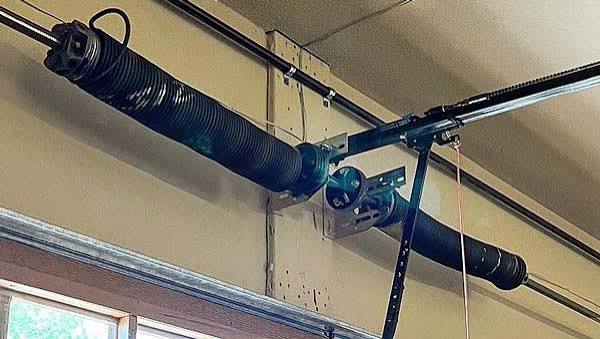
3. Visible Gaps in the Torsion Spring
If you have torsion springs (mounted above the door on a metal bar), inspect them visually. Look for a clear gap in the coiled wire.
- Intact Spring: The coils are tightly wound together with no space between them.
- Broken Spring: You will see a separation of 2–3 inches where the metal has snapped.
| Feature | Intact Torsion Spring | Broken Torsion Spring |
|---|---|---|
| Coil Spacing | Tight, no gaps | Visible gap (2-3 inches) |
| Alignment | Straight on the bar | May appear crooked or loose |
| Sound | Quiet operation | Loud bang at time of break |
4. The Door Feels Extremely Heavy
If you can still open the door manually, try lifting it halfway. It should stay in place or move smoothly. If a spring is broken:
- The door will feel incredibly heavy, like lifting a solid steel beam.
- It may slam shut if you let go.
- It won’t stay open at mid-height.
Safety Warning: Never attempt to lift a door with a broken spring alone. The imbalance can cause the door to fall unexpectedly, leading to serious injury.
5. Cables Are Loose or Hanging
The lift cables are attached to the bottom brackets of the door and wrap around the drums at the ends of the torsion spring tube. When a spring breaks, the tension is released, causing the cables to go slack.
- Look for cables that are hanging loosely near the bottom corners of the door.
- Check if the cables have come off the drums entirely.
Torsion vs. Extension Springs: Which Do You Have?
Knowing which type of spring your system uses helps you diagnose the issue accurately. Most modern homes use torsion springs, but older homes may have extension springs.
Torsion Springs
- Location: Mounted horizontally above the garage door opening on a metal shaft.
- Appearance: One or two thick, tightly wound coils.
- Failure Sign: A visible gap in the coil; loud bang.
- Lifespan: Typically 7–10 years (10,000 cycles).
Extension Springs
- Location: Mounted vertically on both sides of the horizontal track, above the rollers.
- Appearance: Long, stretched-out coils that expand and contract.
- Failure Sign: The spring hangs loosely or is separated into two pieces; often accompanied by a safety cable running through the center.
- Lifespan: Typically 5–7 years (10,000 cycles).
What To Do If Your Spring Is Broken
If you confirm that your spring is broken, follow these steps immediately.
Step 1: Stop Using the Door
Disconnect the garage door opener by pulling the red emergency release cord. This prevents accidental activation. Do not attempt to open or close the door manually unless absolutely necessary for safety reasons.
Step 2: Secure the Area
Keep children and pets away from the garage. A door with a broken spring is unstable and can fall without warning. If the door is partially open, do not try to close it.
Step 3: Call a Professional
Garage door spring replacement is not a DIY project. Torsion springs are under high tension (often over 200 pounds of force). Improper handling can result in severe injury, including broken bones or lacerations.
- Contact a licensed garage door repair technician.
- Ask for a quote that includes both parts and labor.
- Verify that the technician carries liability insurance.
Step 4: Consider Replacing Both Springs
If one spring breaks, the other is likely near the end of its life as well. Since they were installed at the same time and have undergone the same number of cycles, replacing both ensures balanced operation and saves you from another service call in the near future.
FAQ: Common Questions About Broken Garage Door Springs
Q: Can I still drive my car out if the spring is broken?
A: It is not recommended. If the door is closed, you cannot open it safely. If it is partially open, do not attempt to move it. The imbalance can cause the door to derail or fall, potentially damaging your vehicle or injuring you.
Q: How much does it cost to replace a garage door spring?
A: The national average cost ranges from $150 to $350 per spring, including labor. High-cycle springs or heavy doors may cost more. Replacing both springs typically costs between $250 and $500.
Q: Can a broken spring damage my garage door opener?
A: Yes. If you continue to try operating the opener with a broken spring, the motor will strain against the full weight of the door. This can burn out the motor, strip the gears, or damage the drive belt/chain.
Q: How long do garage door springs last?
A: Standard springs are rated for 10,000 cycles. With average use (4 cycles per day), this translates to about 7 years. High-cycle springs can last up to 25,000 cycles (approx. 17 years). Climate and maintenance also play a significant role.
Q: Is it safe to lubricate garage door springs?
A: Yes, regular lubrication can extend the life of your springs. Use a silicone-based lubricant or white lithium grease. Avoid WD-40, as it is a degreaser and can attract dust, leading to premature wear. Lubricate every 6 months.
Conclusion
Learning how to tell if spring is broken on garage door systems empowers you to act quickly and safely. Remember the key signs: the loud bang, the visible gap, the heavy lift, and the loose cables. While it is tempting to try a quick fix, the risks associated with high-tension springs make professional repair the only sensible choice.
By addressing the issue promptly, you protect your garage door opener, ensure the security of your home, and keep your family safe. Don’t wait for the second spring to break—schedule a repair today.
Found this guide helpful? Share it with your neighbors on Facebook or Twitter to help them spot the signs too!
Leave a Reply