Introduction
There’s nothing more frustrating than walking into your garage after a heavy rainstorm only to find a puddle of water spreading across the floor. If you’ve been searching for how to stop water from coming in garage door, you’re not alone — thousands of homeowners face this exact problem every year, especially during spring and fall storm seasons. The good news is that most garage door water leaks can be fixed with a few affordable tools and a little bit of weekend effort. Let’s walk through the causes, solutions, and preventive steps so you can keep your garage dry and your belongings safe.
Why Does Water Come Through Your Garage Door?
Before diving into fixes, it’s important to understand why water is getting in. Identifying the root cause will save you time and money by ensuring you apply the right solution.
Here are the most common culprits:
- Worn or damaged weatherstripping along the bottom or sides of the door
- Improper door alignment creating gaps between the door and the frame
- Cracked or uneven garage floor near the threshold
- Missing or clogged drainage around the garage entrance
- Lack of a proper threshold seal at the base of the door
According to the U.S. Department of Energy, properly sealing gaps around doors and windows can reduce energy loss by up to 20%, and the same sealing principles apply to keeping water out. When your garage door doesn’t form a tight seal, both air and water find their way inside.
Step-by-Step Guide: How To Stop Water From Coming In Garage Door
Step 1: Inspect and Replace the Bottom Weather Seal
The bottom weather seal (also called a garage door threshold seal or astragal) is your first line of defense against water intrusion. Over time, rubber seals crack, flatten, or tear — leaving a gap that water easily flows through.
How to replace it:
- Close the garage door completely and examine the rubber seal along the bottom edge.
- Look for visible cracks, tears, or sections where the seal no longer touches the floor evenly.
- Measure the width of your garage door (standard single-car doors are typically 8–9 feet wide; double-car doors are 16–18 feet).
- Purchase a replacement T-style or bulb-style rubber seal compatible with your door brand.
- Slide the old seal out of the aluminum retainer track at the bottom of the door.
- Insert the new seal into the track, starting from one end and working across. Use a rubber mallet to tap it into place if needed.
- Trim any excess material with a utility knife.
Pro Tip: Choose a seal made from EPDM rubber — it withstands UV exposure and extreme temperatures far better than standard vinyl.
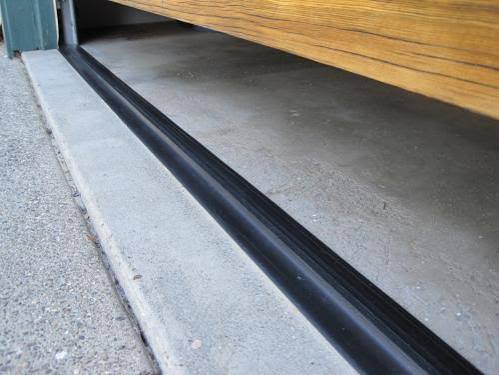
Step 2: Install a Garage Door Threshold Seal on the Floor
Even with a new bottom seal, water can still seep underneath if your garage floor has settled or slopes toward the interior. A garage door threshold seal attaches directly to the concrete floor and creates a raised barrier.
Installation steps:
- Clean the floor area beneath the closed garage door thoroughly. Remove dirt, oil, and debris using a degreaser and stiff brush.
- Allow the surface to dry completely (at least 2–4 hours).
- Measure and cut the threshold seal to match the width of your garage door opening.
- Apply a high-quality construction adhesive (such as polyurethane-based adhesive) to the underside of the threshold.
- Press the threshold firmly onto the floor, aligning it directly under the closed door’s bottom edge.
- Place heavy objects (like cinder blocks) on top and let the adhesive cure for 24–48 hours at a temperature between 50–85°F (10–29°C).
This method is particularly effective for homes in flood-prone areas or regions with heavy seasonal rainfall.
Step 3: Check and Adjust Door Alignment
A misaligned garage door won’t close flush against the frame, creating gaps on the sides or top where wind-driven rain can enter.
Signs of misalignment:
- Visible daylight around the edges when the door is closed
- The door binds or sticks during operation
- Uneven gaps on the left vs. right side
Quick adjustment process:
- Disconnect the automatic opener by pulling the emergency release cord.
- Manually lower the door and observe where gaps appear.
- Locate the track brackets on each side and loosen the bolts slightly.
- Gently tap the tracks inward or outward using a rubber mallet until the door sits evenly within the frame.
- Retighten all bolts and test the door’s movement.
If the problem persists, the torsion springs or cables may need professional adjustment.
Step 4: Seal Cracks in the Garage Floor
Water doesn’t always come through the door — sometimes it rises up through cracks in the concrete slab itself. Hydrostatic pressure from saturated soil can push groundwater upward through even hairline fractures.
How to seal floor cracks:
- Identify all visible cracks using a flashlight held at a low angle.
- Clean each crack with a wire brush and vacuum out loose debris.
- For cracks less than ¼ inch wide, apply a polyurethane concrete sealant using a caulking gun.
- For wider cracks, use a hydraulic cement patch, pressing it firmly into the gap.
- Allow the sealant to cure according to manufacturer instructions (typically 24 hours at 60–80°F / 15–27°C).
For comprehensive information on how concrete behaves under water pressure, you can refer to Concrete on Wikipedia, which covers the material’s porosity and structural properties in detail.
Step 5: Improve Exterior Drainage Around the Garage
Sometimes the best way to stop water from entering your garage is to prevent it from reaching the door in the first place.
| Drainage Solution | Cost Range | Difficulty | Best For |
|---|---|---|---|
| French drain installation | $500–$2,500 | Advanced | Chronic flooding issues |
| Regrading soil away from garage | $300–$1,500 | Moderate | Sloped yards directing water inward |
| Gutter and downspout extension | $50–$200 | Easy | Rainwater dumping near garage |
| Channel drain at threshold | $200–$800 | Moderate | Flat driveways with pooling water |
Quick wins you can do this weekend:
- Extend downspouts at least 6 feet away from the garage foundation
- Clear leaves and debris from gutters before rainy season
- Add gravel or crushed stone along the garage perimeter to improve absorption
Additional Tips for Long-Term Protection
- Apply a waterproof coating to your garage floor every 3–5 years using an epoxy or penetrating sealer.
- Install a sump pump if your garage is below grade or in a low-lying area.
- Use a dehumidifier rated for 50-pint capacity or higher to manage residual moisture.
- Inspect seals annually, ideally in early spring before heavy rains begin.
FAQ: Common Questions About Garage Door Water Leaks
Q1: What is the cheapest way to stop water from coming in garage door?
The most affordable fix is replacing the bottom weather seal, which typically costs between $20 and $50. Pair it with a tube of silicone caulk around the door frame ($5–$10), and you can significantly reduce water intrusion for under $60 total.
Q2: Can I use a regular door sweep on my garage door?
Standard door sweeps designed for interior or entry doors are not recommended for garage doors. Garage doors require heavy-duty rubber seals that can withstand vehicle traffic, temperature swings, and constant friction. Always use a seal specifically rated for overhead garage doors.
Q3: Will a garage door threshold seal work on an uneven floor?
Yes, but with limitations. Flexible rubber thresholds can conform to minor irregularities (up to about ½ inch of variation). For severely uneven floors, you should first level the concrete with a self-leveling compound before installing the threshold for maximum effectiveness.
Q4: How often should I replace my garage door weatherstripping?
Most experts recommend inspecting weatherstripping once per year and replacing it every 3 to 5 years, depending on climate conditions. Homes in areas with extreme heat, freezing winters, or intense UV exposure may need replacements more frequently.
Q5: Is water coming into my garage a sign of a bigger foundation problem?
Not necessarily, but it can be. If you notice water entering from multiple points — not just the door — or if you see horizontal cracks in your foundation walls, it’s wise to consult a structural engineer. Persistent hydrostatic pressure can indicate poor exterior drainage or a compromised foundation membrane.
Q6: Can I waterproof my garage door itself?
While you can’t make a standard sectional garage door fully waterproof, you can improve its resistance by applying a silicone-based water repellent spray to the exterior panels and ensuring all panel joints are sealed. However, the most critical waterproofing happens at the edges and threshold, not the door face itself.
Conclusion
Learning how to stop water from coming in garage door doesn’t require a massive budget or professional contractor — in most cases, a combination of a fresh bottom seal, a threshold barrier, and improved exterior drainage will solve the problem for good. By taking action now, you’ll protect your vehicles, tools, and stored items from costly water damage while also improving your home’s energy efficiency.
Start with a simple inspection this weekend. Identify where the water is entering, choose the right fix from the steps above, and enjoy a dry, worry-free garage through every storm season ahead.
Found this guide helpful? Share it on Facebook, Twitter/X, or Pinterest to help a friend who’s battling the same garage water problems. Together, we can keep more garages dry! 💧🚗
Leave a Reply